Table of Contents
Why are people not clicking links anymore?
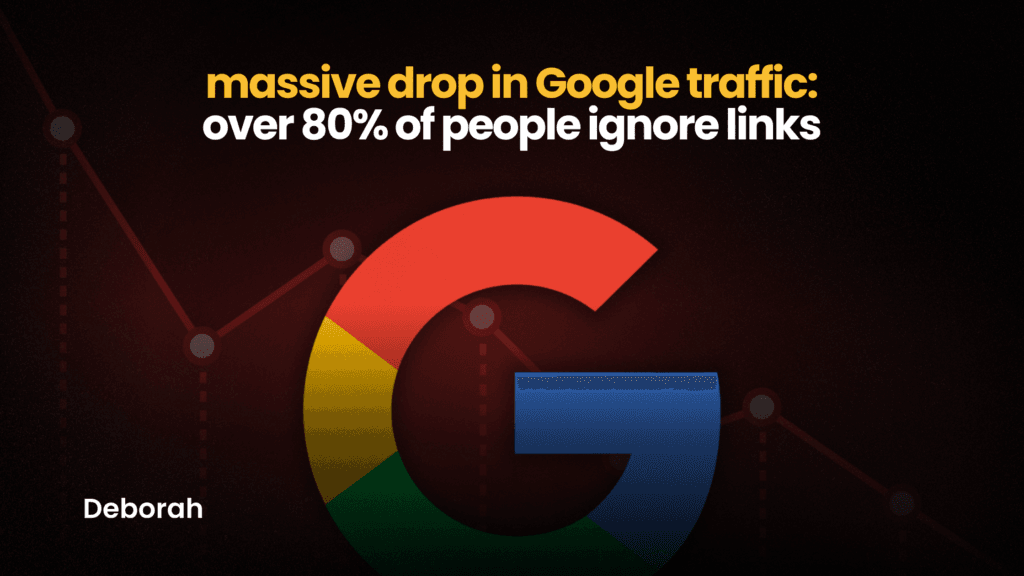
We’re seeing a massive drop in Google traffic to websites. AI platforms are killing clicks. The entire SEO and publishing ecosystem is at risk. And there’s no point in pretending, to ourselves or anyone else, that everything is staying the same.
Traditional search is starting to crack, even though it’s still the biggest source of traffic for websites. Still, we have to admit that Google traffic to websites has dropped by around 30% over the past year or two. And it’s only going to fall further now that Google has announced changes to its search box, the biggest change to Search in 25 years. Google has redesigned the search field to give users more room to type their queries. The search box will continue expanding as the user types a query or prompt. More and more questions will be answered without anyone needing to click through to a website.
In short, Google is gradually shifting from “find websites” to “instantly solve search intent.” You can expect the number of clicks from Google Search to keep declining.
A growing share of searches now end without users clicking through to external websites, especially when AI summaries appear.
That means that out of every 100 people who search for something, 83 never visit a single website or click on any of the links shown in the results. Google, or rather its AI, serves them the complete answer right away.
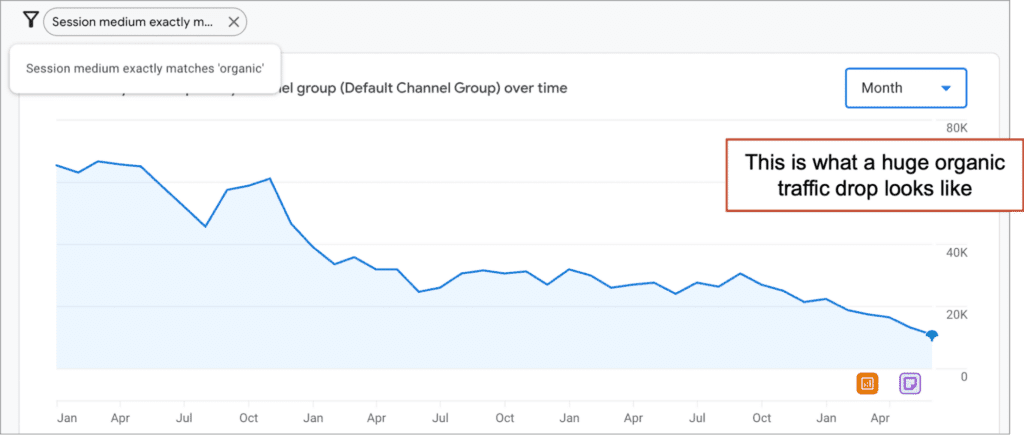
These are the three main factors behind the drop in website traffic:
1. Lower organic CTR: When an AI Overview or AI Mode is triggered, the click-through rate (CTR) for the top organic search result drops by 58% to 61%.
2. Zero-click searches: As mentioned, around 83% of queries that trigger AI Overviews are answered directly within the AI response, meaning no clicks through to websites.
3. Impact on ads: CTR for Google Search ads drops even more than organic results, by as much as 68% when AI Mode is active.
The new normal is that people increasingly prefer talking to AI to get information instead of searching query by query on Google and clicking through ten different websites to find what they’re looking for.
Users now interact with AI, which summarizes information from countless websites. They can guide it with follow-up questions until they get exactly the information they need. Only then might they click through to buy something or make a reservation. Everyone does this to an extent in 2026. That means the real advantage in the future may no longer be traffic alone, but having a brand that people actively search for by name.
The publishing industry is under pressure
The entire publishing ecosystem is under pressure because of these changing user habits. When people stop clicking, traffic drops. For news publishers, that creates a major problem because they’re losing huge numbers of visits they once relied on. As traffic declines, so does advertising revenue, because advertisers want large audiences. That’s why more and more publishers are turning to paid content and subscriptions to stay afloat.
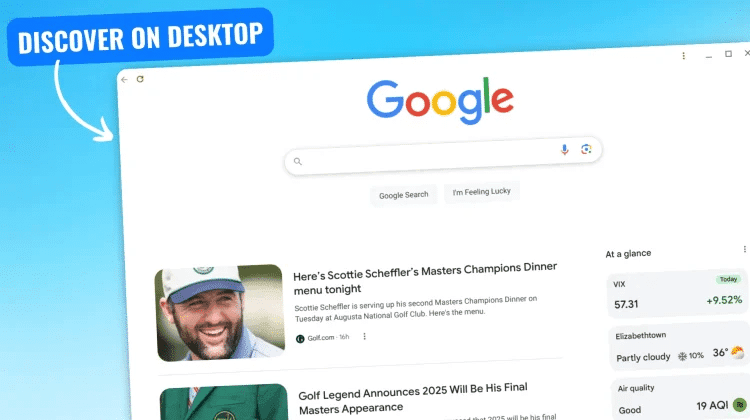
The only websites still seeing growth are those successfully riding the wave of Google Discover. Publishers that aren’t getting visibility there are in a particularly tough spot.
However, this was already happening
It’s also worth mentioning that plenty of searches ended without a click even before AI Mode. Year after year, Google kept more and more potential clicks for itself.
For example, someone searching for “24-hour pharmacy in London” would get the answer directly from a Google Business Profile. Or if someone searched for “Greg’s bakery pening hours,” they could immediately see whether it was open. The same happened when people started using Google to convert currencies or perform simple calculations. Many searches were already zero-click, but they mostly involved practical, service-related queries rather than informational content.
AI Mode in 2025 has significantly reduced traffic to content-focused websites. Websites built around informational content are seeing the biggest traffic declines, and that trend is likely to continue.
| Year | Zero-Click Rate (Approx.) | Key Driver |
|---|---|---|
| 2016 | ~45% | Knowledge Graph expansion, answer boxes |
| 2018 | ~49% | Featured snippets proliferation |
| 2019 | ~50% | First widespread reporting (SparkToro/Jumpshot) |
| 2020 | ~51% | COVID-19 search patterns, People Also Ask boxes |
| 2021 | ~53% | Google Maps integration, video carousels |
| 2022 | ~55% | Continuous scroll, expanded SERP features |
| 2023 | ~56% | SGE (Search Generative Experience) pilot |
| 2024 | ~57% | AI Overviews rollout begins |
| 2025 | ~58.5% | AI Overviews expanded to most query types |
| 2026 (projected) | ~65-70%+ | AI Overviews expansion + multimodal search |
Social media platforms want you to pay for your own audience
Search hasn’t disappeared. People are still looking for information, but they’re no longer landing on websites as often as they used to.
People use ChatGPT for much more than simple searches, you know that yourself. What ChatGPT did was push Google to launch its own LLM faster, and that has changed how people search for information far more than the launch of ChatGPT.
The same is happening on social media. Neither Facebook nor LinkedIn wants users leaving their platforms, so posts containing external links are heavily suppressed, unless you pay to promote them. That’s how these platforms maximize their revenue.
In other words, platforms that once drove traffic to websites are now keeping users on their own platforms instead.
Conclusion
Relying only on organic traffic is becoming increasingly risky. Search engines and social platforms are changing how people discover content and the platforms that control distribution can shift their rules at any time. Direct relationships with your audience, through newsletters, communities, and owned channels, are becoming far more valuable because they give you more control over how people find and engage with your content.
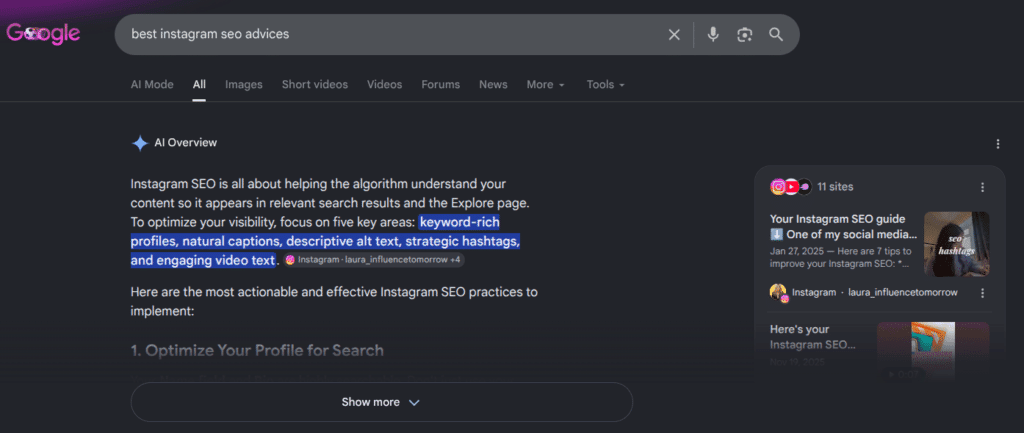
The future belongs to brands and publishers that build visibility across multiple channels. Publish your content where your audience already spends time, and make sure each platform works as a discovery channel. Don’t forget to optimize your social media posts for search, what you write in your captions, titles, and descriptions matters more than ever as people increasingly search directly on social platforms.
FAQ
1. Why is Google sending less traffic to websites?
Google is increasingly answering users’ questions directly in search results through AI Overviews and AI Mode, reducing the need to click on external websites.
2. What are zero-click searches?
Zero-click searches are searches where users get the information they need directly on the search results page without visiting another website.
3. Which websites are most affected?
Content-heavy, informational websites are experiencing the biggest traffic declines because AI can summarize their content directly in search results.
4. How can businesses adapt to these changes?
Focus on building a recognizable brand, growing your email list, creating communities, publishing across multiple platforms, and optimizing both your website and social media content for search.
5. Is social media still a good traffic source?
Organic social media traffic has declined as platforms prioritize keeping users on their own apps. To maximize reach, businesses should diversify their content strategy instead of depending on a single platform.