
Table of Contents
DISCLAIMER: This is a personal take from our graphic designer on the use of AI in typography.
It explores how these tools are used, where they’re useful and why the human touch remains the missing piece of the puzzle in creating type that truly communicates with audiences.
Think of this as an insider’s perspective rather than a technical guide; an opinion on where AI fits in the creative process.
Why’s typography important?
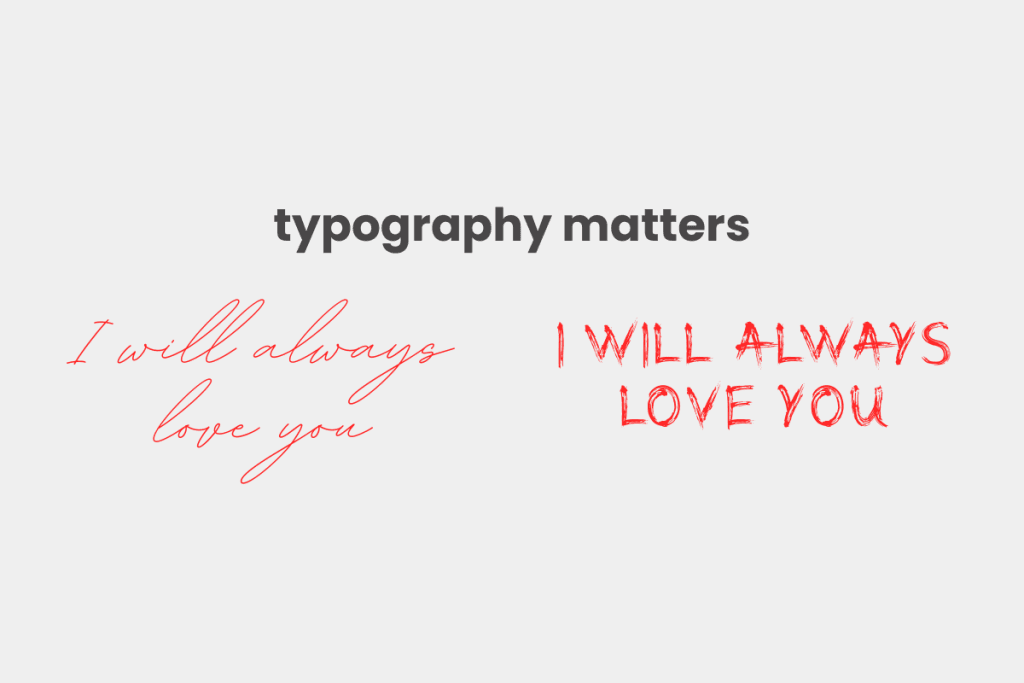
Typography has always been the quiet foundation of a brand. It shapes the way a brand sounds, the mood it gives off, and how easily people remember it. Today, with the rise of AI typography, the possibilities are expanding even further. The challenge is that the fonts that are simple and reliable often feel a little flat, while the ones with real personality can be difficult to use consistently everywhere a brand needs to show up.
Many type foundries target the broadest audience, creating ultra-neutral Sans serifs or slight variations on familiar designs. They’re versatile and dependable, but playing it safe makes brands blend together, losing any sense of personality.
Some of the most iconic brands let typography do the heavy lifting. Coca-Cola’s script became the brand full of warmth and nostalgia. IBM used type to signal precision and intelligence. MTV embraced constantly shifting, expressive lettering that reflected youth and rebellion. Nike’s bold typography drives energy. Disney’s whimsical letters signal imagination. The New York Times leans on type to convey credibility and trust. None of these were neutral decisions. They were emotional ones, and that’s what made the brands unforgettable.
Then things started to change
As branding became more structured and scalable, much of its emotional richness was stripped away. Efficiency began to outweigh expression. Brands focused on versatility and accessibility, which do matter but in the process, the strange, bold, and opinionated edges disappeared. In a marketplace packed wall to wall with brands, standing out isn’t a bonus – it’s the only way to stay alive.
When budgets allow, designers create custom typefaces, an amazing way to make a brand truly ownable. But for most companies, that’s out of reach: costly, time-consuming, and impractical for smaller teams.
So most brands end up cycling through the same trendy fonts, hoping they feel fresh. Retail fonts can build strong brands, but only if they’re designed for real-world use: headlines, body copy, interfaces, packaging, motion, and scale.
What’s needed are fonts that are:
- Strong enough to carry a full brand system
- Distinctive enough to stand out
- Flexible enough for any medium
- Affordable for teams without massive budgets
Today, the industry is stuck between safe, uninspired workhorses and costly custom fonts. Few fonts hit the perfect balance of style and usability. Everyone’s playing it safe, and it shows.
How is AI in typography changing design?
AI is creeping into the world of fonts, analyzing every curve, size, and pairing you choose. It’s not just suggesting typefaces, it’s learning your habits, predicting your preferences, and subtly steering your creative decisions.
Algorithms can adapt existing typefaces, generate variations, or even invent entirely new fonts based on data patterns rather than human intuition. While this makes design faster, it also risks replacing the quirks, personality, and serendipity that make typography truly human.

Even complex layouts aren’t safe. AI can propose “optimized” text arrangements, smoothing out inconsistencies – but sometimes at the cost of originality and character. With every project, typography risks becoming more uniform, more predictable, and more dictated by algorithms than by the designer’s eye.
The question isn’t what AI could do, it’s what it’s already starting to do, quietly reshaping the way we create, see, and experience type.
Humans create, AI imitates
AI makes everything look the same. Images, layouts, templates – they’re all starting to blur together at lightning speed. Deepfakes make it worse: photos, videos, even illustrations. Can you trust any of it? People are going to start craving proof that something was made by a human. Some already do.
Enter typography. A truly great typeface still requires a human eye. Someone who understands rhythm, optical balance, personality, and voice. AI can spit out ideas, sure, but it can’t craft a fully functional, intentional typeface. Not yet, and maybe not for a long time.
AI-generated typography often looks warped, blurry, and unreadable, losing all character. Tools like “Word-As-Image for Semantic Typography“ turn words into literal images. Type “yoga” and the letters are cluttered with wobbly figures. The result is jagged, blurry, and nearly unreadable, a perfect showcase of AI’s limits. It sacrifices clarity and accessibility in a clumsy bid to innovate, which isn’t surprising given AI’s shallow understanding of how humans actually read.
In typography, AI is often chasing the wrong goals – trying to reinvent a 2,000-year-old Latin alphabet is a dead end. A better approach is to use AI as an assistive tool, not a generative one.
Custom typography is becoming one of the clearest ways for brands to show human involvement. With everyone using the same AI tools, templates, and stock assets, a thoughtfully designed typeface is one of the simplest ways to truly stand out. It’s not just about looking different, it’s proof that someone put real care and intention into creating it, rather than just hitting the “generate” button.
People have always wanted to improve typography
Word-As-Image isn’t new. Designers have long explored how technology could reshape type. In 1920, engineer Walter Porstmann imagined a phonetic system ordered by sound, tone, and strength, and Bauhaus artist László Moholy-Nagy later predicted that film and sound would transform typography, urging it to evolve alongside new media.
Looking at AI type alongside 20th century experiments, one has to ask: who benefits? Not readers. But like past tech-driven experiments, AI could help designers create better type if used as an assistive tool rather than a replacement. Much like the digital revolution made typography more accessible and efficient, AI has the potential to support typographers, but only if it’s used wisely.
Key takeaways
Typography remains a quiet but powerful foundation for brand identity, shaping tone, emotion, and memorability – but AI is starting to change how it’s created and experienced.
- Iconic brands like Coca-Cola, IBM, Nike, and Disney use type intentionally to convey emotion, personality, and credibility.
- Modern branding often prioritizes efficiency and scalability over expression, leaving fonts safe but forgettable.
- Custom typefaces are ideal for distinctiveness but costly; most brands rely on off-the-shelf fonts that may lack personality or flexibility.
- AI can analyze, suggest, and generate fonts, optimizing layouts and predicting designer preferences – but often at the cost of originality, readability, and character.
- Human designers remain essential: great type requires understanding rhythm, balance, optical illusion, and voice.
- Custom typography signals human intention, helping brands stand out in a homogenized AI-driven landscape.
- History shows tech can assist typography, but AI should be used as a supportive tool, not a replacement, to benefit both designers and readers.
FAQ
1. Why is typography important for brands?
It conveys personality, mood, and trust, making brands memorable.
2. Can a brand succeed using only neutral or trendy fonts?
Yes, but neutral fonts are safe and forgettable; trendy fonts may lack flexibility and lasting distinctiveness.
3. What makes a font “ideal” for branding?
It should be strong, distinctive, flexible, and affordable across all media.
4. How are AI tools changing typography?
AI suggests fonts, generates variations, and optimizes layouts, speeding design but often reducing originality.
5. Can AI replace human designers in type creation?
Not yet. Human judgment is needed for balance, rhythm, and personality.
6. What are the risks of AI in typography?
It can produce warped, unreadable, or overly uniform fonts, reducing uniqueness.
7. Why is custom typography valuable today?
It shows human care and helps brands stand out in an AI-heavy landscape.
8. How does history inform AI in typography?
Past tech experiments show AI can assist creativity but shouldn’t replace human insight.
9. Should brands entirely avoid AI in typography?
No. AI works best as a tool to support designers, not dictate decisions.
10. What is the long-term role of typography in branding?
It remains key for expressing emotion, personality, and credibility.