Table of Contents
What are backlinks?
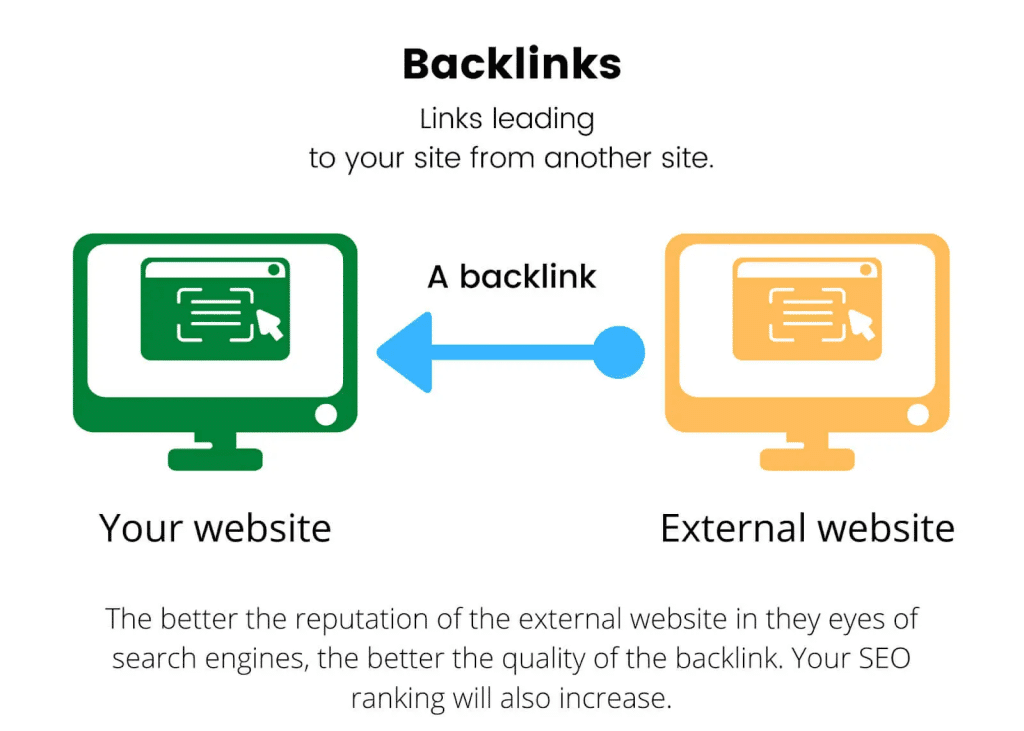
A backlink is a hyperlink from one website to another website. In SEO, backlinks are also called inbound links or incoming links. When Website A links to Website B, Website B receives a backlink. This is what people usually mean when they want SEO backlinks explained.
Search engines use backlinks to discover pages and judge the authority, relevance and credibility of a website. A backlink functions as a signal that another website considers the linked content valuable enough to reference.
For example, if a digital marketing blog links to an article about technical SEO on your website, that link is considered a backlink. The linking website is called the referring domain.
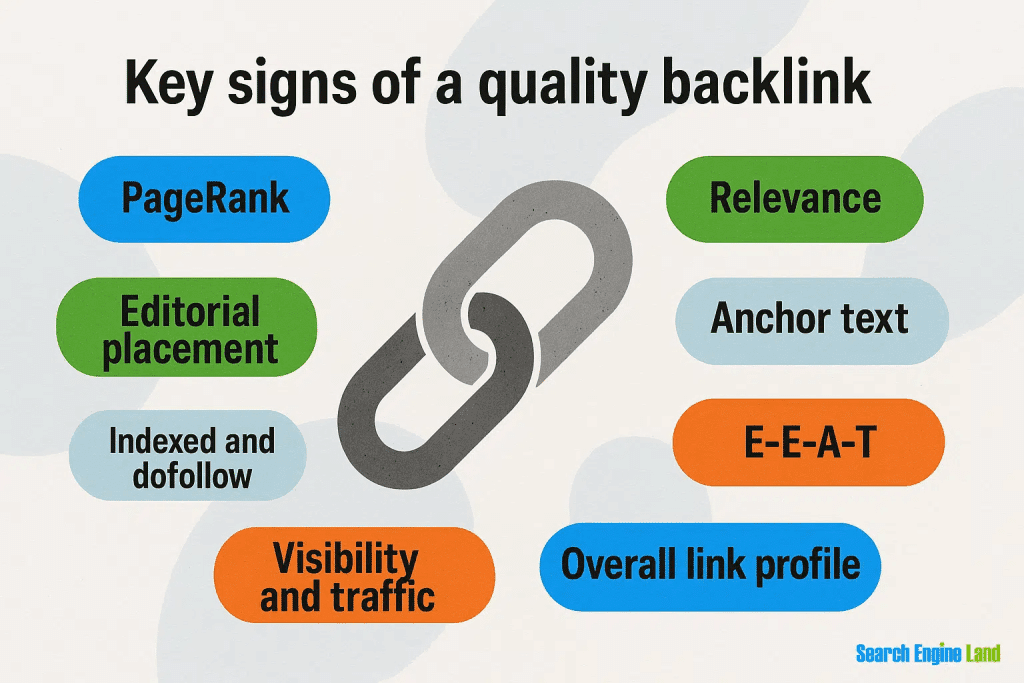
Backlinks are a core component of off-page SEO because they influence how search engines rank webpages in organic search results. However, not all backlinks carry equal value. Search engines judge factors like the authority of the linking website, topical relevance, anchor text and link placement.
How do backlinks work in search engines?
Search engines discover new pages by following links between websites. When a search engine crawler finds a backlink pointing to a page, it can use that link to crawl and index the destination page.
Backlinks also help search engines evaluate the importance of webpages. Google’s ranking systems analyze how pages link to each other to understand which pages may be more useful or authoritative for a search query.
This process is historically associated with PageRank, an old algorithm developed by Google that treats links as signals of importance. Pages that receive backlinks from authoritative and relevant websites generally pass stronger ranking signals than pages with few or low-quality links.
Search engines also take into consideration the context of a backlink. They analyze factors like the topic of the linking page, the anchor text used in the link, and the relationship between the two websites. This helps determine whether the backlink is relevant and trustworthy.
Difference between good and bad backlinks
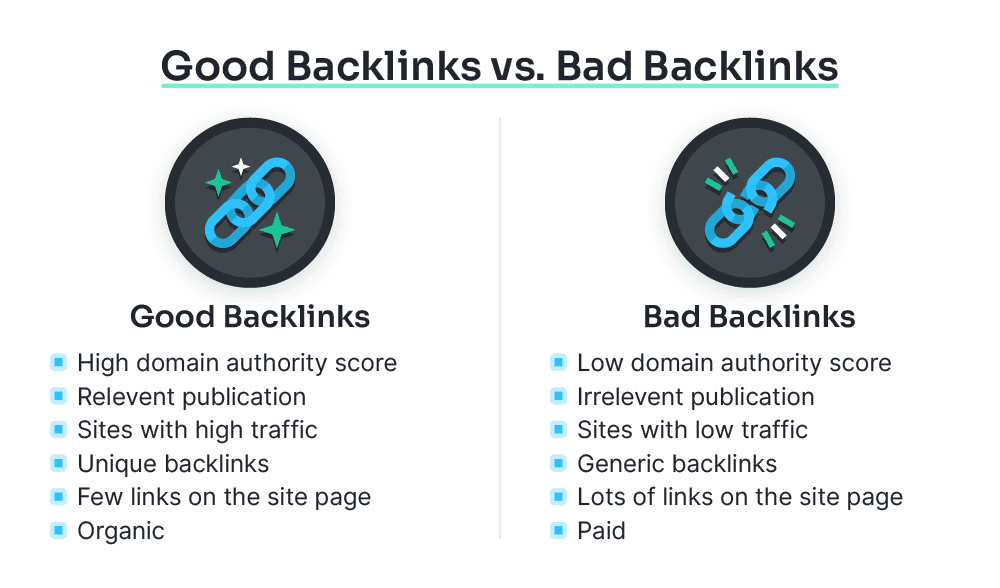
Not all backlinks improve SEO performance. Search engines assess backlinks based on relevance, trust, placement, and whether the link appears naturally within content.
A good backlink typically comes from a relevant website, appears within editorial content, and provides value to readers. These links are usually earned because the content is useful, original, or authoritative.
Examples of good backlinks:
- A cybersecurity blog linking to a research study on your website
- A news publication citing your original statistics
- A university website referencing your educational resource
- A niche industry website linking to your guide or case study
Bad backlinks are links created primarily to manipulate search rankings. These often come from spam networks, irrelevant websites, automated systems, or paid link schemes that violate Google’s spam policies.
Examples of bad backlinks:
- Links from private blog networks (PBNs)
- Spam comments containing keyword-rich links
- Links from unrelated gambling, casino, or adult websites
- Sitewide footer links repeated across hundreds of pages
- Paid backlinks without proper disclosure attributes
Search engines have become better at ignoring low-quality backlinks automatically. However, large-scale manipulative link building can still lead to ranking losses or manual penalties.
Types of backlinks you should know
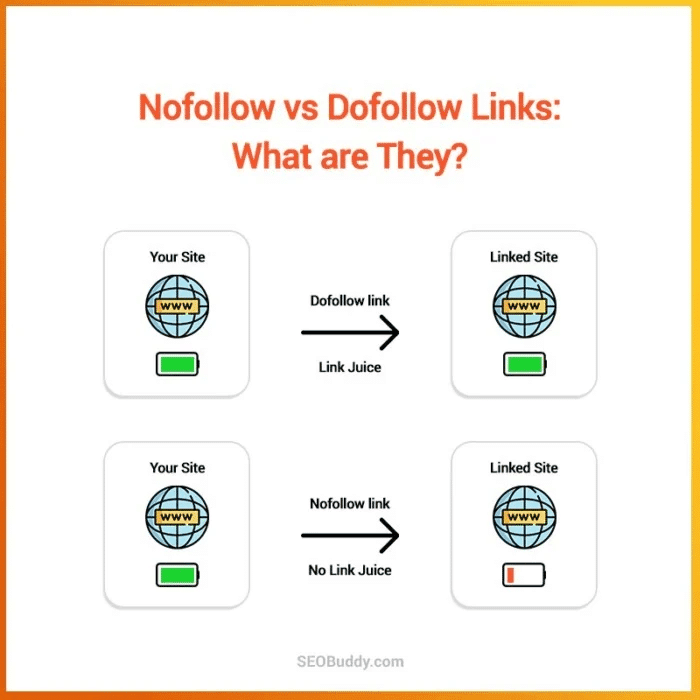
Backlinks are commonly divided into 4 main categories based on how search engines interpret them. These categories are defined through HTML link attributes.
Dofollow backlinks
A dofollow backlink is a standard link with no special attribute attached to it. These links can pass ranking signals and authority from one page to another.
Example:
- A news website linking to your article as a source
- A blog recommending your guide or tool
Nofollow backlinks
Nofollow backlinks contain the rel="nofollow" attribute. They tell search engines that the linking website does not want to pass endorsement signals through the link. Google now treats these as hints rather than strict directives.
Example:
- Blog comment links
- Social media profile links
- Forum discussion links
Sponsored backlinks
Sponsored backlinks use the rel="sponsored" attribute. They identify links created through advertising, sponsorships, affiliate partnerships, or other paid agreements.
Example:
- Paid guest posts
- Affiliate product links
- Sponsored brand collaborations
UGC backlinks
UGC stands for user-generated content. These backlinks use the rel="ugc" attribute and are commonly found in areas where users can publish content themselves.
Example:
- Forum posts
- Reddit comments
- User profile pages
- Website comment sections
A natural backlink profile usually contains a mix of these link types rather than only dofollow backlinks.
Do backlinks still matter in 2026?
Yes. Backlinks sre still one of the strongest ranking signals in SEO, although their role has changed slightly. Search engines now place more emphasis on link quality, topical relevance, and trust than raw link quantity. Kind of like how Google and other search engines don’t just look at the sheer number of keywords within a text, because that metric can easily be manipulated (keyword stuffing).
Multiple industry studies continue to show a strong correlation between backlinks and higher rankings:
- The #1 Google result has an average of 3.8x more backlinks than positions 2–10.
- 96.6% of online content receives zero backlinks from external websites.
- Pages with backlinks receive 3,8x more organic traffic on average than pages without backlinks.
- 78.1% of SEO professionals reported positive ROI from link building in 2026.
Backlinks also help websites appear in AI-powered search results and tools like ChatGPT or Google AI Overviews. When trusted websites link to your content, search engines are more likely to see your website as credible and worth showing to users.
Common backlink mistakes that hurt rankings
Many websites fail to benefit from backlinks because they focus on quantity instead of quality. Search engines are designed to detect manipulative link-building patterns, especially those created to artificially influence rankings.
Some of the most common backlink mistakes include:
- Buying bulk backlinks from cheap SEO services
- Getting links from irrelevant websites outside your niche
- Overusing exact-match anchor text like “best SEO agency”
- Using private blog networks (PBNs)
- Spamming blog comments and forums with links
- Building hundreds of links in a short period unnaturally
- Paying for backlinks without using proper sponsored attributes
- Focusing only on domain authority while ignoring relevance
One of the most common mistakes is using the exact same keyword in every backlink. For example, if dozens of websites all link to your page using the phrase “best SEO agency,” it can look artificial to Google (and to a regular person, if they cared enough to look). Natural backlinks usually use a mix of brand names, page titles, website URLs, and general phrases like “learn more” or “this article.”
Another common issue is prioritizing “high-authority” websites that have no topical connection to your industry. A relevant backlink from a smaller niche website is often more valuable than an unrelated backlink from a large website. For example, a backlink to a dental clinic from a gaming blog is far less useful than a backlink from a smaller healthcare or local business website. Search engines look at relevance, not only website size or authority.
Google has also become more effective at ignoring low-quality spam links automatically. Since the Penguin update, the algorithm often devalues manipulative links instead of penalizing websites directly. However, aggressive link schemes can still trigger manual actions and ranking losses.
How to get high-quality backlinks?
High-quality backlinks are usually earned. Search engines are designed to identify links that exist because someone genuinely found the content useful, relevant or worth referencing. So in short, get better at writing content.
Jokes aside, the most effective way to earn backlinks is to publish content that other websites naturally want to cite. This includes:
- Original research and statistics
- In-depth guides and tutorials
- Case studies
- Industry reports
- Useful tools or calculators
- Expert opinions and interviews
For example, if a cybersecurity company publishes a report on data breaches in 2026, news websites and blogs may reference that data and link back to the original source.
Other common backlink strategies include:
- Guest posting on relevant industry websites
- Digital PR campaigns
- Reaching out to websites that mention your brand without linking
- Getting listed in reputable directories
- Building relationships with journalists and publishers
Relevance matters more than volume here. A few backlinks from trusted websites in your industry is a much better metric of your quality than hundreds of unrelated links. Google’s spam policies specifically target manipulative practices such as buying links, excessive link exchanges and automated link building.
Such dishonest strategies might work for a little while, but just be aware that your impressions and clicks will probably get smashed into pieces during the next Google update. So beware!
Good backlinks usually grow naturally over time as more people discover and share your content. A useful guide may slowly earn links from blogs, forums and news websites over several months. If a website suddenly gets hundreds of backlinks overnight from random websites, search engines may and will see that as suspicious and manipulated.
How to check your backlink profile?
A backlink profile is a list of all websites linking to your domain. Checking it helps you understand where your traffic signals come from and whether those links are helping or potentially harming your SEO performance.
You can review your backlink profile using tools such as:
When reviewing backlinks, focus on a few core signals:
- Which websites are linking to you (referring domains)
- The pages they are linking to
- The anchor text used in the links
- Whether links are follow or nofollow
- Unusual spikes or suspicious domains
A healthy backlink profile shows gradual growth, relevant referring domains, and natural variation in anchor text.
How long does it take backlinks to impact SEO?
Backlinks don’t affect rankings immediately. Search engines first need to discover the link, crawl the page it is on, and then reassess how your page should rank based on the new signal.
In most cases, early movement appears within 2 to 4 weeks, especially for websites that are already indexed and active. More stable and measurable changes usually take 6 to 12 weeks, while full impact often builds over 3 to 6 months, depending on competition and site authority.
The timeline varies based on a few practical factors:
- How often the linking site is crawled
- The authority and relevance of the linking page
- The competitiveness of the keyword you are targeting
- The existing strength of your website
A single backlink will rarely cause a sudden jump in rankings. Instead, backlinks contribute to gradual improvement as search engines accumulate more signals over time.
Can you rank without backlinks?
Yes, but only in limited situations.
Search engines can rank a page without backlinks if they can clearly understand its relevance and there is little competition for the query. This typically happens with low-competition, very specific searches, or when a website already has some level of trust built from other pages.
In most competitive niches, however, backlinks still matter. When multiple pages have similar content quality, backlinks often act as the deciding factor. Pages with stronger and more relevant link profiles are more likely to rank higher.
In practice:
- Possible without backlinks: low-competition keywords, niche topics and highly specific questions
- Difficult without backlinks: commercial keywords, competitive industries and high-traffic search terms
- Rare but possible: strong content combined with established domain authority or internal site strength
Backlinks are not the only ranking factor, but for most websites trying to grow traffic, they’re a must.
Key takeaways
Think of backlinks less as “individual links” and more like trust building over time. One link won’t change much on its own, but several relevant links pointing to the same topic start to signal that your content is worth paying attention to.
The way links are written also matters. If every link uses the same keyword, it looks unnatural. In real life, people link in different ways, sometimes they use your brand name, sometimes the page title, sometimes just a simple “click here.”
What happens on your own website also plays a role. If people link to a page but your site doesn’t connect that page well to the rest of your content, you’re not getting the full benefit of those links.
Timing matters too. A slow, steady flow of backlinks looks normal. A sudden burst of hundreds of links can look suspicious and may not help as much as you’d expect.
And lastly, backlinks don’t hold permanent value. If the page linking to you gets deleted or loses relevance over time, that link can lose its impact too.
FAQ
1. What is a backlink?
A backlink is when another website links to your website. It works like a reference or recommendation from one page to another.
2. Do I need backlinks to rank on Google?
Not always. Very specific or low-competition topics can rank without them, but for competitive keywords, backlinks are usually needed to reach higher positions.
3. How many backlinks do I need to rank?
There is no fixed number. A few strong, relevant backlinks can outperform hundreds of weak or unrelated ones.
4. Can bad backlinks hurt my website?
Yes, if they are part of spammy or manipulative patterns. However, Google often ignores many low-quality links automatically unless there is clear abuse.
5. How do I get backlinks naturally?
By publishing useful content that others want to reference, such as guides, data, case studies, or tools. Over time, people link to it without needing to be asked.