Table of Contents
The Stranger Things x Netflix hype-train
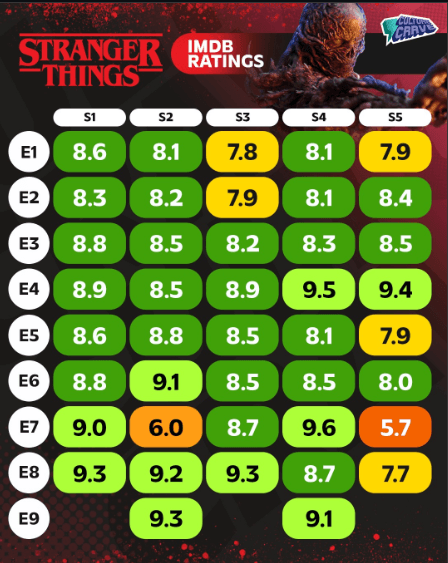
The Stranger Things finale aired on December 31st and caused a lot of mixed reactions from a very loyal fan-base. It’s safe to say that the Duffer brothers’ show didn’t get the ratings for Season 5 that they were hoping for. In fact, the ending was so lackluster, that in the following weeks many fans have been putting on their tinfoil hats and been making a lot of theories for the show’s “actual” ending. And this audience involvement in the spreading of the show’s hype is what drove Stranger Things marketing efforts. Let’s do a deep dive.
Modern TV shows, for some reason, rarely get a soft landing for an ending. The most famous example of a universally hated ending is HBO’s Game of Thrones, which was so unpopular that some fans on social media have been saying things like “if they make a sequel, can they redo the final season as well”. On the other end of the spectrum, you have a show such as Breaking Bad, whose ending is universally seen as great. So, where Stranger Things final season was going to land within that spectrum was anyone’s guess.
And looking at the ratings it’s clear to see that they landed closer to the Game of Thrones ending, though not as universally hated. The final volume was seen as lukewarm and there was an air of “this is missing something”
However, what transpired in the week and a half following the release of the final Stranger Things episode can only be described as a masterclass in marketing efforts. We think the best and most effective marketing campaigns are the ones that are carried out by pure, organic hype generated by fans, and not aggressive ads.
An example of this is Rockstar’s GTA 6, which we already talked about in prior blog posts. Fans do the marketing, and the companies throw them hints, clues and things that confirm their already preexisting biases. This is a case study of how Netflix used the Stranger Things finale as a catalyst for people to keep talking about their brand, and keeping it in the social media hype cycle 24/7.
The Conformity Gate conspiracy
The Conformity Gate theory claims that the season finale of Stranger Things we all got isn’t real and that everyone in the show is just conforming to the distorted reality in that epilogue. It was basically the fans saying “there must be a secret 9th episode ready to be released”. However, reality is often disappointing. It was supposed to be released on January 7th but the episode never appeared on the streaming platform.
But this wasn’t just the mad ravings of a deluded fanbase. There was a lot of evidence for this throughout the final season, even if it required a huge leap of faith to believe.
The evidence that pointed to Conformity Gate
The evidence to back the Conformity Gate was pretty robust and when researching all of this, we nearly believed it ourselves.
Here’s a not so exhaustive list:
1. The military just let go of the main characters after taking out dozens of soldiers.
2. The audience sitting like Henry and Billy (and the poster in the back is blank).
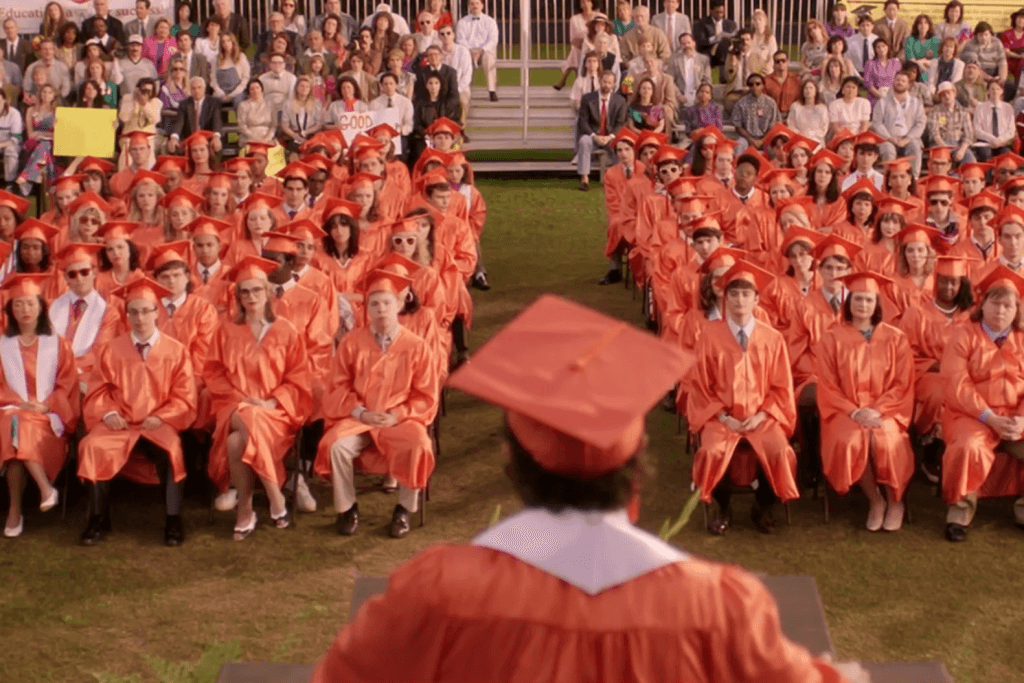
3. The girl that doesn’t like the main characters invites them to her party and they skip it to go play D&D.
4. Fans have also noted that it’s strange and weird how Mike was the leader in volume 1 until episode 4 where he gets knocked out by Vecna and then literally does nothing and is just an observer for the rest of the show.
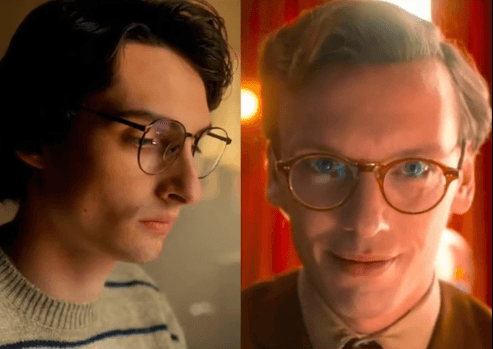
5. Further, we have Mike’s resemblance to Henry with the haircut and the glasses. But also Mike and Nancy conforming to what they feared the most: becoming their parents and looking exactly like them in the epilogue.
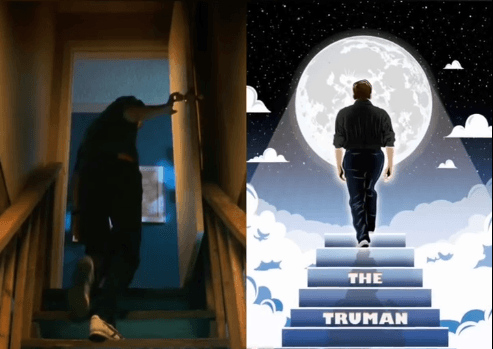
6. There’s even some parallels with The Truman Show and Mike’s basement looking exactly like The Truman Show poster.
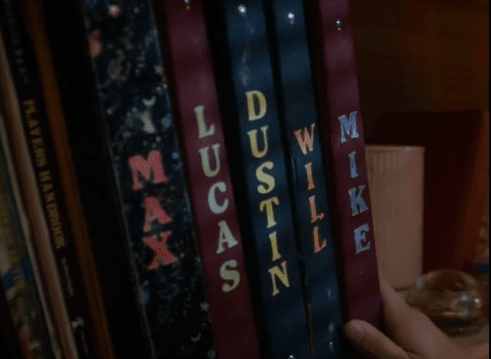
7. There’s the scene where Will puts his binder up and Mike does it last, but then they switch the order on Stranger Things social media to where Dustin’s is the second to last and that just spells out “X a Lie” – Dimension X is a lie?

8. The D&D campaign from season 1 is 10 hours long, which is the exact run time of season 5.
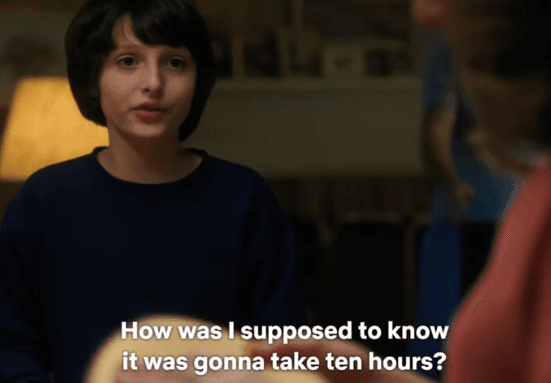
9. The number 7
In the final season of the show, the number 7 is everywhere. Will rolls a 7 in that game, which means they lose. The roll die on the end credits of the finale is on a 7. The screen goes black for 7 seconds after Steve falls off the tower. Will being kidnapped right after the D&D campaign and 7 days pass before he was found.
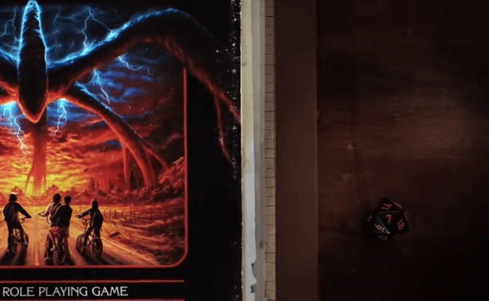
Well 7 days after the season finale was January 7th and Netflix was planning to make a big announcement that day.
10. Netflix “Fake Ending” search query
Many Netflix users and especially Stranger Things fans shared their screen recording of them searching up the term “fake ending” only to be suggested Stranger Things. This didn’t happen to everybody, which is why some people suspected that the videos which surfaced were fake. Nonetheless, if it was true that it suggested Stranger Things, it doesn’t really point to Netflix willfully tampering with the algorithm, but who knows, at this point many fans will believe anything, out of desperation to get another episode.
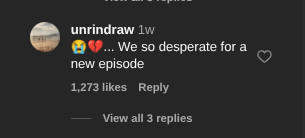
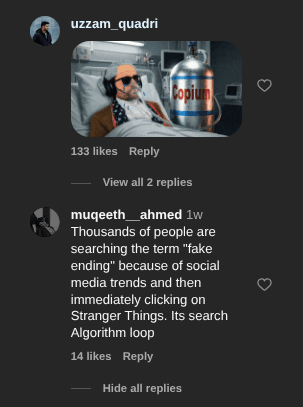
Everything seemed to be pointing at the release of one final, secret episode. But come January 7th nothing happened and fans were left wondering. However, the story doesn’t end there. Another theory pointed to January 12th 2025.
Stranger Things Documentary is the secret finale of season 5?
The documentary theory is an interesting hypothesis, and a lot of credit goes to Gregory Lawrence (@greggfriedrice on TikTok).
Today marks the premiere of Netflix’s documentary about Stranger Things 5 called “One Last Adventure”. On the surface, it’s just a documentary. However, maybe it’s not.
When writing the series, the Duffer brothers drew a lot of inspiration from 80s pop culture and movies. One franchise that stands out as an inspiration for the show is A Nightmare on Elms Street, a 6 movie franchise. The 6th installment Freddy’s Dead: The Final Nightmare was meant to be the end of the Elm street franchise. They defeat Freddy, he’s dead – the end.
But then the 7th installment comes out called Wes Craven’s New Nightmare. And as we’ve established, the number 7 has become important for Stranger Things and its lore. Is New Nightmare a documentary? Kind of, but it’s more framed like a documentary, where all the actors of the franchise are being interviewed. Nothing seems amiss, until Wes Craven, the director, announces that Freddy Krueger is an entity trapped in the previous 6 movies. And now that the story is over, he’s released from his contract, leading to Freddy hunting down the cast and the crew of the movie.
And it’s a fact that Freddy Krueger does kind of look like Vecna.
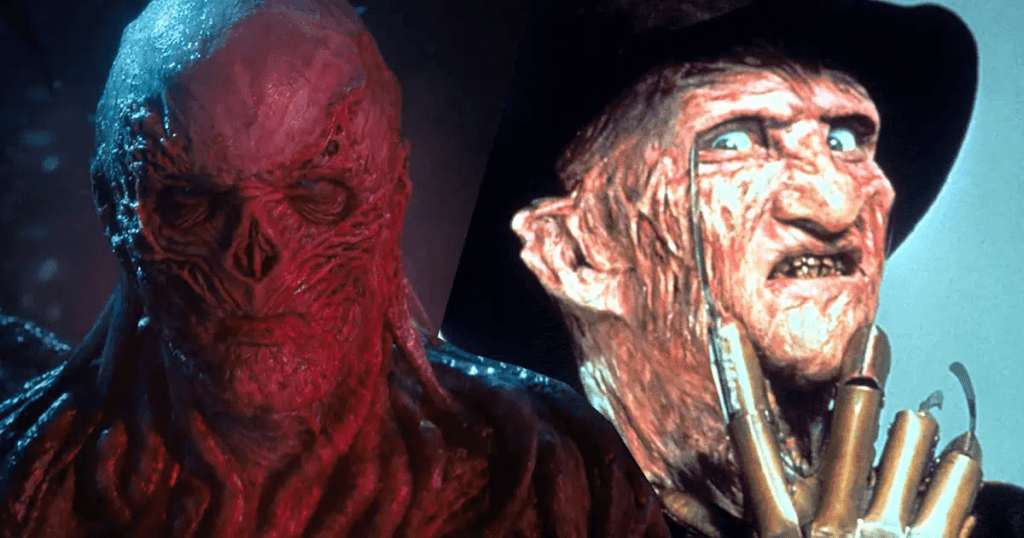
Another interesting parallel is the fact that Freddy Krueger’s actor Robert Englund, in the nightmare franchise, appears in Stranger Things 4, as Victor Creel, Henry Creel’s dad.
The contents of the Stranger Things documentary remain to be seen, but all of this, plus the hints that previously pointed to the Conformity Gate conspiracy are not a coincidence. It’s an example of how Netflix used Stranger Things hype to keep its brand mentioned all over social media, and improve its brand image, particularly after the recent price spikes and a crackdown on password sharing.
How Netflix let the fans do their marketing for them
The most successful marketing is when it works for you. When a brand can do minimum work, whilst its audience talks about it, discusses it and dissects every decision they make, it’s a sure sign that your brand is on the up.
Netflix could not have paid its fans for a better marketing campaign for the Stranger Things documentary than the Conformity Gate. Instagram Reels, TikTok and X were dominated by posts related to the finale and the secret episode. It was on everyone’s minds, including non-fans. Everybody was talking about the show and by proxy Netflix, since the show is so synonymous with the franchise.
But one thing in particular sealed the deal for us that Netflix was in on all the conspiracy and that they fueled the talk.
A whole legion of fans rushed to Netflix on January 7th and crashed the platform for an episode that never existed. However, to play devil’s advocate, it might not have been a regular crash. The official narrative goes that so many people rushed to Netflix to see if Conformity Gate was real, that Netflix’s servers couldn’t handle it.
But they were able to handle the traffic when the real season 5 finale was on, and the entire world was tuning into it. Not to be conspiratorial, but many people saw this as a stunt by Netflix themselves. That Netflix did this on purpose.
The conspiracy theory about the Conformity Gate was a very good thing to happen to Netflix for the start of 2026. Because Netflix have been put out there in the social media ecosystem so much that their brand awareness is on the rise. The more eyeballs they have on themselves the better.
Famously, Netflix’s CEO Reed Hastings in 2017 stated that the biggest competitor to Netflix was sleep. Not another platform or a TV series, but the fact that humans have to close and rest their eyes.
So anything that keeps people’s attention on Netflix is the bull’s eye. And it seems that they’ve hit it with Stranger Things.
And what will keep everyone’s attention to Netflix apart from the post-show hype and the upcoming documentary? A crash of their website. People screenshot and post the crash on social media, other people comment on it and check out the website for themselves to see if this is true and it creates a snowball effect of people talking and theorizing about the show, all the while raising Netflix’s brand awareness for free. And so the theory goes that Netflix deliberately caused the crash to fuel the talk.
It can’t be proven and we’re not accusing them of doing it. But it’s a fun little thing to keep in mind, as Netflix will no doubt try to replicate the success of Stranger Things with their other original shows and play the hints and clues games with their audience. Though will the audience want to play along after the Conformity Gate is another question, which remains to be answered in the future.
What this tells us about hype marketing
The Stranger Things finale and the subsequent games Netflix and the show’s creators played with its audience is a lesson in how to ride, control and extend the hype-train of a service or a product. In this case, Netflix had a show with a very loyal fan-base, and a season that was highly anticipated; the fans had to wait since 2022 for the ending and this anticipation created hype whose only parallel right now can be found in the GTA franchise.
While Rockstar lets its fans do the free mass marketing by hinting and giving clues about an unfinished product (GTA 6), Netflix did it with a finished product, and is extending the amount of time people are talking about it.
We believe the marketing story of Netflix’s Stranger Things is going to be replicated more and more by huge brands who have a product that has a rabid and loyal following. Only with such a product can you let the fans do the marketing for you, essentially for free.
If we had to make a prediction on which brand and franchise will generate this much hype next – it would probably be the new Harry Potter TV show that will air on HBO Max. Maybe even The Hunt for Gollum but the reaction from the LOTR fan-base hasn’t been very positive regarding the premise of the show as of yet.
One thing is for certain: it’s no wonder the big players, like Disney and Netflix are buying out their other huge competitors. No doubt to generate as much of a monopoly as possible – but more importantly – to buy out the big franchises (with huge and committed fan-bases) that those competitors have and to have them associated with their name.
And with the recent talks of Netflix acquiring Warner Bros, who own HBO and its streaming service HBO Max – it will mean that Netflix will be associated with the aforementioned new Harry Potter TV show. It remains to be seen if they’ll use similar tactics with that show and its massive audience.
FAQ
1. What is the Stranger Things Conformity Gate theory?
Conformity Gate is a fan-driven theory claiming the Season 5 finale wasn’t the real ending. Supporters believed the epilogue showed a false, “conformed” reality and that Netflix was hiding a secret final episode to be released later.
2. Was there ever a secret 9th episode of Stranger Things planned?
There’s no official confirmation that a secret episode existed. What mattered more than its existence was the sheer volume of evidence fans assembled and how widely the theory spread across social platforms.
3. Did Netflix intentionally fuel the Conformity Gate hype?
Netflix never acknowledged the theory, but their silence, timing of announcements, and the January 7 traffic spike worked in their favor. Whether intentional or not, the platform benefited massively from the attention and speculation.
4. Why was January 7th such an important date for Stranger Things fans?
Fans linked symbolism around the number seven in Season 5 to January 7 as a potential release date. When nothing happened, it intensified discussion rather than shutting it down.
5. Is the Stranger Things documentary meant to function as a secret finale?
The documentary, “One Last Adventure,” officially frames itself as behind-the-scenes content. However, fans have drawn parallels to meta-horror examples like Wes Craven’s New Nightmare, where the line between fiction and reality collapses, keeping the theory alive.
6. How did the Conformity Gate benefit Netflix as a brand?
Netflix received sustained, organic exposure without running a traditional campaign. Fans created content, debates, and viral posts across TikTok, Instagram, and X, effectively extending the lifecycle of a finished product.
7. What does this case tell us about hype-based marketing?
Hype works best when fans feel like participants, not targets. With a loyal audience and the right ambiguity, brands can extend attention far beyond a release window, often with minimal direct intervention.
8. Can other franchises replicate this strategy?
Only properties with deeply invested fanbases can pull this off. Without emotional buy-in, ambiguity becomes confusion. That’s why franchises like Stranger Things, GTA, or Harry Potter are uniquely positioned to benefit from this kind of hype extension.