Table of Contents
Key takeaway
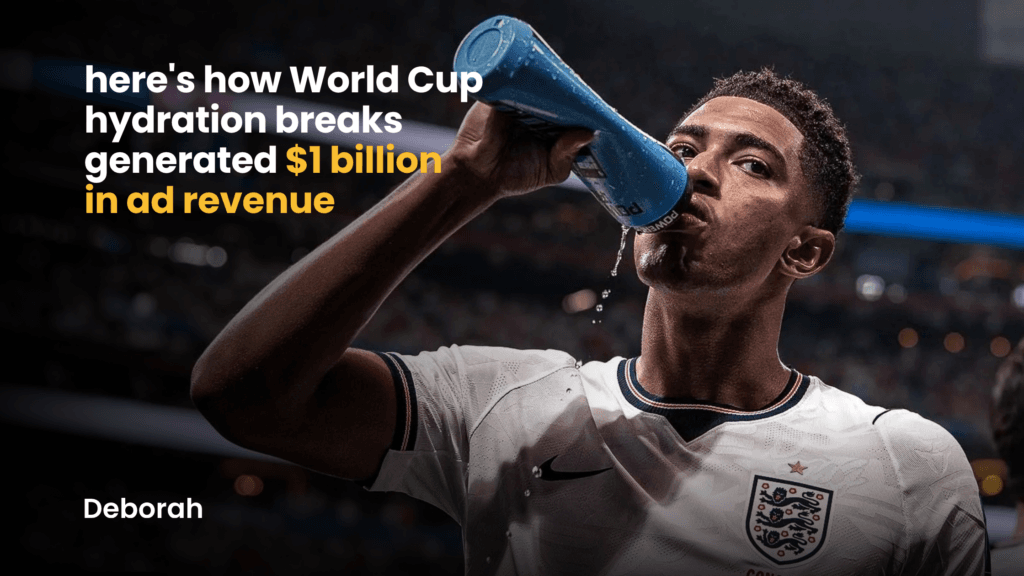
The 2026 FIFA World Cup hydration breaks are projected to generate more than $1 billion in additional advertising revenue worldwide, with Fox Sports alone expected to earn around $250 million from the newly created commercial inventory.
Even though FIFA insists the breaks were introduced for player welfare, some would argue they fundamentally changed football’s broadcast model by creating the sport’s first guaranteed in-game ad slots. The financial success of the experiment is already generating debate if future World Cups, and even other major sports, will adopt similar commercial interruptions.
How much money did the World Cup 2026 hydration breaks make?
The headline figure is eye-catching, but it helps to understand where it actually comes from.
Before the tournament began, analysts estimated that the newly introduced hydration breaks could create over $1 billion in additional advertising revenue worldwide. That estimate was almost entirely driven by the new commercial inventory that didn’t exist in previous World Cups
The expanded 2026 World Cup has 104 matches, and each match includes 2 mandatory 3-minute hydration breaks. FIFA’s broadcast guidelines leave enough room for roughly four 30-second commercials during each break, giving broadcasters around eight new ad spots per match. Across the tournament, that’s approximately 832 brand-new television commercials that wouldn’t have existed under the traditional format.

For Fox Sports, which owns the English-language broadcast rights in the United States, those slots quickly became some of the most valuable inventory of the tournament. Industry estimates suggest the network charged an average of around $300,000 per 30-second ad, putting expected revenue at roughly $250 million from hydration breaks alone. Some analysts believe the total could climb to $500-600 million if average prices increase during the knockout rounds and final.
When you factor in broadcasters across dozens of other markets, plus premium pricing for high-profile matches, the global estimate of more than $1 billion starts to look far less surprising. For FIFA, broadcasters, and advertisers, hydration breaks were not a player safety measure. They created an entirely new advertising product in the world’s biggest sporting event.
Why hydration breaks became a goldmine for advertisers?
To understand why advertisers were willing to spend so much, we first have to understand one thing about football broadcasts. There has never been much room for commercials.
Unlike the NFL, NBA, or baseball, football (soccer) is played in two uninterrupted 45-minute halves. Aside from halftime, broadcasters have very few opportunities to air full-screen advertisements without missing live action. That scarcity has always made football advertising incredibly valuable, but it also put a limit on how much broadcasters could sell. The 2026 World Cup changed that overnight.
With FIFA introducing two mandatory 3-minute hydration breaks in every match, broadcasters suddenly had 6 extra minutes of guaranteed airtime.
What made these slots especially attractive was the audience. World Cup matches regularly attract tens of millions of viewers, and unlike traditional TV, people rarely switch channels during a stop in the game. Fans know play will resume in just a few moments, so most stay put. That means advertisers get one of the things they value most: a massive audience that’s still paying attention.
Fans didn’t like the misrepresentation
One of the most interesting parts of the hydration break debate is that the breaks themselves weren’t necessarily the biggest issue.
Most fans understand that playing a summer tournament across the United States, Mexico, and Canada brings legitimate concerns about extreme heat. FIFA has repeatedly maintained that the 3-minute breaks were introduced for player welfare, pointing to rising temperatures and the need for a consistent safety protocol across all venues, regardless of local weather conditions.
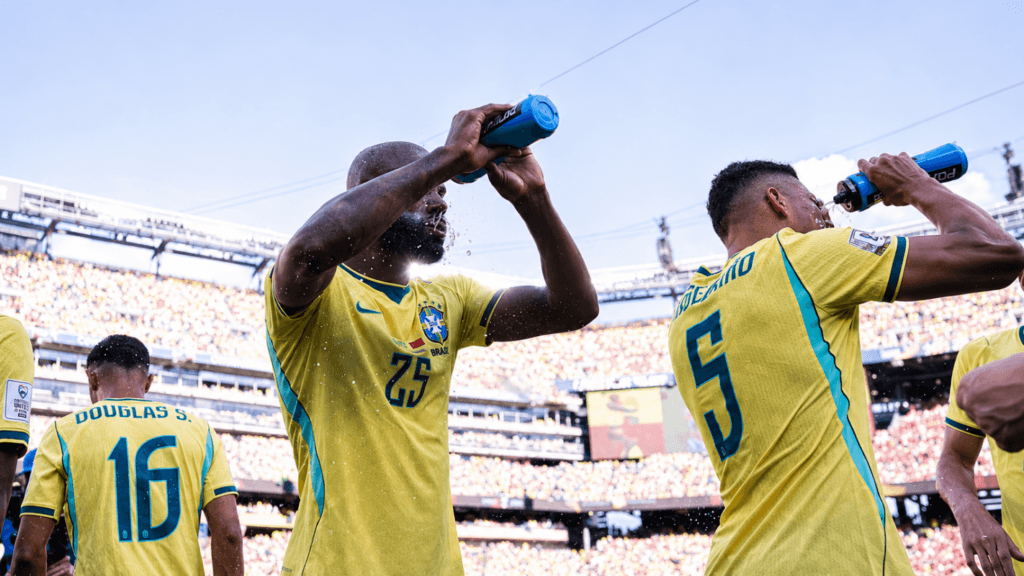
The controversy really began when broadcasters decided how to use those three minutes.
In the US, Fox cut away to full-screen commercials during the opening match, even missing a few seconds of live play when the broadcast returned late. And the backlash was immediate, as fans argued that football’s uninterrupted flow had been sacrificed for advertising revenue. Many called the decision a step toward the commercial-heavy style of American sports. Telemundo took a completely different approach.
Rather than leaving the match feed, the Spanish-language broadcaster kept the cameras on the pitch throughout the hydration breaks. Viewers could watch players talking with coaches, see tactical adjustments, catch replays, and listen to live analysis, all without interrupting the viewing experience. Any sponsorships were integrated into the broadcast instead of replacing it with commercial breaks.
The contrast made one thing clear: hydration breaks didn’t have to feel like television timeouts. They only became controversial when broadcasters chose to monetize them as traditional ad breaks.
That distinction matters because it shifts the conversation from player safety to business strategy. FIFA can argue that the breaks are necessary to protect players in increasingly hot conditions. Broadcasters, meanwhile, have every financial incentive to turn those same breaks into premium advertising inventory.
As long as those two interests are the same, it’s difficult to imagine the hydration breaks disappearing. The bigger question is whether future tournaments will follow Telemundo’s model, keeping fans engaged while still integrating sponsors, or Fox’s model, treating the breaks as six extra minutes of commercial television. That answer could shape not just future World Cups, but how football is broadcast for years to come.
Will hydration breaks stay at future World Cups?
At this point, it’s hard to imagine FIFA abandoning hydration breaks.
From a player safety perspective, rising temperatures and increasingly unpredictable weather make a strong excuse for FIFA in keeping them. They introduced the breaks as a permanent tournament-wide policy iinstead of something used only in extreme heat, arguing that consistent rules are fairer for every team.
After creating what could become over $1 billion in new advertising revenue, broadcasters now have a clear incentive to keep the format. While some fans criticized the commercials, the breaks themselves proved valuable enough that they’re unlikely to disappear anytime soon.
The bigger question isn’t whether hydration breaks will return. It’s whether future broadcasters will follow Fox’s commercial-heavy approach or Telemundo’s model, which kept viewers watching the match while still giving sponsors visibility. That choice could determine whether hydration breaks become an accepted part of football or remain one of its most controversial changes.
Will hydration breaks become a permanent part of sports in general?
The success of the World Cup’s hydration breaks has raised a bigger question: could other sports adopt a similar model?
For sports with few natural commercial breaks, the financial incentive is obvious. More stoppages mean more advertising slots, which makes broadcast rights even more valuable. Some media analysts have already suggested that leagues like MLS (the top tier of American soccer) could benefit from a similar approach. Whether fans would accept it is another matter.
The backlash to the World Cup showed that viewers are far more accepting of breaks introduced for player welfare than breaks that feel designed primarily to sell more ads. If other sports follow FIFA’s lead, they’ll likely face the same balancing act between generating new revenue and preserving the viewing experience.
FAQ
1. Why were hydration breaks introduced at the 2026 World Cup?
FIFA introduced hydration breaks to help players deal with high temperatures and protect their health during matches played across North America.
2. How much money did World Cup 2026 hydration breaks generate for advertisers?
Estimates suggest the new commercial slots created by hydration breaks could generate more than $1 billion in advertising revenue worldwide, with broadcasters selling previously unavailable in-game ad space.
3. How long are the World Cup 2026 hydration breaks?
Each hydration break lasts around 3 minutes, with two breaks scheduled during every match.
4. Did all broadcasters show ads during hydration breaks?
No. Some broadcasters, such as Telemundo, kept coverage on the match during breaks, while others used the time to show traditional commercials.
5. Will hydration breaks become a permanent part of football?
Given the combination of player safety concerns and the new advertising opportunities they create, hydration breaks are likely to remain part of future major tournaments.