Table of Contents
Finding a EUR 29 flight still feels miraculous. The route could cross half a continent, the aircraft costs tens of millions, and somehow the advertised price is less than dinner for two. Then the booking begins. A cabin case costs extra, a checked suitcase costs more, the seats beside your travelling companion are another choice, and then priority boarding appears. The EUR 29 journey ends up closer to EUR 80.
The first price remains technically accurate because it describes a thinner version of the journey than many passengers have in mind. That is why airline baggage fees make more sense as part of the product design than as a random surcharge dreamed up near the end of checkout. The ticket price is written for the search screen, while the baggage fee is written for the passenger.
That sentence explains why baggage fees survived the fuel crisis that helped popularize them and spread from low-cost carriers into the rest of the industry. It also explains why regulators have started paying close attention to the first price shown in flight search results.
Airline baggage fees are younger than they feel
For a long time, checking a normal suitcase was simply part of an economy ticket. Travellers could still pay for an overweight bag or an extra one, of course, though the first checked bag on a regular fare rarely felt like a separate product. That began changing in the United States during the mid-2000s as low-cost carriers separated more services from the fare.
American Airlines made the shift impossible to ignore in May 2008. In an official filing announcing a USD 15 fee for the first checked bag, the airline pointed to soaring fuel costs and a wider industry crisis. Other large carriers followed, and a charge introduced during an emergency soon looked like a permanent feature of flying.

The numbers changed quickly. Bureau of Transportation Statistics data shows that US airlines collected USD 464 million in baggage fees in 2007, USD 1.15 billion in 2008 and USD 2.73 billion in 2009. By 2025, the annual total had reached USD 7.4 billion, almost sixteen times the 2007 figure. That does not mean the fee on an individual bag rose sixteenfold; more airlines adopted the model, passenger numbers grew and the rules became more elaborate. Still, a minor line of revenue became an industry of its own.
The fuel shock opened the door, then airlines discovered that baggage fees could do something a higher base fare could not. They created a second price lever, encountered after the passenger had already chosen the flight, while allowing someone with a small backpack to keep buying the cheapest version.
The cheapest number wins the search
Airline shopping is a strange market because the product is complicated and the comparison screen is simple. A search result usually gives us the departure time, duration, number of stops and one large price. Everything else takes work. The Competition Bureau of Canada found that initial airline search results typically show the lowest basic fare, often without a carry-on bag, while fuller fare options and individual extras appear later in the booking process.
That first number becomes an anchor. We have written about this effect in our guide to cognitive bias in marketing: once a price establishes the reference point, every later amount is judged against it. A EUR 29 ticket with a EUR 35 bag still feels like a cheap flight plus an annoying fee, even when another airline offers a EUR 59 fare with the bag already included.
The presentation changes decisions. In a Marketing Science experiment on drip pricing, 54.5 percent of participants initially chose the airline with the lower base fare when baggage and seat charges appeared later. Only 11.7 percent chose it when the same charges were shown beside the original fare. The total prices had not changed. The order in which people encountered them had.
This gives the baggage fee a second function. It is a product passengers can buy, and it helps the flight compete for the click that begins the booking. An airline that includes a suitcase in every fare has to communicate that value before the customer scrolls past a larger number. Usually, it gets only a few words of small print to make the case.
The suitcase became a revenue buffer
There are real costs behind checked baggage. A suitcase needs check-in infrastructure, security screening, conveyor systems and people to move it between the terminal and the aircraft. It adds weight, takes up hold space and occasionally goes missing, which creates another cost that nobody enjoys discussing at the carousel.
A US Government Accountability Office review found that airlines also consider customer demand, willingness to pay and competitors’ prices when setting optional-service fees. In other words, the amount reflects what the market will accept as well as what the bag costs to carry.
The airline industry’s own forecasts describe ancillary pricing as a flexible buffer. In its June 2026 global outlook, IATA said unbundled pricing allows carriers to spread increases across several parts of the journey, helping them limit the immediate effect on the headline fare. It expects ancillary revenue to rise 12.6 percent in 2026 to USD 165 billion, faster than ticket revenue. Baggage and seat selection are expected to play a large role.
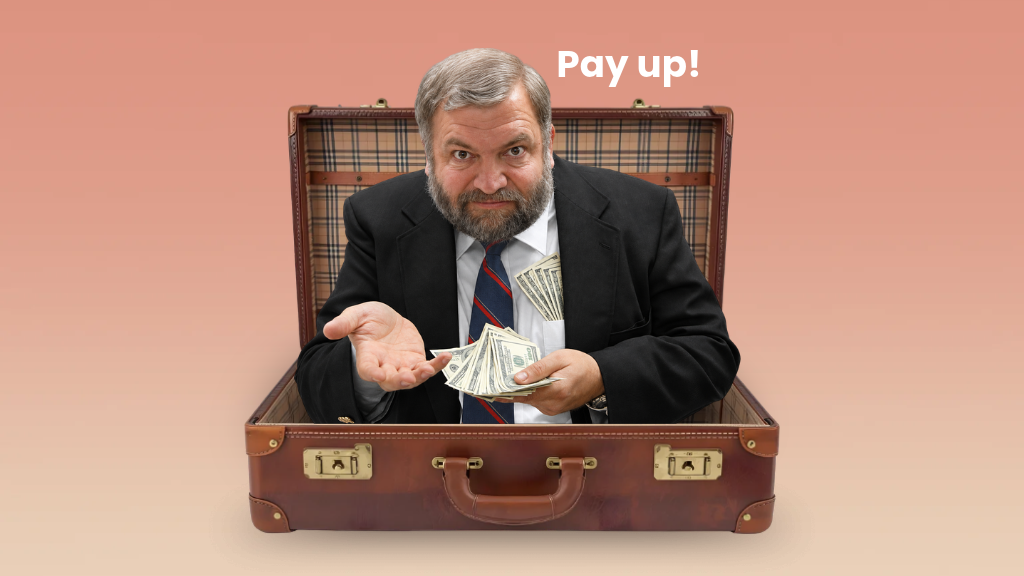
Raising the base fare touches every passenger and immediately changes how the flight appears beside competitors. A bag fee reaches the people who reveal that they need a more complete version of the trip. It can also change by route, season, booking channel or purchase date, which gives the airline far more room to adjust the final amount without repainting the first number everybody sees.
There is a US-specific tax wrinkle as well. IRS Publication 510 states that the 7.5 percent passenger transportation tax does not apply to excess baggage accompanying a passenger on an established airline route. A study of US ancillary pricing estimated that untaxed baggage and seat reservation fees reduced revenue flowing to the Airport and Airway Trust Fund by 4.0 to 4.6 percent. This is not the global reason baggage fees exist, though it makes unbundling a little more attractive in one of the world’s largest aviation markets.
The fee prices the passenger as much as the bag
A suitcase tells an airline something about the person buying the ticket. Someone taking a two-day trip with a backpack can walk away from the fee. A family travelling for a week probably cannot, and a passenger who reaches the airport with an unregistered bag has even less room to negotiate. The physical service is similar, while the willingness to pay changes dramatically.
That is why the fee works as market segmentation. A peer-reviewed study on the economics of airline bag fees found that base fares fell after airlines introduced baggage charges, though the reduction was smaller than the new bag fee. Passengers who checked a bag therefore paid more for the combined journey on average, while passengers who travelled without one paid less.
Unbundling can genuinely lower the price for somebody travelling light. It can also raise the total for anyone whose trip requires luggage, which includes many families, longer holidays and people carrying equipment. The popular promise that everybody pays only for what they use becomes less appealing when an apparently optional service is practically unavoidable for the trip being taken.
The point where the fee appears matters just as much as the amount. Research on consumer reactions to airline ancillary fees links unexpected fees with anger, perceived betrayal and worse attitudes towards the provider. A passenger may accept an expensive total and still resent the way it was assembled, particularly after spending ten minutes entering names, dates of birth and passport details before seeing the useful comparison.
Budget airline logic spread across the industry
Low-cost carriers made the structure visible because ancillary revenue sits near the centre of their model. Ryanair reported EUR 4.99 billion in ancillary revenue for its 2026 financial year, about EUR 24 per passenger and roughly 32 percent of total revenue. Wizz Air reported EUR 2.53 billion in ancillary revenue, equal to 44.5 percent of its total. Those figures include far more than bags, from priority boarding and reserved seats to insurance and commissions, but baggage remains the clearest expression of the idea.
Full-service carriers gradually adopted the same architecture through basic economy and branded fares. The aircraft seat may be identical, yet one fare includes a checked bag, another adds flexibility, and a third offers little beyond the legal right to occupy the seat until the aircraft lands. A single flight can now support several products without changing the cabin.
Southwest Airlines is an especially useful case because free checked bags had been part of its identity for years. In 2025, the company ended the two-free-bag policy for most passengers while preserving benefits for selected fare classes, status members and credit-card customers. Its 2025 annual report later cited new bag-fee revenue as one reason passenger revenue increased.
That change shows how far the fee has travelled. A free bag once differentiated Southwest from competitors; now the waiver can reward loyalty, encourage a more expensive fare or make a co-branded credit card more attractive. The bag generates revenue when somebody pays and marketing value when somebody earns the right not to pay.
Regulators are changing the comparison screen
Europe has started addressing the part of the system passengers see first. Under the EU passenger-rights rules approved in 2026, airlines and booking platforms must display a fare that includes hand baggage by default before the booking process begins. Carriers can still sell a cheaper fare to someone who voluntarily travels without it, and one small personal item remains included. The rules take effect after a transition period.
This does not abolish unbundling. It changes which bundle becomes the reference point. When the bag-inclusive fare appears first, the bag-free option looks like a deliberate discount for travelling light. When the bag-free fare appears first, the same suitcase feels like an extra charge. Those two screens can produce different choices even when every available price is identical.
The United States currently takes a lighter approach. A stronger 2024 disclosure rule was vacated by a federal appeals court in February 2026, and the Department of Transportation restored the earlier disclosure framework in July. Airlines and ticket agents must warn that baggage fees may apply and direct customers to the relevant information, rather than place a passenger-specific bag price beside every initial fare.
Transparency will not make baggage free, nor does it need to. It makes the versions of the journey easier to compare, which puts pressure on the part of the business model that depends on a very low first number and a more expensive total discovered later.
Who benefits from unbundled fares
Cheap flights are genuinely useful, and their growth cannot be credited to baggage fees alone. Low-cost airlines also reduced real operating costs through dense seating, quick turnarounds, direct online sales and frequent use of cheaper regional airports. A passenger who can travel with one small bag may reach another country for a price that would have sounded absurd a generation ago.
The difficulty starts when travelers compare unlike products. Our article on changing buyer spending habits discusses how heavily consumers now rely on price-comparison tools. Those tools are only as useful as the information placed side by side. A flight without baggage and a flight with baggage may share a route and departure time, but they are not the same purchase for somebody carrying a suitcase.

Passengers can protect themselves by comparing the final price for the journey they will actually take, including both directions, and by checking whether a bag costs more when added later or at the airport. Still, the more interesting lesson belongs to marketing. When a marketplace reduces a complicated product to one visible number, businesses learn to optimise that number and recover margin through details the ranking does not show. Hotel resort fees and food-delivery charges follow a similar logic; airlines simply attach it to something we can wheel through a terminal.
Conclusion
Cheap flights and expensive bags grew together because they perform different jobs. The base fare attracts attention and competes in search results. The baggage fee earns more from the passenger who needs a fuller version of the journey. The fuel crisis accelerated the arrangement in 2008, and the industry then refined it into a flexible system worth billions.
Some travellers come out ahead, particularly those who can pack lightly. Others pay more than they would have paid under an inclusive fare, and the academic evidence suggests that checked-bag passengers often fall into that group. Regulation can make the comparison clearer, though the underlying incentive remains as long as one prominent number determines which flight receives the click.
The next time a EUR 29 fare becomes EUR 80, remember that the ticket was priced for the comparison screen and the suitcase was priced after the airline knew more about the trip you were taking. They are two halves of the same pricing system.
FAQ
1. Why do airlines charge baggage fees?
Airlines charge for bags to cover handling and weight-related costs, keep the advertised base fare lower and earn more from passengers who need additional services. The amount also reflects demand, competitors’ prices and when the bag is purchased.
2. Did baggage fees make flights cheaper?
They lowered the total price for some passengers travelling without checked luggage. Research found that base fares generally fell after bag fees were introduced, though by less than the fee itself, so passengers checking a bag paid more on average for the combined journey.
3. When did airlines start charging for checked bags?
Some low-cost US carriers introduced broad checked-bag charges in the mid-2000s. The model spread quickly after American Airlines announced a USD 15 first-bag fee in May 2008 and other large carriers followed.
4. Why can baggage cost more at the airport?
Airlines use lower advance prices to encourage passengers to declare bags earlier, which helps planning. Airport prices also reach customers with less ability to change their booking, and many carriers now vary ancillary prices by route, timing or demand.
5. Do airlines have to include carry-on baggage?
Rules depend on the market. The EU’s 2026 passenger-rights reform requires one personal item at no extra cost and makes a hand-baggage-inclusive fare the default display, while still allowing cheaper offers for passengers who travel without a larger cabin bag.