Table of Contents
Black Friday 2026 falls on November 27th, although by the time Halloween arrived the season was already well under way. In an August survey of 1,004 US consumers, Gartner found that 57% planned to begin holiday shopping in October or earlier, and almost one in three expected to start in September. The old idea of waiting for the Friday after Thanksgiving has become rather quaint.
The National Retail Federation found a less dramatic figure, with 43% of US shoppers saying they would start browsing or buying before November. Its survey also found that 64% still expected to do most of their shopping during Thanksgiving weekend. The surveys use different wording and were carried out at different times, so the percentages should be handled separately. Taken together, they describe a familiar sort of shopper: someone who starts a list early, checks prices for weeks and keeps the card in the wallet until the sale feels real.
We have already written about how Black Friday began and the campaigns that turned it into a global event. What has changed since then is the amount of calendar it occupies. Black Friday now has a long runway for research and a very familiar spike at the end, which leaves brands with several extra weeks to fill and shoppers with several extra weeks to wonder whether a better discount is coming.
Why shoppers are starting earlier
There is a fairly ordinary reason for the early start: people need more time to make the money work. Nearly 60% of the consumers in Gartner’s survey said they had less available for the holidays than they did a year earlier. Two-thirds planned to buy for fewer people and 32% expected to spend less on gifts. The NRF found that 56% believed the economy would affect their holiday spending, while half of those who start early said they do it so the cost can be spread over a longer period. Promotions came second, at 37%.
Of course, starting to shop can mean almost anything now. It might be a product saved on Instagram, a screenshot sent to the family group chat or a wish list that will be ignored until somebody asks for it three days before Christmas. TikTok Shop reported that posts using #holidaygiftideas rose 248% from August to September on its platform. That is TikTok’s own data and says more about activity on TikTok than the whole retail market, but it does show how early the search for ideas begins.
October therefore matters even when very little is being bought. A useful comparison, a clear answer about sizing or a gift guide that understands the difference between a present for a colleague and a present for a partner can earn a place on the shortlist. The transaction may come later, possibly much later, and that is fine as long as the brand is still remembered when it does.
A longer season with the same budget
Deloitte’s survey of 4,000 US consumers produced one of those figures that looks optimistic until the rest of the page catches up with it. Households planned to spend an average of $1,654 during the 2026 holiday season, 4% more than the year before, while 79% expected prices to be higher. Spending more dollars does not automatically mean taking home more gifts, and it certainly does not mean feeling relaxed about the bill.
Deloitte also identified a group it called value seekers, shoppers using at least five ways to cut costs. They made up 38% of the sample and planned to spend 12% more than everyone else. That sounds odd for a moment, then it makes sense: somebody who checks several websites, waits for a code, uses loyalty points and turns up during the best sale can be both price-conscious and ready to spend. They simply want to feel that they did the homework first.
The NRF expects US holiday sales in November and December to rise 4.2% and pass $1 trillion for the first time. It is an impressive total, although it is measured in dollars and higher prices help lift it. A household quietly removing two people from the gift list can exist inside a record retail season without causing any contradiction.
Those extra weeks give brands more time to compete for a share of the budget that already exists. They do not add another pay cheque to it.
Black Friday still controls the calender
If the early promotions had replaced Black Friday itself, we would expect spending to flatten across the season. Adobe’s forecast points elsewhere. It expects US online sales to reach $95.8 billion in October, up 8% from 2025, followed by $47.5 billion during Cyber Week alone. That single week would account for 17.3% of all online spending in November and December, with Cyber Monday forecast at $15.1 billion and Black Friday at $12.9 billion.
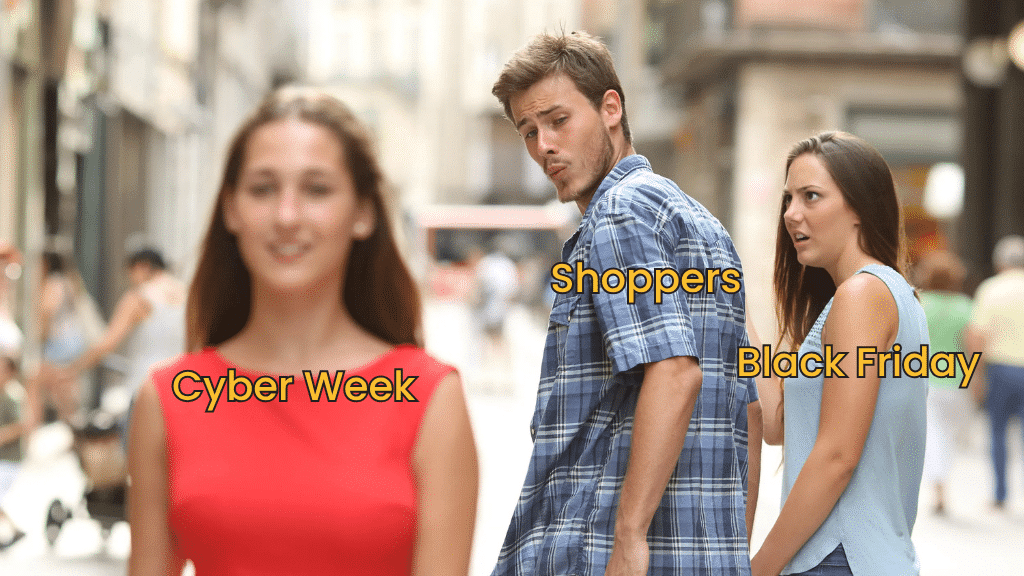
The expected discounts explain part of the rush. Adobe sees them reaching about 14% in early November, 21% just before Thanksgiving and 30% during Cyber Week. Most shoppers will never know those exact percentages, nor should they need to, because years of increasingly early sales have taught them the general pattern. The first Black Friday email is probably a preview, and the stronger offer is likely to arrive closer to the date.
This is how somebody can spend six weeks shopping and still buy everything over one weekend. The early period is useful for comparing products and deciding what deserves the money, while Thanksgiving weekend provides the price and the deadline that finally settle the matter.
The problem with two months of urgency
People do want advance notice. In a 2026 survey across eight countries, 58% told Sinch they wanted Black Friday and Cyber Monday messages at least a month before the event. An early email gives them time to make a list, move money around or decide whether the offer is worth waiting for. That is useful information, and there is no reason to hide it until the last week of November.
The trouble begins when advance notice arrives dressed as a final warning. Once a brand has sent its first LAST CHANCE email in October, every later deadline looks negotiable. The customer may still open the messages, partly out of habit and partly to check whether the discount has grown, but the urgency has already been spent.
A separate US survey of 1,034 consumers with household incomes above $75,000 found that 46% had unsubscribed because a brand kept sending the same promotions, and 92% wanted control over how often they received marketing and what kind. The income threshold makes this a narrower sample, so it should be read with that limitation in mind. Even so, the underlying complaint is hardly exotic. The fifth version of the same sale email is still the same email.
A longer campaign needs a reason to keep moving. New information, a change in the offer or a genuinely useful reminder gives people something to respond to; another countdown with a different background colour usually does not.
What brands should do with extra weeks
The extended calendar becomes easier to manage when each part of it has a different job. That sounds obvious, but Black Friday campaigns often reach full volume in October and then have nowhere left to go.
October helps people decide
October content should answer the questions people ask while they are still narrowing the list. Comparisons, demonstrations and gift guides all belong here, along with the less exciting details that often decide a purchase, such as sizing, compatibility, returns and the actual delivery cost. A wish list or price alert also gives the shopper a convenient way back when the sale begins.
Early November builds confidence
By early November, the shortlist is taking shape and proof becomes more useful. Reviews, stock information and clear delivery dates remove small reasons to hesitate. Brands offering early access should also say whether the price is protected, because buying early feels foolish if the same product is 15% cheaper a week later.
December solves the last practical problem
After Cyber Week, attention moves to availability, shipping cut-offs, store collection and presents for the person everybody somehow forgot. A guaranteed delivery date may matter more than a slightly larger discount by then. This part of the season has its own anxieties and does not need to keep pretending it is still Black Friday.
Channel choice deserves the same restraint. Sinch found that email was the leading global preference for Black Friday messages at 55%, while 58% of Gen Z preferred social advertising. A brand can use the channel its customers actually notice and allow the others to do less, which is often a better plan than copying the same promotion into every available feed and inbox.
Black Friday still pulls the season towards it
Black Friday remains the point the rest of the season bends around. A shopper can discover a product in September, compare it through October and wait until Thanksgiving weekend to buy it, especially when the discounts tend to deepen along the way. Early browsing and late purchasing belong to the same journey.
The extra weeks are valuable when they help somebody reach a decision without becoming tired of the brand before the sale even starts. Once the real offer arrives, it should be easy to understand and have an end date that means what it says. A campaign that has already used its loudest language in October has left itself very little room for November, which is why starting earlier is the easy part and keeping the campaign useful until 27 November is where the actual work begins.
Conclusion
Although the most detailed 2026 spending data comes from the United States, the earlier Black Friday season reaches far beyond it. Sinch surveyed consumers across eight countries and found that 58% wanted Black Friday and Cyber Monday messages at least a month in advance. For consumers, this creates a longer window for comparing local and international retailers, checking delivery costs and deciding whether an early offer is genuinely worth taking. It also means several more weeks of promotional pressure, which makes exaggerated deadlines easier to recognise and ignore.
For marketers, Black Friday now acts as an international retail season with noticeable differences from one market to another. Pay cycles, delivery times, import charges and the strength of Black Friday traditions all vary by country. A campaign built around the US Thanksgiving calendar may feel awkward elsewhere, particularly when shoppers are planning around monthly salaries, local sales or whether a cross-border order will arrive before Christmas. International campaigns can begin early, but their timing and promises still need to make sense locally.
FAQ
1. Why is Black Friday starting earlier every year?
Retailers are competing for attention before the main sale weekend, while shoppers are giving themselves more time to spread costs and compare prices. Much of that early activity is research or list-making, so an October start does not always produce an October sale.
2. Are people actually buying earlier?
Some purchases are moving forward, although a large share of early activity still consists of browsing, saving products and watching prices. The National Retail Federation found that 64% of surveyed US shoppers still expected to do most of their shopping during Thanksgiving weekend.
3. Does a longer Black Friday season make people spend more?
There is no simple link between an earlier start and a larger budget. The 2026 surveys show higher planned spending alongside strong concern about prices, and many households are starting sooner because they need more time to manage the same limited amount of money.
4. Is Black Friday still the main shopping weekend?
Yes, especially for online retail in the United States. October sales are growing, but Adobe still expects Cyber Week to account for 17.3% of all online spending in November and December.
5. How can brands avoid Black Friday marketing fatigue?
Use the early weeks to help people choose, then save the strongest offer and real urgency for the main sale period. Repeated countdowns and identical promotions quickly teach customers that another email can be ignored.