Table of Contents
Introduction
GTA 6 is one of the biggest new releases of 2026, yet part of its appeal comes from somewhere familiar. The game returns to Vice City, a place Rockstar first introduced more than two decades ago, and its preorder bonuses include a collection called the Vintage Vice City Pack. A new game, built for current consoles and modern audiences, is being sold partly through memories of an older one.
GTA is hardly alone here. Y2K clothing has returned to shops. Old logos are being restored after years of simplification. Film casts reunite for commercials, discontinued products briefly come back and songs from the 1980s appear in ads aimed at people who were born in the 2000s. During the 2026 Super Bowl, Xfinity even reunited the original Jurassic Park cast to imagine what the film might have looked like with modern internet access.
After enough examples, this stops looking like the occasional affectionate reference. The past has become a regular part of how new products are introduced.
The practical reason is fairly simple. Something completely new requires explanation. A familiar character, melody, package or visual style arrives with context already attached. People recognise it, understand roughly what it represents and often feel something before the actual sales message has properly begun. That is quite useful when an ad may have only a few seconds to earn attention.
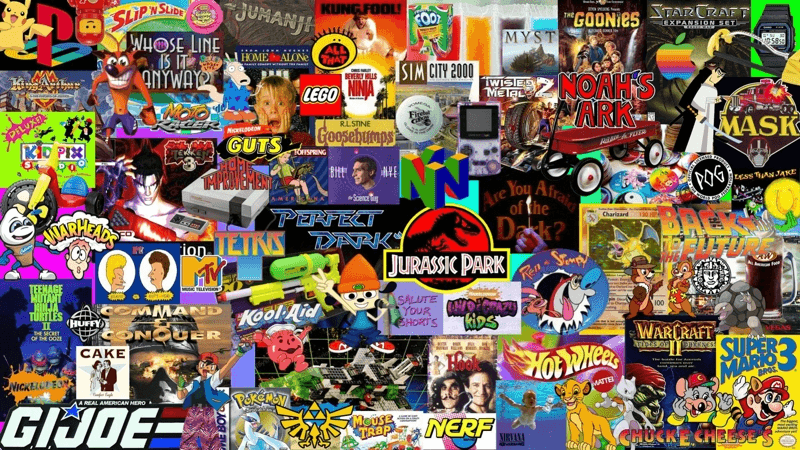
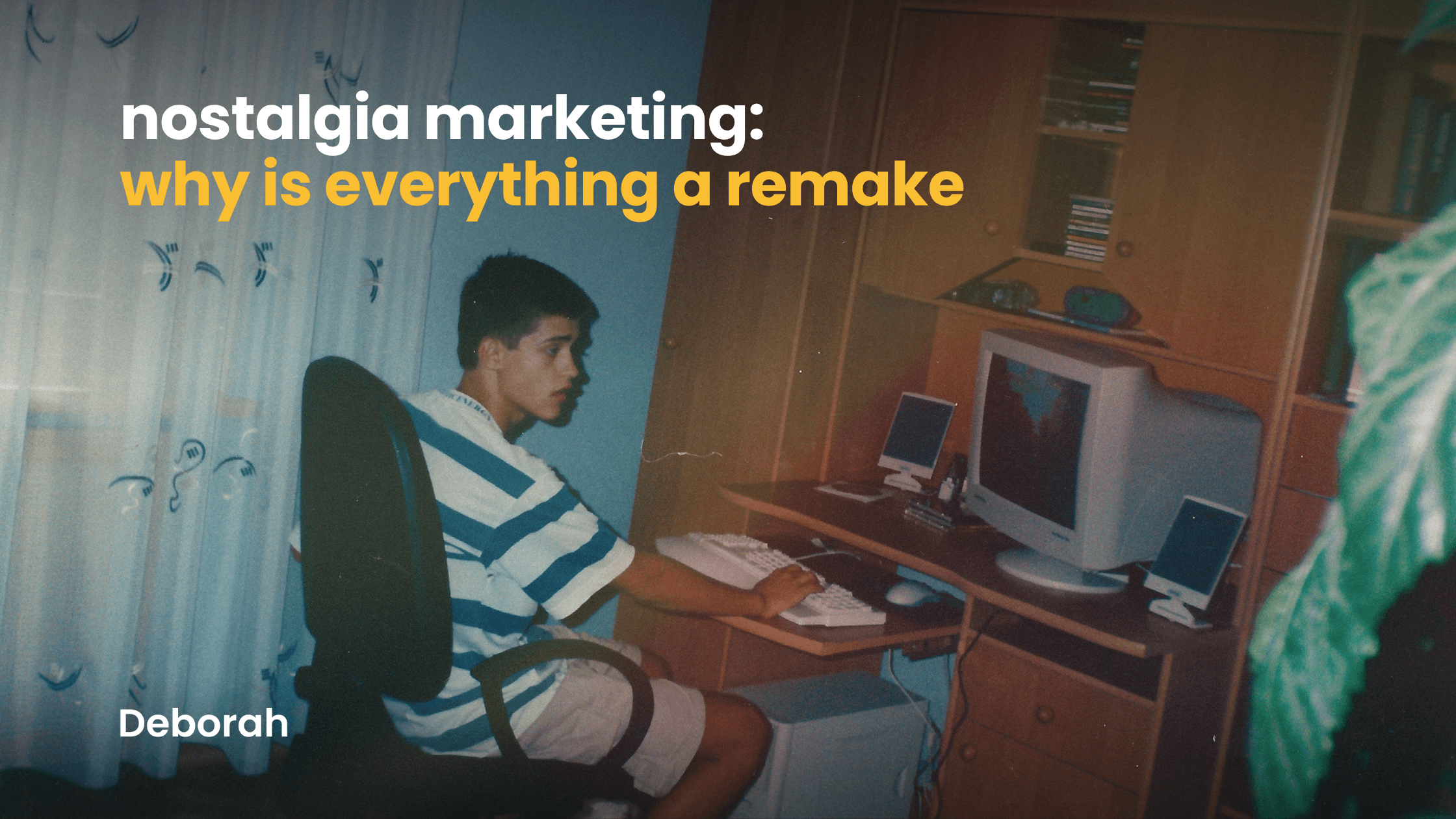
This is the basic territory of nostalgia marketing, although the term covers more than brands placing an old song over new footage. Nostalgia can come from a product someone used as a child, a show their family watched or an era they discovered years later through films, TikTok edits and old photographs. People can even feel attached to periods they never experienced themselves, which explains the slightly strange sight of teenagers becoming nostalgic for flip phones and early internet graphics.
Some of this for sure comes from a shortage of new ideas. That is difficult to rule out entirely. Still, nostalgia wouldn’t appear this often if it didn’t perform a useful job. It gives brands access to feelings and associations that already exist, sometimes built over decades. The more interesting question is what happens after that recognition. A memory can’t automatically make the current product good, relevant or worth buying.
So why are brands relying so heavily on nostalgia now, and how much can they borrow from the past before they start looking stuck there?
What is nostalgia marketing?
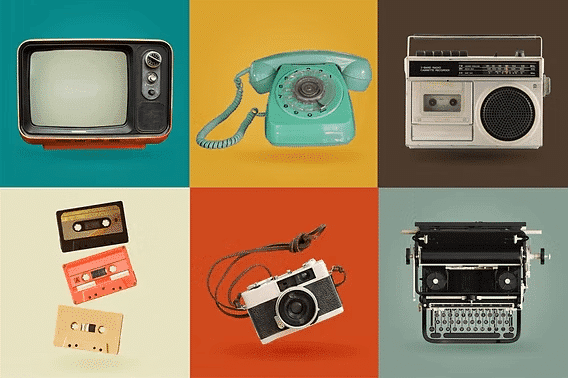
Nostalgia marketing is the use of familiar references from the past to influence how people feel about a current product, brand or campaign. Those references can take almost any form: an old logo, a discontinued flavour, a former slogan, a television character, a particular typeface or the opening sound of a game console someone has not touched in twenty years. The reference itself is only part of the process. What’s more important is the memory attached to it.
A biscuit wrapper from the 1990s may remind someone of school breaks. A song brings back long drives in the family car. Even something as ordinary as an old football shirt can recall a tournament, a summer or a group of people who watched the matches together. The product appears in the memory, although it is rarely the most important part of it.
Brands use those associations because they can be transferred, at least temporarily, to whatever is being promoted now.
This also explains the difference between retro styling and nostalgia marketing. An advertisement can look old without making anyone nostalgic. Retro design is a visual style. Nostalgia begins when that style connects to a personal memory or to a familiar idea about an earlier period. A grainy filter and a 1970s font might simply look attractive. Add a recognisable jingle or a product people remember from childhood, and the response becomes more personal.
Not every nostalgic response comes from direct experience, either. Some nostalgia is personal, built from things that happened in someone’s own life. Some is collective, connected to widely shared events, entertainment or cultural habits. There is also a more indirect form, sometimes called historical or vicarious nostalgia, in which people feel drawn to a period they never actually lived through. They know it through photographs, films, family stories and, increasingly, carefully edited clips online.
This is why nostalgia marketing can reach a broader audience than its source material might suggest. The person who remembers an object and the person who discovered it thirty years later may respond for different reasons, yet both recognise what it is supposed to represent.
A review of research on nostalgia and consumer behaviour suggests that many of its effects on advertising and product choice are connected to feelings of social closeness. That makes sense. Our memories tend to include other people, even when the thing that triggers them is only a packet, a song or an old television advert.
Once nostalgia is understood as a shortcut to memory, identity and belonging, its popularity becomes easier to explain. The next question is why that shortcut can be so effective.
Why the past is so easy to sell
Nostalgia’s main advantage appears before anyone decides to buy something. Familiar references are easier to approach.
A completely unfamiliar product comes with some work. What is it? Who is it for? Is it any good? Something recognized from the past has already answered some of those questions; even if the answers are based more on feeling than evidence. An old logo suggests that a brand is established and a returning product feels less risky because people saw it before. Familiarity creates a sense of reassurance, which can be surprisingly useful when consumers are faced with endless versions of essentially the same thing.
Memory helps by doing some selective editing. People remember playing an old game with friends, watching cartoons on Saturday morning and hearing a particular song during a good summer. They are less likely to remember the loading screens, the bad episodes or the fact that the snack they loved was probably much smaller than they recall. The past used in advertising usually resembles a highlights reel, with the dull and irritating parts removed.
But the emotion isn’t fake. Nostalgic memories help people feel that their past and present belong to the same continuous story. In a series of experiments, researchers found that nostalgia strengthened this sense of self-continuity, in part by increasing feelings of belonging and connection.
Nostalgia also gives a product a story before the campaign has told one. A revived trainer design may carry associations with a particular sport, musician or period of street culture. A new design has to build those associations over time. The older one arrives with them, slightly worn and occasionally exaggerated, but already understood.
But of course, recognition only makes the introduction easier. It can’t guarantee that someone will like the product, and research on nostalgic advertising shows that its effectiveness depends on the situation. A reference that has meaning to one group can mean nothing to another. It could even remind people that the earlier version was better.
Still, the basic appeal is clear. The audience has already done part of the work by giving the past its meaning. Brands find ways to attach that meaning to something they can sell today.
How nostalgia reaches people who were never there
Someone born in 2005 can feel attached to the 1990s without remembering any of them. The decade reaches them through old films, family photographs, archived commercials, playlists and thousands of carefully selected clips online.
Researchers call this vicarious nostalgia, a connection to a period outside someone’s own living memory. Studies of nostalgia in advertising suggest that it can shape how people understand a brand’s history and strengthen emotional attachment to it.
Social media has made this easier. Entire periods are reduced to a set of recognisable details: flip phones, disposable cameras, low-rise jeans, video rental stores and slightly terrible computer graphics. The inconvenient parts of the era rarely make the edit.
This changes how nostalgia marketing works. Brands no longer have to wait for a generation to grow older and miss its youth. A younger audience can learn the visual language of an earlier period, adopt it and give it new meaning.
The useful takeaway is that nostalgia can now be inherited. People do not need the original memory if the reference offers a world they would like to imagine themselves in.
GTA 6 and the value of returning to Vice City
GTA VI shows how a familiar world can be used without simply rebuilding the old one.
Vice City first appeared as the setting of Rockstar’s 2002 game, where it was closely associated with 1980s music, fashion and Miami excess. GTA 6 returns to a modern version of the city as part of the larger state of Leonida. It has new protagonists, Jason and Lucia, and a culture shaped by smartphones, livestreams and social media.
Rockstar still understands the value of the older game. GTA 6 is scheduled for release on 19 November 2026, and preorders include a “Vintage Vice City Pack” that deliberately refers back to the city’s neon-heavy past.
Vice City gives existing players an immediate point of recognition. At the same time, Rockstar has moved the setting forward rather than preserving it as a museum piece. Players are returning to a name they know, but the place itself has changed.
That is the more useful lesson for brands. Familiarity can open the door, while new ideas give people a reason to stay. The strongest nostalgia marketing treats the past as material to build with, rather than a finished product to reproduce.
When nostalgia becomes a creative shortcut
Once nostalgia proves effective, it is tempting to use it as the entire campaign.
Bring back the old packaging. Hire an actor from a popular film. Play the first few notes of a familiar song and wait for the comments to fill with “I remember this.” The audience recognises the reference, the post receives attention and the campaign appears to have worked.
Recognition and relevance are still separate things.
A revived character may create a brief reaction without saying anything useful about the product. An old design may attract existing fans while confusing everyone else. Repeated often enough, nostalgia also begins to feel less like affection and more like a brand searching through its own cupboards because it has run out of ideas.
A simple test helps here: remove the nostalgic reference and see whether the campaign still has a point. If nothing remains, the memory was doing all the work.
The problem lies in asking the past to replace an idea. Good nostalgic advertising adds a new context, joke or perspective. It gives the reference a reason to exist today, because recognition can earn a moment of attention. What happens after that still depends on the creative work.
The past gets the attention, but the present has to deliver.
Companies keep returning to the past because they can extract an audience, and a story already comes attached. In a crowded market, that is difficult thing to resist.
The problem comes when every brand begins searching the same cultural archive. Reboot after reboot; old logos return and another discontinued product is brought back for a limited time only. Eventually, familiarity starts to feel predictable. The past is full of ideas, but it is still a finite resource.
The better examples give an old reference a new job. They connect it to a current product, audience or cultural moment and allow it to develop. GTA 6 returns to Vice City after more than two decades, although the city, characters and world around it have moved forward. That return carries more weight because something has changed.
A useful way to judge nostalgia marketing is to ask what the campaign contributes to the original memory. If the answer is only “it reminds people of it,” the idea probably has a short life.
Nostalgia can borrow attention from yesterday. The harder task is creating something people may feel nostalgic for tomorrow.
FAQ
1. What is nostalgia marketing?
Nostalgia marketing uses familiar references from the past to create an emotional connection with a current product, brand or campaign.
2. Why is nostalgia marketing effective?
Familiar images, sounds and products are easy to recognise and often carry positive memories. This can help a campaign gain attention and feel more trustworthy.
3. What are some examples of nostalgia marketing?
Common examples include returning products, restored packaging, old jingles, film reunions, retro designs and modern sequels set in familiar worlds.
4. Why does nostalgia marketing appeal to Gen Z?
Gen Z often discovers earlier periods through films, music, family stories and social media. This can create an attachment to eras they never personally experienced.
5. What are the risks of using nostalgia in advertising?
The reference may feel irrelevant, overused or lazy. Nostalgia can attract attention, but the current product still needs to offer something worthwhile.