
Table of Contents
The quote that won’t die
The year is 2016: fidget spinners are selling big; Pokemon Go has made people see the outside for the last time (maybe), and the world geopolitics changed forever (google “list of elections in 2016”).
But another thing that happened, or was rather said, in 2016 was “You’ll own nothing and be happy”. This quote is associated with the World Economic Forum (WEF) 2016. Based on an essay written by Danish politician Ida Auken, it’s basically a mantra that envisioned a future in which a hypothetical person relies on a “sharing economy” for many of their needs.
The original essay was controversially titled “Welcome to 2030. I own nothing, have no privacy, and life has never been better”, which was later changed to “Here’s how life could change in my city by the year 2030” on WEF’s website.
It described life in an unnamed city in which the narrator doesn’t own a car, a house, or any clothes. Instead the narrator relies on shared services for all of his daily needs.
Fast forward 10 years and cynics among you are probably saying “yup, we’re already living in it”. Will the world 4 years from now really look like the dystopic life of the unnamed narrator in the 2016 essay? Or is it just a paranoid panic, that people spread because of a lack of imagination?
Ownership used to be the default
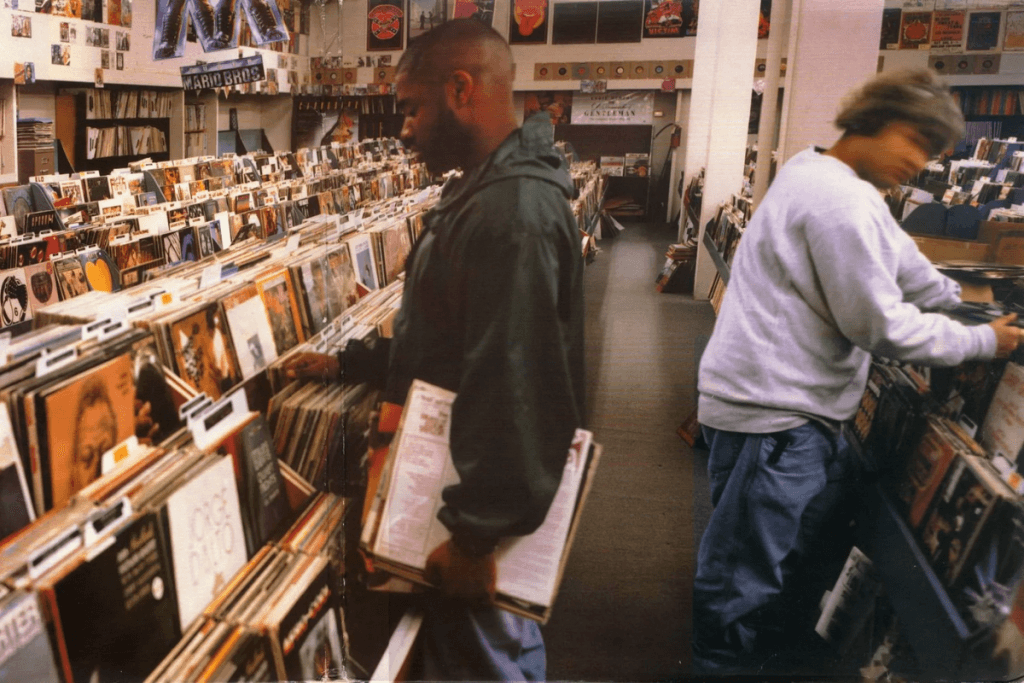
For most of the 20th century, owning a product was simply how commerce worked. You bought a piece of music on a vinyl, a movie on VHS, or a piece of software on a CD, and it was yours. You kept it, sold it, lent it, or used it until it wore out. The economic model was straightforward: one transaction, one owner, and no recurring payments attached.
Goods were durable, updates were optional, and once you paid – your relationship with the product ended at the point of sale. Software was no different. Early versions of Microsoft Office came on physical media and were sold with a perpetual license, meaning your right to use them didn’t expire once you paid. The company’s incentive was to sell as many units as possible whenever a new version came out.
Everyday physical goods followed this pattern as well of course: you bought a car, you owned it; you bought a set of encyclopedias, they sat on your shelf for decades; you bought a mixer, it stayed in your kitchen until it broke.
Over time, certain industries experimented with access-based approaches early on. Newspapers and magazines had long used subscription models, and online portals already hinted at ongoing access over ownership. But for the average consumer, the idea that nearly everything could be rented or accessed rather than owned was still unusual well into the 1990s and early 2000s.
That started changing as digital distribution and cloud technologies lowered the cost of providing continuous access. Companies then realized that constant revenue made more money than one-off purchases. In other words, the default expectation that buying something once meant you owned it began to crumble. This set the stage for the subscription domination that we see today.
So why is everything becoming a subscription?: Technology enabled it, executives approved it
Once the Internet infrastructure matured and everybody got used to being a “digital native”, an opportunity arose for subscriptions to take the centre stage. Technology made it easier to update products and to manage customers and recurring billing. Tech executives couldn’t ignore the economics of this equation.
At its core, subscription transition was a strategic decision to increase revenue; companies strive for a predictable cash flow. And one-time sales were always going to be too volatile, too unpredictable to appease the perpetual growth nature of big tech companies. With one-time purchases, sales are going to hit peaks, taper off and maybe end all-together. This of course forces companies into cycles of new releases and marketing pushes. Recurring revenue avoids all of that and brings in a more steady cash flow. Monthly or annual payments help smooth out earnings, making financial planning for the next 5-10 years easier. Investors reward this stability with higher valuations.
This wasn’t a neutral side-effect of better tech. It was an intentional shift with clear business incentives:
- Reliable revenue over spikes and troughs
Subscriptions create predictable income streams instead of one-time, unpredictable sales. This steadiness reduces risk for companies and investors alike. - Higher customer lifetime value
Instead of one sale, companies earn ongoing payments for as long as someone keeps paying, often exceeding the revenue they would have earned from a single purchase. - Improved investor appeal
Financial markets consistently reward recurring revenue models with higher multiples because they signal future cash flow and lower volatility. - More control over product lifecycle
With subscriptions, companies dictate update schedules, pricing tiers, and feature bundles on their terms, reinforcing dependence on ongoing payments.
By that point, the incentive structure was obvious. Subscriptions meant steadier cash flow, stronger valuations, and more leverage over customers.
And it didn’t stop with software or streaming. Hardware companies started locking premium features behind paywalls. Carmakers experimented with charging monthly for heated seats and performance upgrades. Fitness brands required memberships for expensive equipment.
Technology opened the door. Profit pushed companies through it. Leadership teams made the call because recurring revenue is safer, stickier, and usually more lucrative than hoping customers come back for the next version.
Convenience vs control
One of the reasons subscriptions took off is simple: they’re convenient. Paying a monthly fee for ongoing access to something you use regularly is easy to rationalize. Music and video streaming services let you skip the (some would call) inconvenience of buying individual albums or movies. Delivery subscriptions handle essentials without reordering. Software updates itself without you thinking about it. All of this feels like freedom.
But convenience is only one side of it.
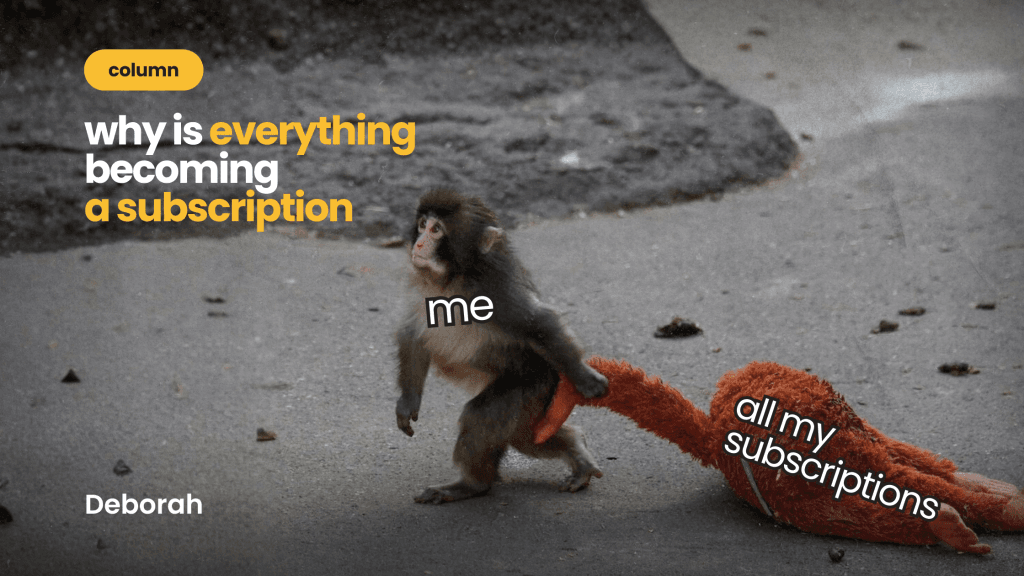
Subscriptions trade control for access. You don’t really own what you use. If you stop paying, you lose access, even if you’ve invested more over time than you would have with ownership. This is clearest in digital media and software: when you cancel Netflix or a productivity suite, the content and tools vanish. You’ve paid again and again for something you could once have owned outright.
As mentioned before, this pattern has spilled into physical products and services. An example I found particularly hilarious is doorbells and security cameras requiring ongoing payments just to retain video access.
More than convenience, these changes mean recurring costs become part of everyday life, sometimes without a corresponding increase in lasting value. Many consumers describe this as a sense of renting their own world rather than owning it.
With subscriptions come additional costs and frustrations that often go unmentioned:
- Subscription fatigue, where consumers juggle many monthly fees and feel financial pressure.
- Loss of ownership, because remember, what you have is access, not ownership.
- Hidden hike risks, since companies can raise prices over time and consumers bear the burden.
- Cancellation friction, where ending a subscription can be deliberately difficult (think about the last time you cancelled a subscription. How many steps did it take?).
Still, it’s fair to acknowledge why people sign up: predictable costs, ongoing improvements, and personalized experiences can be real value adds when subscriptions are done well.
The real issue isn’t whether subscriptions have value. They do. The issue is whether the trade-off has tilted too far, where ease and automation come at the cost of ownership and lasting control. More and more people are starting to feel that the exchange no longer favors them.
A generation that grew up streaming
One of the more striking shifts in the subscription era is how younger generations experience ownership. Many of today’s adults grew up with physical media (CDs, DVDs, Blu-rays, VHS tapes). The default assumption that paying once meant something belonged to you. For digital natives (or people who’ve lived their whole lives with constant internet access), that assumption never fully took root.
Studies show that people attribute less psychological value to digital goods than to physical ones, partly because digital items don’t feel “owned” in the same way physical objects do.
Meanwhile, surveys consistently show that younger people embrace access-based services at very high rates. Nearly all members of Gen Z and most of Millennials report having at least one subscription service, and preference for subscriptions tends to be higher among younger people compared with older generations.
For many younger people, there is no memory of shelves lined with CDs or software discs tucked away in drawers. Ownership, in the traditional sense, was never part of their everyday experience. That inevitably shapes how they think about the things they use. When everything lives in the cloud and access can disappear with a cancelled payment, the idea of possession loses meaning.
Is this sustainable? Subscription fatigue and backlash
Subscriptions have been convenient, there’s no doubt about that. You got predictable costs, continuous updates, and access without big upfront big payments. But as the model spreads into every corner of our lives, cracks are showing. Lots of people are starting to push back, and there are signs that this endless push toward subscriptions could hit a limit.
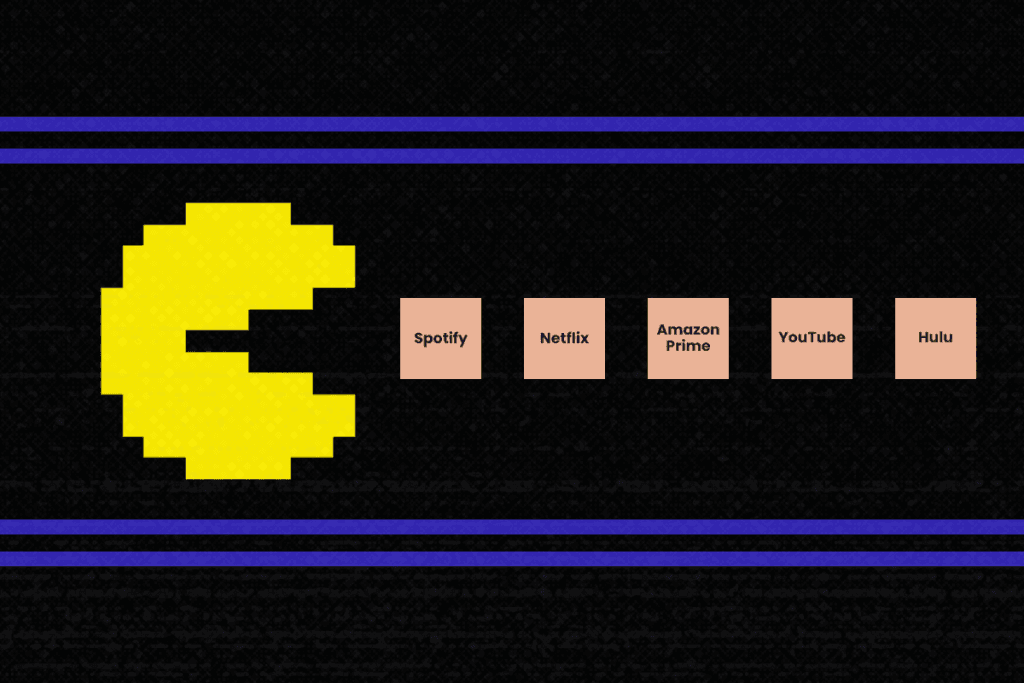
One of the clearest evidence of strain is subscription fatigue. A growing number of people report feeling overwhelmed by the sheer number of subscriptions they manage each month. In surveys, up to 41 % of consumers say they’re experiencing fatigue, and nearly half have canceled at least one service in recent months because it doesn’t feel worth the cost. Many people also spend far more than they realize, often forgetting free trials or small auto-renewals that keep renewing on their own.
So where does this leave us?
Access to your favorite games, movies, TV shows and all that can be turned off at the push of a button. And to be fair many people will take that trade for convenience.
The problem starts when the model spreads into everything.
What began with media and software is now getting into cars, household devices, and products that used to work perfectly well without a bill attached. At that point, people should question weather the air they breathe is billable.
The future probably isn’t a world where nobody owns anything. However, we’re already hit a point where it’s getting hard to outright own anything. And if I had to make a prediction, hardware like PCs and laptops are going to start being rented out due to the way RAM prices have skyrocketed. Yes, laptop renting, that’s now becoming a thing.
It’s hard to say what the average Joe can do in this situation to push back against everything becoming a subscription, but one thing we have seen, and that may lead to a small cultural revolution of sorts is the nostalgic trend of buying physical media (CDs, DVDs etc.)
Maybe these small niche communities can start a snowball effect and get more people onboard to buy physical media and reject subscriptions, but only time will tell.
FAQ
1. What is the subscription economy?
It’s a business model where you pay recurring fees, usually monthly or yearly, to access a product or service instead of buying it outright.
2. Why are companies moving to subscriptions?
Recurring payments create steady revenue and make businesses more predictable and attractive to investors.
3. When did subscriptions become widespread?
The modern boom started in the late 2000s as cloud computing and fast internet made digital delivery easy.
4. Do subscriptions save consumers money?
Sometimes in the short term, especially when upfront costs are high. Over time, repeated payments can exceed the price of ownership.
5. What is subscription fatigue?
It’s the feeling of being overwhelmed by too many recurring payments.
6. Why do subscriptions feel everywhere now?
Companies in many industries realized recurring revenue is more stable than one-time sales.
7. Why don’t companies offer one-time purchases anymore?
Subscriptions often generate more total revenue and keep customers tied to the product.
8. Do younger generations care less about ownership?
Many grew up with streaming and cloud services, so access feels more normal than owning.
9. Are subscriptions spreading beyond digital services?
Yes. Cars, smart devices, fitness equipment, and software increasingly include subscription features.
10. Will everything eventually become a subscription?
Unlikely. Many products still work better as one-time purchases, and consumer pushback is growing.