Spend five minutes scrolling through Reels and listen closely. “Stop scrolling.” “You need to hear this.” “Here’s something nobody tells you.” “I wish I knew this sooner.” Once you notice these openings, they’re impossible to ignore.
None of them are necessarily bad. They can work, which is why they’re everywhere. The strange part is hearing the same voice come from completely unrelated accounts. A personal trainer, a marketing agency, a dentist and someone reviewing an air fryer all begin with the same sentence, the same oversized captions and even the same slightly urgent hand gesture. Maybe every brand on Instagram hired the same copywriter?
There is a logical reason for this. Instagram now gives creators a skip-rate metric, showing how many viewers leave within the first three seconds. TikTok’s own guidance also recommends introducing the content proposition during that opening window. Give marketers a visible number and, naturally, we will try to improve it.
The three-second hook began as a useful reminder to get to the point. Gradually, it turned into a formula that everyone used. And when everyone uses the same pattern to interrupt the feed, the pattern itself stops being an interruption.
The three-second rule didn’t appear out of nowhere. When someone sees a Reel on their fyp, they’ve made no commitment to watch it. There is no title they deliberately clicked and no introduction they patiently sat through. One movement of the thumb brings up new, so the opening has to provide an immediate reason to stay.
TikTok recommends introducing the content proposition within the first three seconds and prioritising the hook within the first six. According to its advertising data, 90% of an ad’s recall impact is captured during those opening six seconds. Instagram made the same period increasingly visible through its Reels skip-rate metric, which measures how many viewers leave within three seconds.
These figures mostly come from advertising and platform data, so they should not be treated as a universal law for every video. Still, the principle behind them makes sense. Viewers want to know what they are watching, whether it is relevant to them and why they should give it another few seconds. They are making that decision while dozens of other videos are waiting directly below.
A good opening therefore provides orientation. It might show the finished result, introduce a recognisable problem or begin in the middle of an interesting moment. It does not need to explain the entire video (that would rather defeat the purpose), but it should offer enough information to make the next second feel worthwhile.
Trouble begins when “make the value clear early” gets translated into “say something dramatic immediately.” The platforms encourage speed and clarity. The familiar scripts, exaggerated promises and pointing fingers came later.
How a metric became a creative formula
There is an idea known as Goodhart’s law: when a measure becomes a target, it gradually loses its value as a measure. People adjust their behaviour to improve the number, sometimes at the expense of the thing that number was supposed to represent.
Short-form video offers a near-perfect example. A creator sees that one opening kept viewers watching, so they use it again. Other creators notice the successful Reel and borrow its structure. Soon the hook appears in a template, a course, a LinkedIn post and an AI hook generator. By that point, thousands of people are working from slightly different versions of the same script.
The platform never needed to instruct everyone to point at floating text while saying, “Here’s why your content isn’t performing.” It just rewarded the videos that held attention. Creators interpreted those results, copied visible successes and fed new data back into the system. Researchers describe a similar relationship between user behaviour and platform algorithms as a feedback loop, with each continually shaping the other.
This creates a fairly understandable temptation. Skip rate is visible, immediate and easy to compare. Originality, credibility and brand recognition are much harder to fit into a neat analytics panel (and “people are slowly becoming tired of the way we speak” is not currently an available Instagram metric).
As a result, the three-second hook can quietly become the entire creative brief. The opening is selected according to its ability to delay a swipe, while tone, personality and relevance come later, if they arrive at all.
No single creator caused this sameness. Each person is making a rational decision based on the information available to them. Collectively, though, those decisions create a feed where every video is competing more efficiently and fewer of them feel genuinely distinct.
The recognition gap
Imagine someone watches a Reel about 3 common content mistakes. They stay until the end, maybe even save it, and then continue scrolling. Ten minutes later, they remember one of the tips. What they can’t remember is who gave it to them.
According to the usual performance metrics, that Reel worked. It held attention, it had value for the viewer and generated an interaction. From a marketing perspective, though, much of that value has floated away from the brand that created it.
We can call this the recognition gap: the distance between remembering the content and remembering its source.
The gap grows when the opening of a Reel relies on language and visuals that could belong to almost anyone. “You’re making this mistake” can get you another few seconds of attention, but nothing in that sentence helps the viewer connect the idea to a particular business. Add the familiar subtitles and trending audio, the content begins to blend into the wider category. The viewer remembers that a marketing account said something useful. Which one? Hard to say.
Research into video advertising suggests this is a real problem. Ipsos found that roughly two-thirds of people who recognised an advertisement could correctly identify the brand behind it. In other words, recognition of the content did not always lead to recognition of its creator. Its analysis of more than 2,000 video ads also found that high-performing ads used distinctive brand assets 52% more often than average.
Those assets can include colours, characters, sounds, recurring phrases or a recognisable way of presenting an idea. Simply placing a large logo in the corner rarely solves the deeper problem (and may make the Reel easier to identify as an ad, which introduces another problem entirely).
Kantar makes a similar distinction: attention is the gateway to effectiveness, but it should not be treated as the final outcome. A person can watch without forming an emotional response, remembering the message or connecting it to the brand.
This gives every three-second hook two jobs. It has to earn the next second, and it has to make that attention belong to someone. Most advice about hooks only measures the first.
What a better hook looks like
A better hook needs to give the viewer a clear reason to care while still sounding like the person or brand that created it.
One useful test is to remove the account name and logo. Could the opening appear unchanged on a competitor’s Reel? If the answer is yes, the hook may be functional, but it is probably generic. “You need to stop making this mistake” can introduce a video about skincare, personal finance, gym technique or almost anything else.
Being specific usually gives the viewer a stronger reason to stay. Compare that line with: “Your Reel may be getting views and still failing your brand.” The second version identifies the subject, introduces a tension and connects naturally to a particular point of view. It also gives away enough information for the viewer to decide whether the video is relevant to them.
Research into curiosity gaps offers us a clue. A 2025 study published inScientific Reports analysed 8,977 headline experiments and found that vague headlines often benefited from becoming more concrete. However, headlines could also become so specific that there was little reason to click. The strongest results appeared somewhere between confusion and complete explanation.
That balance also applies to short-form video hooks. “This changes everything” provides almost no information. A complete summary of the video removes the curiosity. A better opening gives viewers a subject, a reason to care and one unresolved detail.
The hook can also happen without a carefully engineered sentence. A designer might open with an awkward logo before revealing how it was fixed. A restaurant can begin with the finished dish already coming out of the oven. A social media agency might show two posts with similar reach and ask why only one produced enquiries. The viewer understands the premise almost immediately, without being ordered to stop scrolling (which, when you think about it, is a slightly strange way to begin every conversation).
Recognisable formats help too. A recurring setting, editing rhythm, presenter, question or visual device can become part of the opening. Over time, viewers can recognise the content before seeing the username. That is far more valuable than borrowing the same Instagram Reels hook they’ve already heard several times that morning.
A strong hook creates curiosity about something specific and makes the right viewer want the next piece of information. It may attract fewer random pauses and more attention from people who genuinely care about the subject. For a brand, that can be the better result.
Conclusion
The three-second hook still has a place in short-form video strategy. It encourages creators to respect the viewer’s time and reach the point sooner. Problems arise when every account reaches that point using identical words, gestures and editing choices.
Trying to win attention by sounding like everyone else is a strange long-term strategy. A good hook should help the viewer recognise why the content matters and gradually learn what makes the creator worth returning to.
Three seconds is enough to begin that process. Give people a reason to stay, and a reason to remember where they stayed.
FAQ
1. What is a three-second hook?
A three-second hook is the opening moment of a short-form video designed to capture attention and communicate why someone should continue watching. It can be spoken, written or entirely visual.
2. Why are the first three seconds important on Instagram Reels?
Reels appear in a feed where viewers can move to the next video instantly. The opening seconds help them decide whether the content is relevant. Instagram’s skip-rate metric also measures how many viewers leave within this period, giving creators a direct indication of how well the opening holds attention.
3. Does every Reel need a spoken hook?
No. A finished result, an unusual image, a recognisable situation or a demonstration already in progress can capture attention without an opening sentence. Visual hooks often feel more natural because the viewer understands the premise by seeing it unfold.
4. Should brands use viral hook templates?
Templates can provide a starting point, especially when a creator is unsure how to structure an idea. They should be adapted to match the subject, audience and brand voice. If the same opening could introduce almost any video from any account, it needs more specificity.
5. What is the recognition gap in social media content?
The recognition gap occurs when viewers remember the content but forget who created it. A Reel may earn views, saves and watch time while building very little memory of the brand behind it. Distinctive language, visual cues, recurring formats and a clear point of view can help close that gap.
The most expensive rebrands in history didn’t cost millions simply because a company created a new logo. A logo can cost thousands of dollars, and replacing it across a dozen of hotels, gas stations, bank branches, vehicles, uniforms, websites and product packages can cost hundreds of millions.
This is why the figures found in other online rankings can be confusing. One company reports only the cost of designing its new identity, while another includes a global advertising campaign or renovations across multiple locations. Some widely repeated figures are not actually rebranding costs at all.
For this list, we used figures reported by the companies themselves or by credible sources at the time. The amounts are shown in their original currencies and have not been adjusted for inflation. Since every project covered something different, the rebrands are ordered roughly by their reported budgets.
Most expensive rebrands at a glance
Reported rebrand budgets and outcomes. Figures are shown in their original currencies.
Brand
Year
Reported cost or budget
What the figure covered
Verdict
Holiday Inn
2007–2010
$1 billion
Global hotel relaunch and property upgrades
Yes
BP
2000
About $200 million
Brand launch, advertising and public relations
No, long term
Accenture
2001
$175 million
Global launch advertising
Yes
PwC Consulting / Monday
2002
$110 million
Planned global renaming and rollout budget
No
British Airways
1997
About £60 million
Design and implementation across the airline
No
BT
1991
About £50 million
Company-wide makeover and rollout
Mixed
Posten Norge / Bring
2008
NOK 300 million
Development, launch and three-year rollout
Yes
Tropicana
2009
$35 million
Advertising campaign supporting new packaging
No
UPS
2003
$20 million
First-year brand revamp and promotion
Yes
ANZ
2009
A$15 million
Buildings, technology and marketing in 2010
Mixed
1. Holiday Inn: $1 billion
By the mid-2000s, Holiday Inn had a recognition problem of an unusual kind. Almost everyone knew the name, but many associated it with an inconsistent and dated hotel experience.
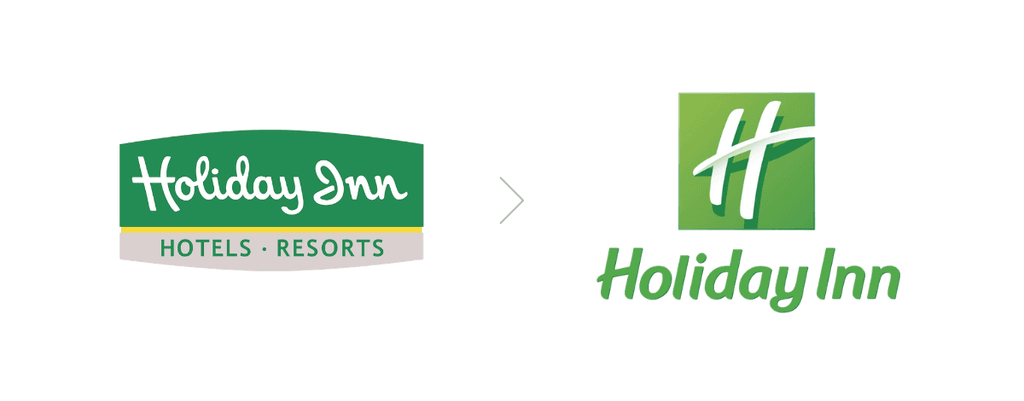
In 2007, parent company InterContinental Hotels Group announced a worldwide relaunch of Holiday Inn and Holiday Inn Express. This was much more than a new green logo. The programme introduced new signage, refreshed rooms and public spaces, upgraded bedding and bathrooms, redesigned arrival areas and established new service standards.
Yes. The rebrand was supported by a noticeably better product, which is one reason it delivered measurable results. During the rollout, IHG reported that relaunched hotels were outperforming control properties by 3% to 7% in revenue per available room
while guest satisfaction scores were also improving. In a 2009 update, the company put average outperformance at more than 5%.
Holiday Inn shows what a rebrand can achieve when the customer experience changes with the visual identity. The new sign made a promise that renovated hotels could actually support.
Verdict: Yes.
2. BP: about $200 million
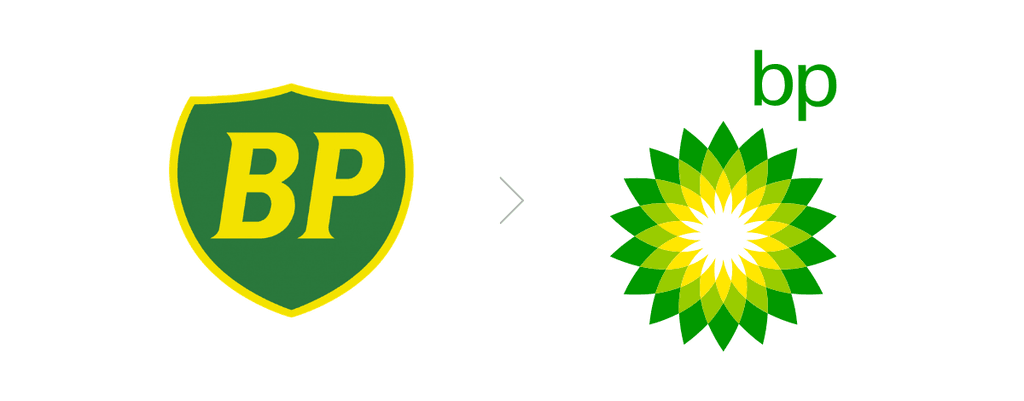
BP introduced its green-and-yellow Helios symbol in 2000 and began presenting its initials as “Beyond Petroleum.” The aim was to move the company away from the image of a traditional oil producer and towards a broader, more environmentally responsible energy business.
The exact cost depends on what is counted. At launch, The Guardian reported that the brand change itself had cost $7 million and that BP planned to spend another $100 million a year developing it. The wider public relations and advertising effort is commonly reported at about $200 million.
Initially, the campaign changed perceptions. Research later found that consumers exposed to the advertising were more likely to see BP as environmentally responsible. By 2008, one survey found that BP was perceived as greener than its oil-industry competitors.
Did it work?
Only in the short term. The messaging created a greener image, but the company’s operations struggled to support it. After the 2010 Deepwater Horizon disaster, BP dropped out of Interbrand’s top 100 global brands for the first time in 11 years. A later academic study found that BP’s reputation fell by more than 50 points relative to a comparable control after the spill and had still not fully recovered by the end of 2017.
The campaign may have influenced public perception, but it also increased the gap between what BP said and what people believed its business actually represented. “Beyond Petroleum” eventually became one of the most frequently cited examples of greenwashing.
Verdict: No, not in the long term.
3. Andersen Consulting to Accenture: $175 million
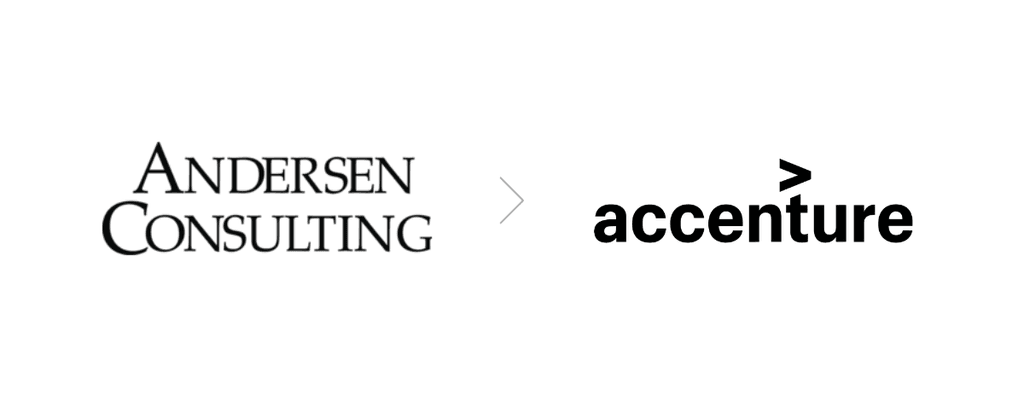
Andersen Consulting was required to adopt a new name after separating from Arthur Andersen. The company chose “Accenture,” derived from “accent on the future,” following an internal naming process involving employees around the world.
The most often-cited cost of the 2001 rebrand is $100 million. However, a contemporary account of the launch describes a $175 million global advertising campaign designed to transfer the equity of the Andersen Consulting name to Accenture and remove references to the former brand.
The timing created a big risk. A global professional services company was giving up a recognised name and replacing it with an invented one. Also, it created an unexpected advantage. Arthur Andersen became associated with the Enron scandal soon afterwards, while Accenture already established a separate identity.
Did it work?
The unfamiliar name quickly became a major global consulting and technology brand. Accenture completed an initial public offering in July 2001, reported more than $11.4 billion in revenue for that financial year and continued expanding under the new identity. By fiscal 2025, annual revenue had reached $69.7 billion.
That growth cannot be credited to a name alone. The more useful measure is that the new identity successfully carried the company through a forced separation, built recognition and remained in place for more than 25 years.
Verdict: Yes.
4. PwC Consulting to Monday: $110 million
In June 2002, PwC Consulting announced that it would become “Monday” as it prepared to separate from PricewaterhouseCoopers and pursue an initial public offering.
The name was meant to suggest fresh starts and positive change. Many people instead connected it with the least popular day of the working week. The announcement attracted immediate ridicule, which was an early warning for a company selling strategic advice to other businesses.
The reported $110 million budget covered advertising, corporate materials and the international rollout. Importantly, this was an allocated budget, not a confirmed final amount spent.
Did it work?
IBM agreed to acquire PwC Consulting for approximately $3.5 billion less than two months after the name was announced. IBM confirmed that the business would operate under the IBM brand, so Monday disappeared before the planned rollout was completed.
The sale may have made strategic sense, but it made the rebranding work largely redundant. “Monday” is now remembered less as a business identity and more as a warning against naming that needs a long explanation before it starts to sound appealing.
Verdict: No.
5. British Airways: about £60 million
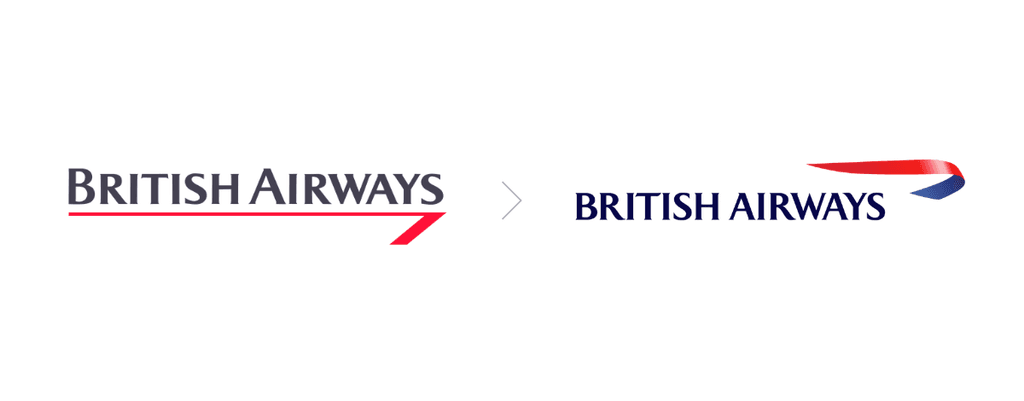
British Airways wanted to present itself as a global airline based in Britain, rather than a carrier defined primarily by British tradition. Its 1997 identity introduced a new Speedmarque symbol, new typography and a collection of colourful tailfin designs inspired by art from different cultures.
The “World Images” programme reportedly cost around £2 million to design and approximately £60 million to implement. . Aircraft, airport spaces, uniforms, printed materials and other customer touchpoints all had to be updated.
The Landor Associates 1984 version of the British Airways corporate identity on a Boeing 767-300. Photo by Aero Icarus [CC BY-SA 2.0] via this flickr page
The concept was ambitious, but the varied tailfins weakened one of the clearest visual signals in aviation. Former prime minister Margaret Thatcher famously covered one of the designs with a handkerchief at a public event. Virgin Atlantic responded by placing the Union flag on its aircraft and positioning itself as Britain’s national flag carrier.
The Polish ‘Koguty Lowickie’ tailfin on a Boeing 737. Photo by Aero Icarus from Zürich, Switzerland [CC BY-SA 2.0], via Wikimedia Commons
Did it work?
In 1999, British Airways stopped expanding the World Images collection after only part of its fleet had been repainted. The airline later standardised its aircraft around the Chatham Dockyard Union flag design.
Some elements of the wider identity survived, including the Speedmarque. The central idea of giving aircraft many different tail designs did not. Instead of making the airline feel more international, it made the fleet less visually consistent and weakened an association that customers already valued.
Verdict: No.
6. British Telecom to BT: about £50 million
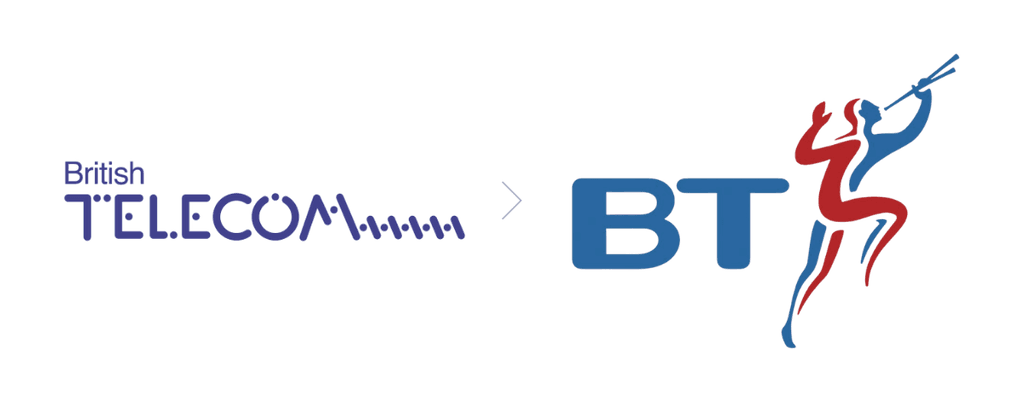
British Telecom shortened its trading name to BT in 1991 and introduced the “Piper,” a red-and-blue figure designed by Wolff Olins. The change aimed to humanise the former state-owned telecommunications company and support its move into a more competitive, international market.
The company-wide makeover was reported to have cost about £50 million. That figure covered far more than the symbol itself, since the identity had to be applied to buildings, vehicles, telephone boxes, uniforms, advertising and a large range of printed materials.
Did it work?
Only partly. The most important element, the shorter BT name, proved durable and remains in use. The Piper also became highly recognizable during its 12-year life.
However, by 2003 the company believed that the symbol had become too closely associated with fixed-line telephones. BT replaced it with a multicolored globe in a new rebrand costing less than £5 million. At the time, a BT executive said the Piper had done an excellent job, while acknowledging that it carried outdated perceptions of the business.
The name change worked better than the visual metaphor attached to it. That makes this a successful simplification paired with an identity that eventually became too narrow for the company it represented.
Verdict: Mixed.
7. Posten Norge and Bring: $53.4 million
Norway’s national postal operator modernised the Posten identity and launched Bring in 2008. Posten would continue serving consumers in Norway, while Bring brought several logistics businesses together under one brand for corporate customers across the Nordic region.
The company put the total cost at NOK 300 million. Half was allocated to development and launch, while the remainder covered the replacement of branding on vehicles and materials over three years. Much of the rollout was planned around normal operational replacement cycles.
Did it work?
Yes, based on the longevity and strategic use of the two-brand system. Posten and Bring are both still active. The company later adopted Posten Bring as its corporate name, and logistics now represents most of the group’s revenue. In 2024, the logistics segment generated more than NOK 20 billion of the group’s roughly NOK 25 billion in revenue.
It would be difficult to isolate the financial effect of the identity from acquisitions, ecommerce growth and wider changes in the postal market. Still, Bring succeeded in giving the expanding logistics operation a distinct, scalable name outside Norway, which was the main purpose of the rebrand.
Verdict: Yes.
8. Tropicana: $35 million
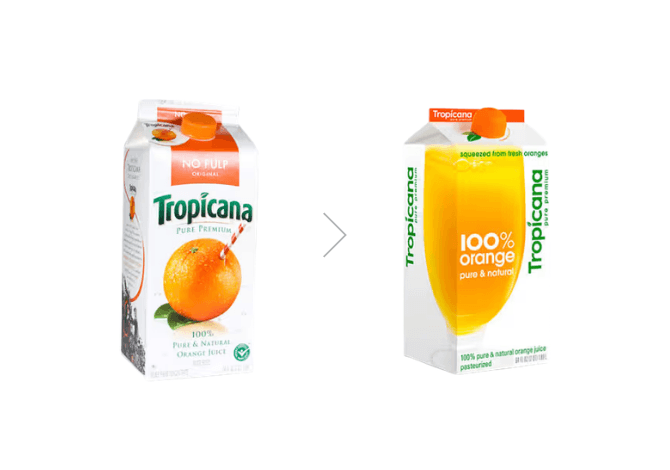
Tropicana replaced its familiar orange-with-a-straw image in 2009 with a cleaner package featuring a glass of juice. The logo was turned vertically, varieties became harder to distinguish at a glance and the most distinctive visual element on the carton disappeared.
The frequently quoted $35 million figure was the advertising campaign supporting the change, rather than a fee paid simply to redesign the packaging.
The new carton reached shelves in January. Customers complained almost immediately, and the commercial impact followed quickly.
Did it work?
Sales of the Pure Premium line fell by about 20% over two months compared with the same period a year earlier, representing roughly $30 million in lost sales. Tropicana announced the return of the original packaging in February, and the familiar orange-and-straw design was back on shelves soon afterwards.
The redesign removed assets that helped people recognise the product quickly in a crowded refrigerator. It may have looked cleaner in isolation, but packaging has to work at the point of purchase, surrounded by competitors.
Verdict: No.
9. UPS: $20 million
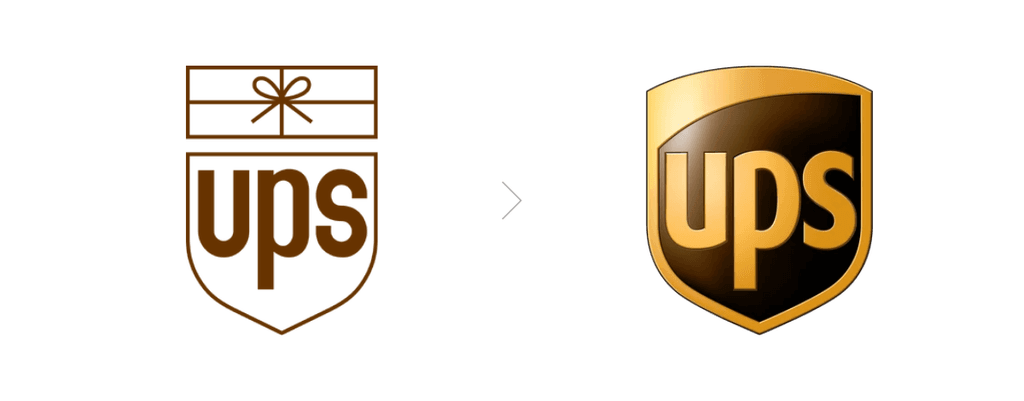
UPS introduced its first new logo in more than 40 years in 2003. FutureBrand retained the familiar shield and brown colour, but removed the tied parcel that had sat above the company name since Paul Rand’s 1961 design.
Removing the package was a strategic decision. UPS wanted customers to see it as a broader logistics and supply-chain company, not only a parcel delivery service. The changes were expected to cost $20 million in the first year, with much of the physical rollout taking place gradually as trucks and other assets were replaced.
Did it work?
The redesign modernised the identity while preserving its most recognisable elements. It also gave UPS room to communicate a broader range of services without abandoning the shield, the name or the brown colour it already owned in customers’ minds.
UPS simplified the logo again in 2014 by removing the glossy, three-dimensional effects, but kept the basic 2003 structure. The rebrand did not have to teach customers an entirely new visual language, which helped it age more effectively than many other early-2000s identities.
Verdict: Yes.
10. ANZ: A$15 million
ANZ launched a new global identity in 2009 as part of its ambition to become a “super regional” bank across Australia, New Zealand and Asia Pacific.
The simplified wordmark was paired with a new symbol that can be read as both a person and a three-petalled lotus. The three sections represented ANZ’s core regions, while the central human form represented its customers and employees. According to the bank, the identity followed 18 months of research with more than 1,300 customers and 250 employees.
The visual identity did. It remains in use more than 15 years later and gave the bank a consistent symbol that worked in markets using different writing systems.
The wider strategy produced mixed results. ANZ expanded its Asian customer base and corporate banking presence during the following years, but later reduced its regional ambitions. In 2016, the bank sold Asian retail and wealth operations and acknowledged that returns had been lower than expected.
The identity proved more durable than the strategy it was originally designed to express.
Verdict: Mixed.
What about the $1.28 billion Symantec logo?
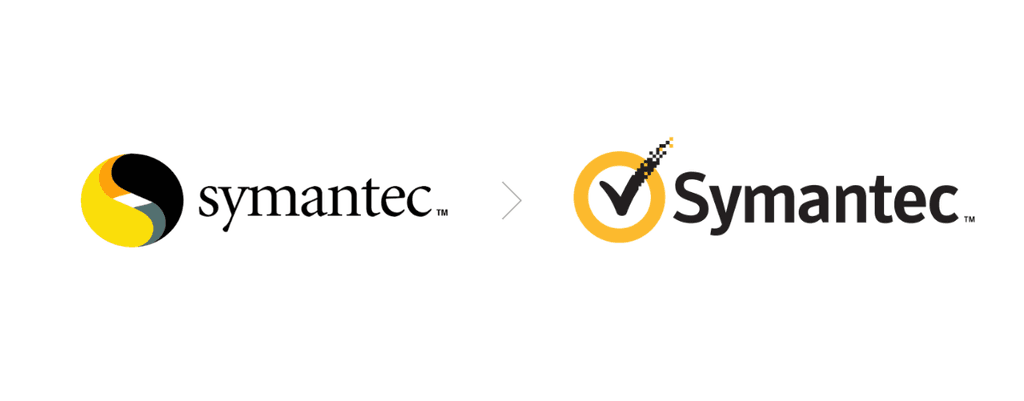
Symantec is regularly placed at the top of “most expensive logo” rankings with a cost of $1.28 billion. That description is misleading.
In 2010, Symantec paid $1.28 billion for VeriSign’s authentication services business. The deal included SSL certificate services, identity protection products, a majority stake in VeriSign Japan, employees, customer relationships and intellectual property. VeriSign’s checkmark trademark was one of the assets and not the sole object of the purchase.
Calling it a $1.28 billion logo is similar to buying an entire hotel and saying the full price was paid for the sign above the entrance.
Pepsi’s 2008 logo provides the opposite problem. Its reported $1 million design fee was genuinely expensive, and the accompanying design document became famous online. However, it is much smaller than the documented global programmes on this list. Pepsi replaced that identity in 2023 with a design that restored more of the brand’s visual heritage.
Why do major rebrands cost so much?
The visual design is usually a small part of the total. Large organisations need research, naming, trademark searches, strategy, customer testing, internal training and new brand guidelines before anything reaches the public. They then have to update every place where the old identity appears. Our article on why logos have become so simple looks more closely at the design pressures behind many modern brand identities.
For a global company, that can mean thousands of signs and vehicles, millions of packages, dozens of digital platforms and advertising in multiple markets. Holiday Inn’s programme was expensive because it changed hotel properties. British Airways had to repaint aircraft. Posten Norge had to update a national delivery network.
The strongest examples also show that spending more does not make a rebrand safer. Accenture spent heavily and created an identity that supported a necessary business separation. Tropicana removed a familiar image and lost sales almost immediately. BP successfully changed perception for a time, but the promise could not survive a conflict with the company’s actions.
So, do expensive rebrands work?
4 of the 10 rebrands in this list achieved most of what they set out to do, 2 produced mixed results and 4 failed or were quickly abandoned. The difference was rarely the visual quality of the logo alone.
Successful rebrands tended to preserve useful recognition, solve a real business problem and arrive with changes customers could experience. Unsuccessful ones weakened distinctive assets, created a promise the business could not support or became irrelevant before the rollout was complete.
A rebrand can change how a company is recognised. For it to change what people believe, the rest of the business has to move with it.
If your brand has outgrown its current identity, Deborah can help you define what should change, what is worth keeping and how to build a visual system that works across every customer touchpoint. Contact us to discuss your rebrand.
FAQ
1. What is the most expensive rebrand in history?
Holiday Inn carried out one of the most expensive rebrands in history, with a reported investment of $1 billion between 2007 and 2010.
2. How much does a major rebrand cost?
A major corporate rebrand can cost anywhere from thousands to hundreds of millions of dollars. The total depends on the size of the company and whether the budget includes research, design, advertising, packaging, signage, vehicles, uniforms and physical renovations.
3. Why are corporate rebrands so expensive?
Designing a new logo is usually only a small part of the total rebranding cost. Large companies must introduce the identity across every physical and digital customer touchpoint, often in several countries and languages.
4. What are some examples of failed rebrands?
Tropicana, British Airways, BP and PwC Consulting’s proposed “Monday” identity are among the best-known failed rebrands. Their problems included removing familiar brand elements, creating an identity customers disliked and making promises the business could not support.
5. How can a company measure whether a rebrand worked?
A company can compare brand recognition, customer sentiment, website performance, sales and other relevant metrics before and after the change. A successful rebrand should also solve the original business problem without weakening the recognition and trust the brand has already built.
Looking at AI chatbot market share in 2026, ChatGPT still holds the largest share of generative AI web traffic, although the gap has narrowed quite a bit. In Similarweb’s June 2026 update, ChatGPT accounted for 52.7% of worldwide visits to the leading generative AI chatbot websites. Gemini followed at 27.8%, while Claude reached 9.2%.
Together, these three platforms generated almost 90% of the measured traffic. Everyone else was left competing for a much smaller part of the market.
Share of worldwide generative AI chatbot web traffic, June 2026
AI chatbot
Web traffic share
ChatGPT
52.7%
Google Gemini
27.8%
Claude
9.2%
DeepSeek
3.6%
Grok
2.5%
Microsoft Copilot
2.0%
Perplexity
1.1%
The change becomes clearer when viewed over a longer period. ChatGPT held around 76% of generative AI website traffic in June 2025. By mid-2026, its share had fallen by more than 20%. Gemini climbed from roughly 9% to almost 28%, while Claude grew from less than 2% to just over 9%. Similarweb describes this as a change toward a three-platform market.
These figures measure visits to the main websites of standalone AI assistants, including desktop and mobile web traffic. They don’t cover every interaction with the underlying models. Someone using Copilot inside Microsoft 365, Gemini through another Google product or an AI model through an API may never visit the chatbot’s website at all (native mobile apps also tell a somewhat different story).
The table therefore shows how people directly use the major AI chatbot websites. It leaves a big amount of embedded, mobile and enterprise usage outside the picture, which helps explain why market-share reports sometimes produce very different numbers.
ChatGPT is losing marketshare, but the number of users remains high
A falling market share can easily be mistaken for falling usage. In ChatGPT’s case, the numbers tell a more complicated story.
Similarweb estimates that ChatGPT’s absolute web traffic remained relatively stable over the past year. During the same period, average monthly visits across generative AI platforms grew by 70%, reaching 9.5 billion. The number of unique visitors increased by 57% to 655 million, while AI app downloads rose by 58%.
In other words, the market around ChatGPT grew much faster than ChatGPT itself. A platform can maintain roughly the same number of visits and still give up a large part of its share when competing platforms are adding traffic at a higher rate.
There is also very little friction involved in switching between AI chatbots. Users do not need to abandon ChatGPT before trying Gemini or Claude. They can open another tab, compare the answers and gradually divide their work between several platforms (many people now use one tool for research, another for writing and a third for tasks connected to a particular software ecosystem).
ChatGPT also continued growing through its mobile app while its share of open web traffic declined. All the data describes a platform whose overall reach remains substantial, but whose former dominance is being diluted by a rapidly expanding category.
So far, ChatGPT’s market-share decline reflects a change in competitive position rather than a collapse in demand. It remains the largest AI assistant by web traffic, although it now has to share a market it once largely controlled.
Is Gemini overtaking ChatGPT?
Gemini has gained more ground than any other direct ChatGPT competitor. Its share of worldwide generative AI web traffic rose from under 9% to around 28% in one year, accounting for most of the market share ChatGPT surrendered during the same period. They are now firmly in second place.
The growth also appears in mobile usage. Sensor Tower placed Gemini at 27.7% of global AI assistant app users by the end of May 2026, compared with ChatGPT’s 46.4%. Claude followed at 10.3%. These figures use a different methodology from web-traffic reports, but they point in the same direction. TechCrunch reported the Sensor Tower findings.
Google says the Gemini app now reaches 950 million monthly active users, up from 750 million at the end of 2025. Its daily active user base has tripled over the past year, according to Alphabet’s Q2 2026 results.
The standalone app is only part of the story. Google can introduce Gemini to people through products they already use:
Search: Gemini 3.5 Flash is now the default model for AI Mode worldwide.
Workspace: Gemini features are built into Gmail, Docs, Sheets, Slides and Drive.
Android: Gemini is increasingly integrated into phones, tablets, watches and in-car systems.
Chrome: Users can summarize pages, compare information and complete tasks without opening a separate chatbot.
Gemini’s reach could soon extend further through Apple. In January 2026, the companies announced a multi-year collaboration under which future Apple Foundation Models will use Gemini models and Google Cloud technology, including for a more personalized version of Siri. Apple and Google confirmed the agreement in a joint statement.
Siri activity won’t automatically count as traffic to Gemini’s website (an important distinction when reading market-share charts). Still, the partnership puts Google’s AI technology inside another huge ecosystem. Gemini’s growth depends on being available at the right moment, inside tools people already have opened.
Where the other AI chatbots stand
After ChatGPT, Gemini and Claude, the market drops off quite a bit. DeepSeek, Grok, Microsoft Copilot and Perplexity collectively account for around 9% of worldwide generative AI chatbot web traffic. None currently holds more than 4% on its own.
Each platform still has a distinct reason for remaining relevant:
DeepSeek, 3.6%: DeepSeek’s biggest advantage is affordability and open access. Its models have attracted developers and businesses looking for lower API costs, particularly outside the US market. The company released its V4 models as open-source software, while independent testing found V4-Flash substantially cheaper to run than comparable models from major Western providers. Reuters covered the cost comparison. That developer adoption will not always appear as visits to DeepSeek’s chatbot website.
Grok, 2.5%: Grok benefits from direct access to X and its stream of real-time posts. It is available through X, grok.com and separate mobile apps, giving xAI several ways to reach users. xAI describes X content, web search and citations as central parts of Grok. Its connection with X provides visibility, although it has yet to translate that exposure into a web-traffic share comparable with Gemini or Claude.
Microsoft Copilot, 2%: Copilot’s standalone website represents only one part of the product. Microsoft also places it inside Word, Excel, PowerPoint, Outlook, Teams, Edge and Windows. This makes its web share particularly difficult to compare with standalone chatbots. A lot of people use Copilot while working without ever visiting copilot.microsoft.com. Microsoft’s Copilot overview emphasizes this integration with workplace content and Microsoft 365 applications.
Perplexity, 1.1%: Perplexity has built a smaller but more specialized audience around research and AI-powered search. The platform processed 780 million queries in May 2025 and was growing by more than 20% month over month at the time, according to CEO Aravind Srinivas. TechCrunch reported the figures from Bloomberg’s 2025 Tech Summit. Since then, larger assistants have added their own live search, research and citation features, making Perplexity’s original selling point less exclusive.
These platforms remain significant within particular regions, professions and use cases. Their combined consumer web traffic, however, still places them in a separate tier from the three market leaders.
What a fragmented AI market means for marketers
AI discovery no longer follows a single path. Someone will find a product through Gemini, compare alternatives in ChatGPT and use Perplexity to check the sources before visiting a website. In a lot of cases, website visits never happens.
A 2026 Pew Research Center survey found that 44% of US adults had used ChatGPT, while 24% had used Gemini and 17% had used Copilot. Smaller groups used Meta AI, Grok and Claude. These categories overlap, since respondents could use several platforms, which is precisely the point: people are gradually building their own mix of AI tools. Pew Research Center published the full platform breakdown.
Visibility on one platform also doesn’t guarantee visibility on another. Semrush analyzed 126 million AI search prompts and found considerable differences in how platforms select and present sources. ChatGPT cited an average of 15 sources per response, while Gemini averaged three. The platforms also relied on different combinations of websites, publishers, community discussions, YouTube and reference sources.
For marketers, this creates a few practical priorities:
Track platforms separately. Monitor brand mentions, citations, sentiment and referral traffic across ChatGPT, Gemini, Claude and Perplexity. A single combined “AI traffic” figure can hide which platforms are gaining influence.
Create information worth referencing. Original research, clear statistics, expert commentary, detailed product information and regularly updated pages give AI systems something specific to quote or summarize.
Strengthen the brand beyond its own website. AI answers draw information from news coverage, review sites, social platforms, forums and video content. BrightEdge found Facebook appearing as a source in 19.5 million Google AI Overview answers, with Instagram referenced 877,000 times. BrightEdge’s study suggests social content is becoming part of the broader search and discovery ecosystem.
Keep traditional SEO in the strategy. AI assistants still rely heavily on information they can discover, understand and verify online. Technical accessibility, strong pages and credible external coverage remain useful, even when the final answer appears inside a chatbot.
One more thing to keep in mind: a chatbot can have many users without sending much traffic to other websites. In March 2026, ChatGPT generated 78% of all website visits coming from AI chatbots, while Gemini generated only 9%. This was despite Gemini having a much larger share of overall chatbot use. StatCounter’s data shows that people are more likely to click through to a website from some AI platforms than others.
FAQ
1. Which AI chatbot has the largest market share in 2026?
ChatGPT remains the market leader. It accounts for approximately 52.7% of worldwide web traffic among the leading generative AI chatbots.
2. Is Gemini overtaking ChatGPT?
Gemini is growing quickly, but it has not overtaken ChatGPT. Its share of worldwide AI chatbot web traffic stands at around 27.8%, roughly half of ChatGPT’s share.
3. Which AI chatbot is growing the fastest?
Claude has recorded the fastest proportional growth, rising from less than 2% to around 9% in one year. Gemini gained more total market share during the same period.
4. Why do AI chatbot market-share reports show different numbers?
Different reports measure different things. Some track website visits, while others count app users, downloads, referrals or revenue. The results should only be compared when they use the same method.
5. What does the changing AI market mean for marketers?
Marketers should monitor more than one AI platform. Clear, reliable content and a strong presence across websites, social media and third-party sources can help brands appear in answers from ChatGPT, Gemini and other AI assistants.
Should I hire a social media agency and is it a smart investment?
Yes, for many businesses, hiring a social media agency is a smart investment. If managing social media has become time-consuming or isn’t bringing desired results, working with professionals can save time and help you build a more effective marketing strategy.
Most DIY business owners start by managing social media themselves. At first, it’s manageable. But as your business grows, so do the demands of creating content, responding to customers, tracking performance and staying informed of platform changes. If you’ve been wondering when to hire a social media agency, these 7 signs can help you decide.
1. You’re spending more time on social media than running your business
You start managing social media because it seems simple: create a post, write a caption, upload it and repeat.
But modern social media management requires a whole lot of planning, creating visuals, writing copy (texts for your posts), responding to comments and analyzing results. That’s a lot to keep in touch with for people who are too busy elsewhere.
According to surveys of small businesses, managing social media can take between 3 and 10 hours a week depending on the amount of content and platforms involved. Over a year, that can add up to 100s of hours spent away from other important parts of the business.
For a business owner, those hours could be better spent on activities that they’re more familiar with, such as improving products, talking to customers, closing sales or building partnerships.
This means that at a certain point, doing everything yourself becomes inefficient. A social media agency can take over the daily execution while you focus on the parts of the business where your time has the biggest impact.
2. Your posts aren’t bringing in customers
Getting likes, views and followers feels good, but those numbers don’t necessarily mean business growth.
A lot of people who do their own social media managment make the mistake of measuring success only through engagement (likes, views etc.). Let’s say a post receives 100s of likes. If the post doesn’t attract the right audience (people looking to buy your product), then its impact is very limited.
Research shows that businesses struggle to connect social media activity with actual business outcomes. In fact, 65% of marketing leaders say they want a clearer connection between social media campaigns and business goals, while many still rely heavily on surface-level metrics like likes or views.
The problem is that posting without a clear strategy often leads to content that gets attention but doesn’t move people closer to becoming customers.
A successful social media strategy needs to answer questions like:
Who are we trying to reach?
What problem are we solving?
What action should people take after seeing our content?
How does this content support our business goals?
A social media agency creates content with a clear goal, whether that’s reaching more people, generating leads, or gaining customers.
3. Your content is inconsistent
A pitfall for many DIY business owners is a consistent post schedule, but an inconsistent look to the profile. One day, they post a review of their long time customer; on another day they post a photo of their product. On another they might try to use AI to promote their business (spoilers: it doesn’t look good).
All of this adds up to a profile that lacks a clear visual identity. Instead of building recognition, every post feels like it belongs to a different brand.
A social media agency helps create that consistency by developing a clear content direction, so every post feels like part of the same brand.
4. You can’t keep up with platform changes
The days of posting a photo on your profile once or twice a week and that being enough are long gone.
Social media platforms constantly change what they prioritize and push. A format that works today can become irrelevant tomorrow. There’s always new features that appear; algorithms and audience behaviour change faster than most business owners can realistically follow.
A business owner already has enough things to manage. Keeping track of every Instagram update, TikTok trend, content format, and algorithm change can quickly become a full-time job on its own.
Constantly jumping from one trend to another can make your brand feel inconsistent. The challenge is knowing which changes actually matter and which ones can be ignored.
A successful social media strategy is about understanding how platforms evolve and adapting your strategy when it matters.
5. You’re unsure what content is working
Posting consistently is only half the job. The other half is knowing what to do next. A lot of people look at their social media and ask the wrong questions, like: “Why didn’t this post get more likes?” or“Why did this video perform worse than the last one?” or “Should we post more often?”.
But likes and views don’t tell the full story. A post with fewer likes can bring more website visits or customers than a viral post that reaches thousands of people who will never buy from you. Social media performance needs to be measured against your actual business goals.
Without tracking what works, businesses end up guessing. They repeat content that feels successful, then stop creating content too early, or jump between strategies without knowing what is going to engage their audience.
If your competitors are consistently attracting more attention, it’s worth asking why. In many cases, it isn’t because they have a better product or offer lower prices. They’re simply more visible. They appear in people’s feeds more frequently, answer common questions and showcase their work. By the time a customer is ready to buy, they know that your competitor exists and are ready to buy (from them).
This is key to remember because people naturally go for brands they recognize. Research shows that 82% of consumers are more likely to choose a brand they know over one they don’t.
Take a look at your competitors’ social media profiles. Do they have a consistent visual style? Are they regularly posting customer stories, behind-the-scenes content or educational posts? Do they respond to comments and questions? If the answer to all of those questions is yes, then it’s something to emulate.
That’s not to say that you have to copy what they’re doing. You do, however, need to understand why it’s working. The businesses that seem to “come out of nowhere” have simply been building their online presence consistently while everyone else was treating social media as an afterthought.
7. Your marketing work has become a constant source of stress
Running a business already means wearing multiple hats. Marketing becomes one more responsibility squeezed into the gaps between serving customers and solving day-to-day problems.
This usually leads to a familiar cycle. You know your social media needs attention, but there’s always something more urgent. A few weeks pass without posting, you rush to create content in one evening, then disappear again. Over time, this starts feeling like another unfinished task, as opposed to something that helps grow the business.
If that sounds familiar, it’s often a sign that your business has reached the point where marketing needs dedicated time and attention, by a whole different department or agency.
So what’s your next step?
Managing your own social media is a great way to understand your audience and build your brand and ultimately gain more customers. And for a good number of you reading this, it’s also where you begin.
As your business grows, however, so do the demands of creating content, planning campaigns, responding to customers, tracking performance and keeping up with platform changes. At some point, marketing becomes too important to fit into the spare hours of your week.
If you’ve been wondering when to hire a social media agency, the short answer is: if it’s taking up way too much of your time, you’re not happy with the results and you have the budget to do it.
Growing businesses eventually choose to outsource social media management so they can focus on more immediate business dealings (mostly customers and finances).
If you’re ready to take social media off your to-do list, get in touch with our team at Deborah Marketing. We’d be happy to discuss your goals and create a strategy that works for your business.
You should hire a social media agency when managing your social media starts taking time away from running your business, or when your efforts are no longer delivering the results you want.
2. Is hiring a social media agency worth it?
For many businesses, yes. A social media agency provides strategy, content creation, and ongoing management, helping you maintain a professional and consistent online presence.
3. Can I outsource only my social media management?
Yes. Many businesses outsource social media management while continuing to handle other areas of marketing internally.
4. How long does it take to see results from social media?
Results vary depending on your industry, goals, and strategy. Building a strong social media presence takes consistency, and meaningful improvements often happen over several months rather than overnight.
5. What does a social media agency do?
A social media agency develops a content strategy, creates and publishes content, manages your social media channels, monitors performance, and helps your business reach the right audience.
The 2026 FIFA World Cup hydration breaks are projected to generate more than $1 billion in additional advertising revenue worldwide, with Fox Sports alone expected to earn around $250 millionfrom the newly created commercial inventory.
Even though FIFA insists the breaks were introduced for player welfare, some would argue they fundamentally changed football’s broadcast model by creating the sport’s first guaranteed in-game ad slots. The financial success of the experiment is already generating debate if future World Cups, and even other major sports, will adopt similar commercial interruptions.
How much money did the World Cup 2026 hydration breaks make?
The headline figure is eye-catching, but it helps to understand where it actually comes from.
Before the tournament began, analysts estimated that the newly introduced hydration breaks could create over $1 billion in additional advertising revenue worldwide. That estimate was almost entirely driven by the new commercial inventory that didn’t exist in previous World Cups
The expanded 2026 World Cup has 104 matches, and each match includes 2 mandatory 3-minute hydration breaks. FIFA’s broadcast guidelines leave enough room for roughly four 30-second commercials during each break, giving broadcasters around eight new ad spots per match. Across the tournament, that’s approximately 832 brand-new television commercials that wouldn’t have existed under the traditional format.
For Fox Sports, which owns the English-language broadcast rights in the United States, those slots quickly became some of the most valuable inventory of the tournament. Industry estimates suggest the network charged an average of around $300,000 per 30-second ad, putting expected revenue at roughly $250 million from hydration breaks alone. Some analysts believe the total could climb to $500-600 million if average prices increase during the knockout rounds and final.
When you factor in broadcasters across dozens of other markets, plus premium pricing for high-profile matches, the global estimate of more than $1 billion starts to look far less surprising. For FIFA, broadcasters, and advertisers, hydration breaks were not a player safety measure. They created an entirely new advertising product in the world’s biggest sporting event.
Why hydration breaks became a goldmine for advertisers?
To understand why advertisers were willing to spend so much, we first have to understand one thing about football broadcasts. There has never been much room for commercials.
Unlike the NFL, NBA, or baseball, football (soccer) is played in two uninterrupted 45-minute halves. Aside from halftime, broadcasters have very few opportunities to air full-screen advertisements without missing live action. That scarcity has always made football advertising incredibly valuable, but it also put a limit on how much broadcasters could sell. The 2026 World Cup changed that overnight.
With FIFA introducing two mandatory 3-minute hydration breaks in every match, broadcasters suddenly had 6 extra minutes of guaranteed airtime.
What made these slots especially attractive was the audience. World Cup matches regularly attract tens of millions of viewers, and unlike traditional TV, people rarely switch channels during a stop in the game. Fans know play will resume in just a few moments, so most stay put. That means advertisers get one of the things they value most: a massive audience that’s still paying attention.
Fans didn’t like the misrepresentation
One of the most interesting parts of the hydration break debate is that the breaks themselves weren’t necessarily the biggest issue.
Most fans understand that playing a summer tournament across the United States, Mexico, and Canada brings legitimate concerns about extreme heat. FIFA has repeatedly maintained that the 3-minute breaks were introduced for player welfare, pointing to rising temperatures and the need for a consistent safety protocol across all venues, regardless of local weather conditions.
The controversy really began when broadcasters decided how to use those three minutes.
In the US, Fox cut away to full-screen commercials during the opening match, even missing a few seconds of live play when the broadcast returned late. And the backlash was immediate, as fans argued that football’s uninterrupted flow had been sacrificed for advertising revenue. Many called the decision a step toward the commercial-heavy style of American sports. Telemundo took a completely different approach.
Rather than leaving the match feed, the Spanish-language broadcaster kept the cameras on the pitch throughout the hydration breaks. Viewers could watch players talking with coaches, see tactical adjustments, catch replays, and listen to live analysis, all without interrupting the viewing experience. Any sponsorships were integrated into the broadcast instead of replacing it with commercial breaks.
The contrast made one thing clear: hydration breaks didn’t have to feel like television timeouts. They only became controversial when broadcasters chose to monetize them as traditional ad breaks.
That distinction matters because it shifts the conversation from player safety to business strategy. FIFA can argue that the breaks are necessary to protect players in increasingly hot conditions. Broadcasters, meanwhile, have every financial incentive to turn those same breaks into premium advertising inventory.
As long as those two interests are the same, it’s difficult to imagine the hydration breaks disappearing. The bigger question is whether future tournaments will follow Telemundo’s model, keeping fans engaged while still integrating sponsors, or Fox’s model, treating the breaks as six extra minutes of commercial television. That answer could shape not just future World Cups, but how football is broadcast for years to come.
Will hydration breaks stay at future World Cups?
At this point, it’s hard to imagine FIFA abandoning hydration breaks.
From a player safety perspective, rising temperatures and increasingly unpredictable weather make a strong excuse for FIFA in keeping them. They introduced the breaks as a permanent tournament-wide policy iinstead of something used only in extreme heat, arguing that consistent rules are fairer for every team.
After creating what could become over $1 billion in new advertising revenue, broadcasters now have a clear incentive to keep the format. While some fans criticized the commercials, the breaks themselves proved valuable enough that they’re unlikely to disappear anytime soon.
The bigger question isn’t whether hydration breaks will return. It’s whether future broadcasters will follow Fox’s commercial-heavy approach or Telemundo’s model, which kept viewers watching the match while still giving sponsors visibility. That choice could determine whether hydration breaks become an accepted part of football or remain one of its most controversial changes.
Will hydration breaks become a permanent part of sports in general?
The success of the World Cup’s hydration breaks has raised a bigger question: could other sports adopt a similar model?
For sports with few natural commercial breaks, the financial incentive is obvious. More stoppages mean more advertising slots, which makes broadcast rights even more valuable. Some media analysts have already suggested that leagues like MLS (the top tier of American soccer) could benefit from a similar approach. Whether fans would accept it is another matter.
The backlash to the World Cup showed that viewers are far more accepting of breaks introduced for player welfare than breaks that feel designed primarily to sell more ads. If other sports follow FIFA’s lead, they’ll likely face the same balancing act between generating new revenue and preserving the viewing experience.
FAQ
1. Why were hydration breaks introduced at the 2026 World Cup?
FIFA introduced hydration breaks to help players deal with high temperatures and protect their health during matches played across North America.
2. How much money did World Cup 2026 hydration breaks generate for advertisers?
Estimates suggest the new commercial slots created by hydration breaks could generate more than $1 billion in advertising revenue worldwide, with broadcasters selling previously unavailable in-game ad space.
3. How long are the World Cup 2026 hydration breaks?
Each hydration break lasts around 3 minutes, with two breaks scheduled during every match.
4. Did all broadcasters show ads during hydration breaks?
No. Some broadcasters, such as Telemundo, kept coverage on the match during breaks, while others used the time to show traditional commercials.
5. Will hydration breaks become a permanent part of football?
Given the combination of player safety concerns and the new advertising opportunities they create, hydration breaks are likely to remain part of future major tournaments.
We’re seeing a massive drop in Google traffic to websites. AI platforms are killing clicks. The entire SEO and publishing ecosystem is at risk. And there’s no point in pretending, to ourselves or anyone else, that everything is staying the same.
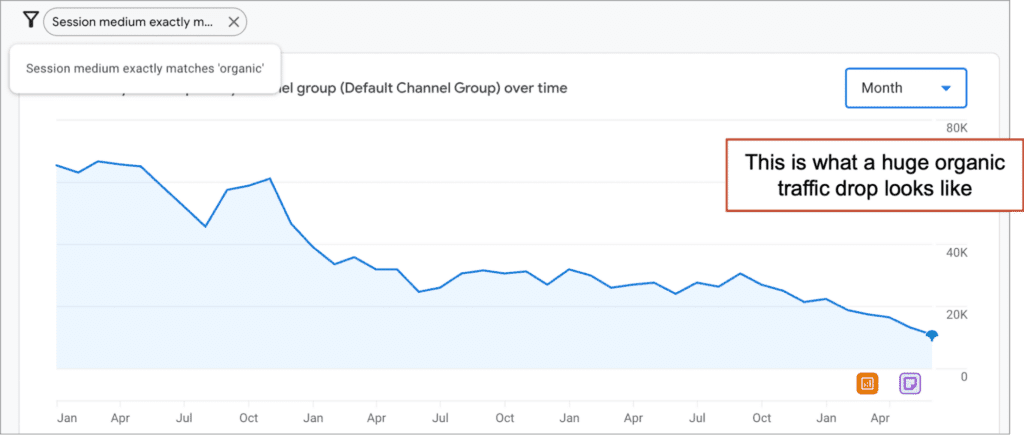
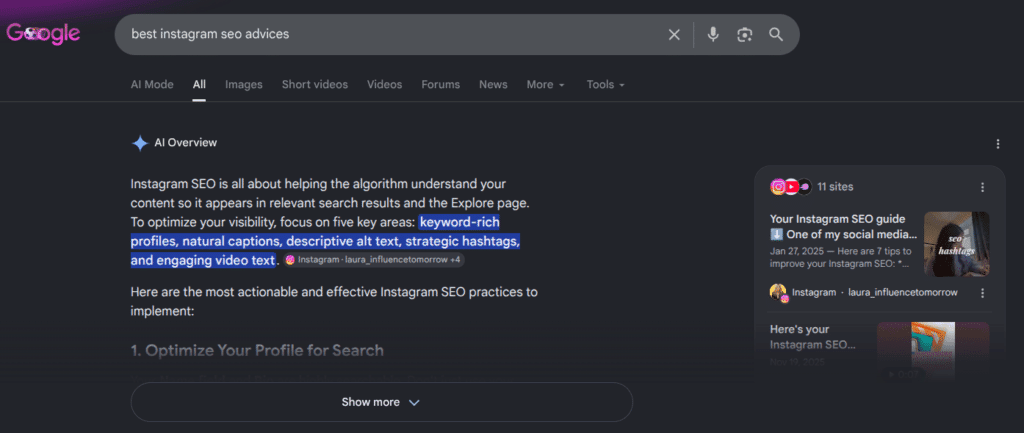
Traditional search is starting to crack, even though it’s still the biggest source of traffic for websites. Still, we have to admit that Google traffic to websites has dropped by around 30% over the past year or two. And it’s only going to fall further now that Google has announced changes to its search box, the biggest change to Search in 25 years. Google has redesigned the search field to give users more room to type their queries. The search box will continue expanding as the user types a query or prompt. More and more questions will be answered without anyone needing to click through to a website.
In short, Google is gradually shifting from “find websites” to “instantly solve search intent.” You can expect the number of clicks from Google Search to keep declining.
That means that out of every 100 people who search for something, 83 never visit a single website or click on any of the links shown in the results. Google, or rather its AI, serves them the complete answer right away.
These are the three main factors behind the drop in website traffic:
1. Lower organic CTR: When an AI Overview or AI Mode is triggered, the click-through rate (CTR) for the top organic search result drops by 58% to 61%.
2. Zero-click searches: As mentioned, around 83% of queries that trigger AI Overviews are answered directly within the AI response, meaning no clicks through to websites.
3. Impact on ads: CTR for Google Search ads drops even more than organic results, by as much as 68% when AI Mode is active.
The new normal is that people increasingly prefer talking to AI to get information instead of searching query by query on Google and clicking through ten different websites to find what they’re looking for.
Users now interact with AI, which summarizes information from countless websites. They can guide it with follow-up questions until they get exactly the information they need. Only then might they click through to buy something or make a reservation. Everyone does this to an extent in 2026. That means the real advantage in the future may no longer be traffic alone, but having a brand that people actively search for by name.
The publishing industry is under pressure
The entire publishing ecosystem is under pressure because of these changing user habits. When people stop clicking, traffic drops. For news publishers, that creates a major problem because they’re losing huge numbers of visits they once relied on. As traffic declines, so does advertising revenue, because advertisers want large audiences. That’s why more and more publishers are turning to paid content and subscriptions to stay afloat.
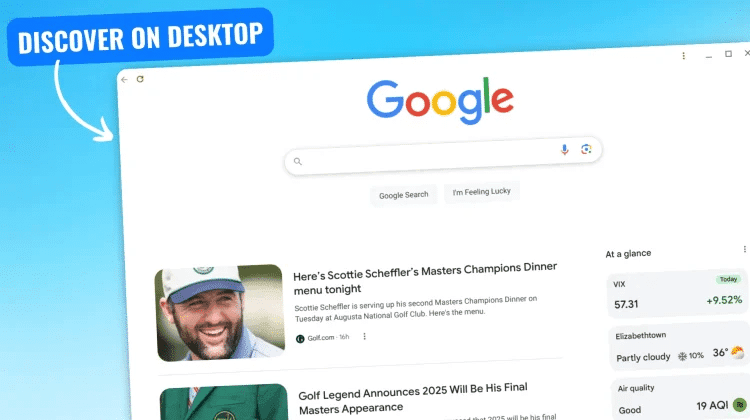
The only websites still seeing growth are those successfully riding the wave of Google Discover. Publishers that aren’t getting visibility there are in a particularly tough spot.
However, this was already happening
It’s also worth mentioning that plenty of searches ended without a click even before AI Mode. Year after year, Google kept more and more potential clicks for itself.
For example, someone searching for “24-hour pharmacy in London” would get the answer directly from a Google Business Profile. Or if someone searched for “Greg’s bakery pening hours,” they could immediately see whether it was open. The same happened when people started using Google to convert currencies or perform simple calculations. Many searches were already zero-click, but they mostly involved practical, service-related queries rather than informational content.
AI Mode in 2025 has significantly reduced traffic to content-focused websites. Websites built around informational content are seeing the biggest traffic declines, and that trend is likely to continue.
Year
Zero-Click Rate (Approx.)
Key Driver
2016
~45%
Knowledge Graph expansion, answer boxes
2018
~49%
Featured snippets proliferation
2019
~50%
First widespread reporting (SparkToro/Jumpshot)
2020
~51%
COVID-19 search patterns, People Also Ask boxes
2021
~53%
Google Maps integration, video carousels
2022
~55%
Continuous scroll, expanded SERP features
2023
~56%
SGE (Search Generative Experience) pilot
2024
~57%
AI Overviews rollout begins
2025
~58.5%
AI Overviews expanded to most query types
2026 (projected)
~65-70%+
AI Overviews expansion + multimodal search
Social media platforms want you to pay for your own audience
Search hasn’t disappeared. People are still looking for information, but they’re no longer landing on websites as often as they used to.
People use ChatGPT for much more than simple searches, you know that yourself. What ChatGPT did was push Google to launch its own LLM faster, and that has changed how people search for information far more than the launch of ChatGPT.
The same is happening on social media. Neither Facebook nor LinkedIn wants users leaving their platforms, so posts containing external links are heavily suppressed, unless you pay to promote them. That’s how these platforms maximize their revenue.
In other words, platforms that once drove traffic to websites are now keeping users on their own platforms instead.
Conclusion
Relying only on organic traffic is becoming increasingly risky. Search engines and social platforms are changing how people discover content and the platforms that control distribution can shift their rules at any time. Direct relationships with your audience, through newsletters, communities, and owned channels, are becoming far more valuable because they give you more control over how people find and engage with your content.
The future belongs to brands and publishers that build visibility across multiple channels. Publish your content where your audience already spends time, and make sure each platform works as a discovery channel. Don’t forget to optimize your social media posts for search, what you write in your captions, titles, and descriptions matters more than ever as people increasingly search directly on social platforms.
FAQ
1. Why is Google sending less traffic to websites?
Google is increasingly answering users’ questions directly in search results through AI Overviews and AI Mode, reducing the need to click on external websites.
2. What are zero-click searches?
Zero-click searches are searches where users get the information they need directly on the search results page without visiting another website.
3. Which websites are most affected?
Content-heavy, informational websites are experiencing the biggest traffic declines because AI can summarize their content directly in search results.
4. How can businesses adapt to these changes?
Focus on building a recognizable brand, growing your email list, creating communities, publishing across multiple platforms, and optimizing both your website and social media content for search.
5. Is social media still a good traffic source?
Organic social media traffic has declined as platforms prioritize keeping users on their own apps. To maximize reach, businesses should diversify their content strategy instead of depending on a single platform.
Querries for “Google Search Alternatives” have been spiking ever since the news broke out. Google’s latest move to upgrade (or downgrade, depending on who you ask) their search engine to a fully conversational AI experience has caused quite a stir. While the move has its supporters, it seems the majority of the online space disagrees with this decision. Following such a move, it’s no surprise that many people have started looking for alternative search engines with no AI.
Choosing a new search engine is not as simple as picking the most popular one. It really depends on your needs, wants and preferences. Are you a privacy-first user; or do you value speed and reliable results – these are all questions that go into the equation. In this blog, we’ll divide these into several categories:
Mainstream search engines
Privacy focused search engines
Knowledge-Based search engines
International search engines
Specialized search engines
Mainstream search engines
1. Bing
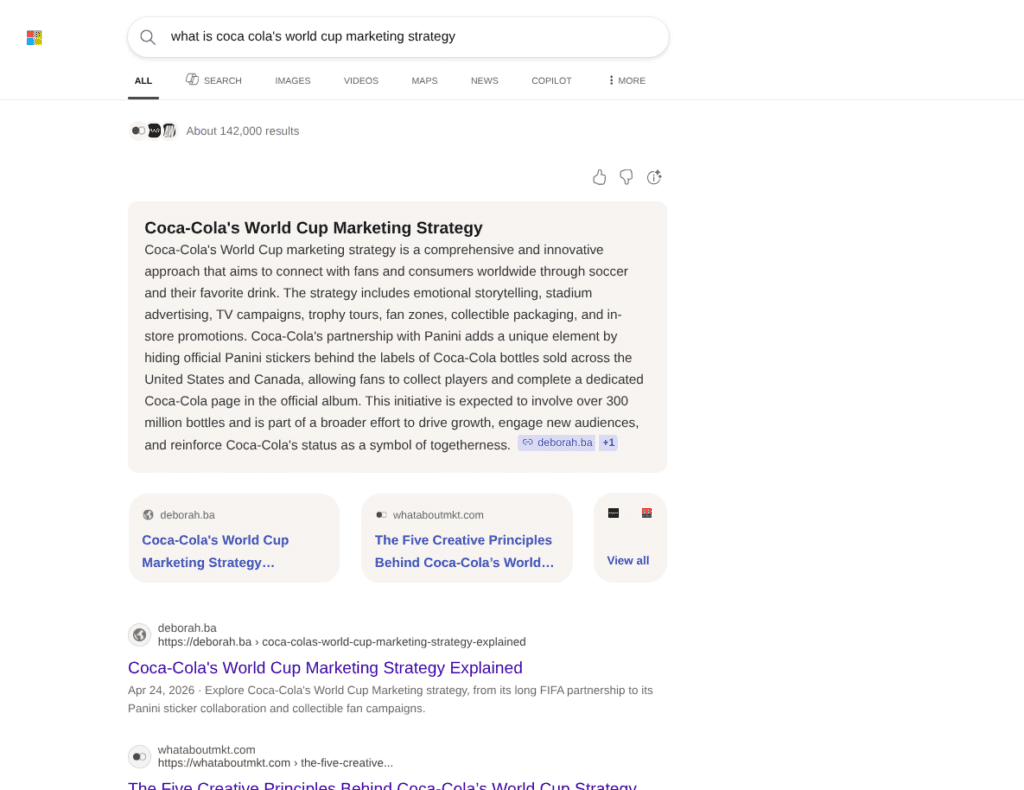
What the SERP on Bing looks like
Traditionally the biggest competitor to Google, as of December 2025 Bing handled nearly 10% of all search querries in the United States.
In some aspects, Bing outperforms Google. Bing has a rewards program that allows users to accumulate points while searching. These points are redeemable at the Microsoft and Windows stores, which is a great perk.
One could also argue that Bing’s visual search API is a lot better, cleaner and easier to use than its competition.
While neither company publishes a complete list of ranking factors, it’s widely understood that Google evaluates hundreds of signals when determining search rankings. Both Google and Bing have shared insights into how their search systems work, giving us a clearer picture of the factors they prioritize and where their approaches differ.
The two search engines place significant weight on elements such as content relevance, backlink quality, and website performance, making these areas important regardless of which platform you’re targeting. That said, Bing and Google don’t evaluate every signal in the same way, and each has its own preferences when ranking content.
The table below highlights some of the most notable similarities and differences between Google’s and Bing’s ranking systems. We’ll take a closer look at each factor in the sections that follow.
Ranking Factor
Bing
Google
Mobile-First Indexing
Site Speed
Core Web Vitals
302 Redirects Can Cause Indexing Issues
Understands JavaScript Content?
Less so
More so
Keywords in Title Tags and URLs
More so
Less so
Prefers .gov or .edu Domains?
Backlinks
Less so
More so
Social Media Signals
Indexing Short-Form Video Content (TikToks/Reels/Shorts)
Helpful, People-First Content
Relevance of Content to Search Terms
Content Freshness and Recency
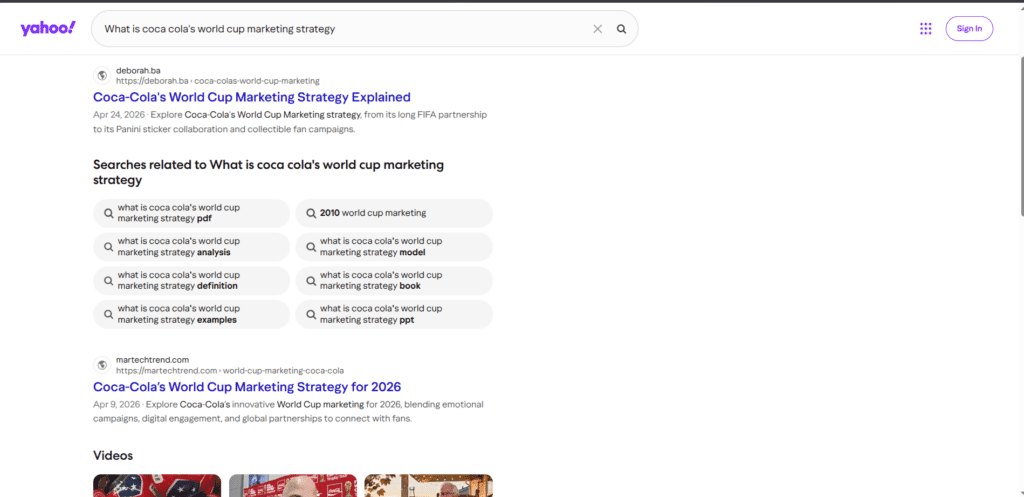
2. Yahoo
As of June 2026, Yahoo (Verizon Media) had a market share of 2,62% in the US.
Before Google became synonymous with online search, Yahoo was the Internet’s homepage.
Founded in 1994, Yahoo began as a human-curated directory of websites. In the early days of the web, users didn’t simply “Google” things. Instead, they browsed categories and directories to discover new websites. By the late 1990s, Yahoo had become one of the most visited destinations on the web. It served as a search engine, news portal, email provider, finance hub, chat platform, and much more. At its peak, Yahoo was the starting point for millions of internet users every day.
Today, Yahoo Search is still active, but it operates very differently than it did during its heyday. Rather than maintaining its own search index, Yahoo’s search results are powered primarily by Microsoft’s Bing. This means the quality and ranking of search results are largely similar to what you’ll find on Bing itself.
Yahoo’s biggest advantage is its ecosystem. Services like Yahoo Mail, Yahoo Finance, Yahoo News, and Yahoo Sports continue to attract large audiences and many users perform searches without ever leaving the Yahoo environment.
Pros
Familiar interface for long-time internet users
Search results powered by Bing
Integrated with Yahoo News, Finance, Sports, and Mail
Strong content discovery experience through Yahoo’s portal-style homepage
Still maintains a loyal user base despite Google’s dominance
Cons
Doesn’t operate its own independent search index
Search results are often nearly identical to Bing’s
Far smaller market share than Google or Bing
Less innovative than newer alternatives like Perplexity, Brave Search, or Kagi
Is Yahoo still relevant in 2026?
Yahoo no longer competes directly with Google on search quality, but it remains one of the most recognizable brands in internet history. Interestingly, the company is also attempting a return to the search spotlight through Yahoo Scout, an AI-powered answer engine launched in 2026. Similar to tools like ChatGPT Search and Perplexity, Scout provides conversational answers while citing sources from across the web.
For most users, Yahoo isn’t the best alternative to Google Search. However, if you already use Yahoo’s ecosystem or just miss the classic web portal experience that defined the early internet, Yahoo is still a surprisingly viable option.
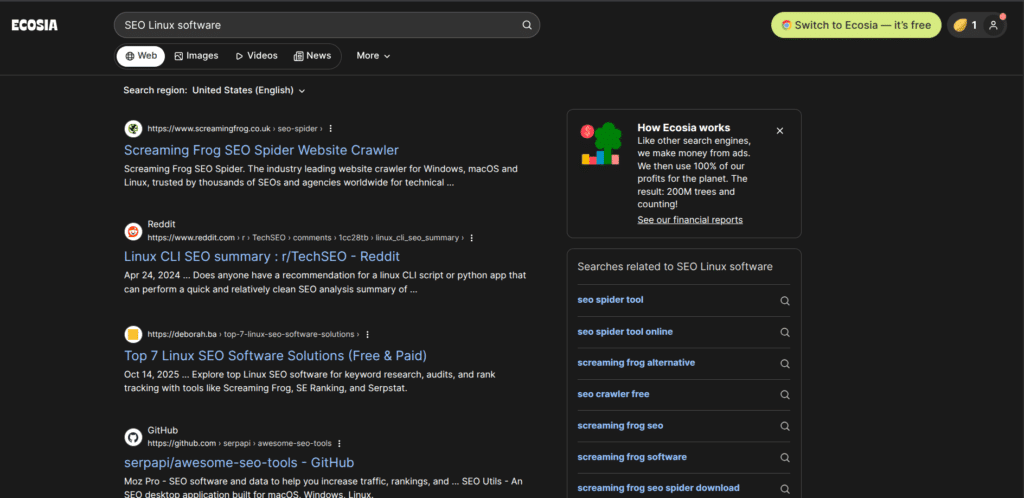
If you’d like your daily searches to contribute to something bigger than finding information, Ecosia is one of the most unique alternatives to Google available.
Unlike Google, Ecosia doesn’t maintain a fully independent search index. Most of its search results are powered through Microsoft’s Bing infrastructure and advertising network, which means the search experience is often similar to Bing. The company also offers browser extensions and mobile apps that make it easy to set Ecosia as your default search engine.
One area where Ecosia stands out is transparency. The company publishes monthly financial reports showing how much revenue it generates and where the money goes. It also invests in renewable energy projects and claims to produce more renewable energy than is required to power its searches and AI features.
Search quality is generally solid for everyday browsing, news, shopping, and informational queries. However, because Ecosia relies heavily on Bing’s search infrastructure, users may occasionally notice differences in result quality compared to Google, particularly for highly specific or technical searches.
Pros
Uses 100% of profits for climate action and environmental projects
More than 240 million trees planted through its initiatives
Transparent monthly financial reporting
Strong privacy protections compared to Google
Familiar search experience powered largely by Bing
Available as a browser extension and mobile app
Cons
Search results depend heavily on Bing’s index
Results may not be as comprehensive as Google’s for niche topics
Revenue relies on search advertising, meaning ad interactions help fund its environmental mission
Smaller ecosystem and market share than Google or Bing
Privacy-focused search engines
Privacy is an increasingly important issue among Internet users.
Privacy-focused search engines prioritize users’ privacy and their appeal is that they don’t track users’ activities or collect personal data.
Some of the most popular include:
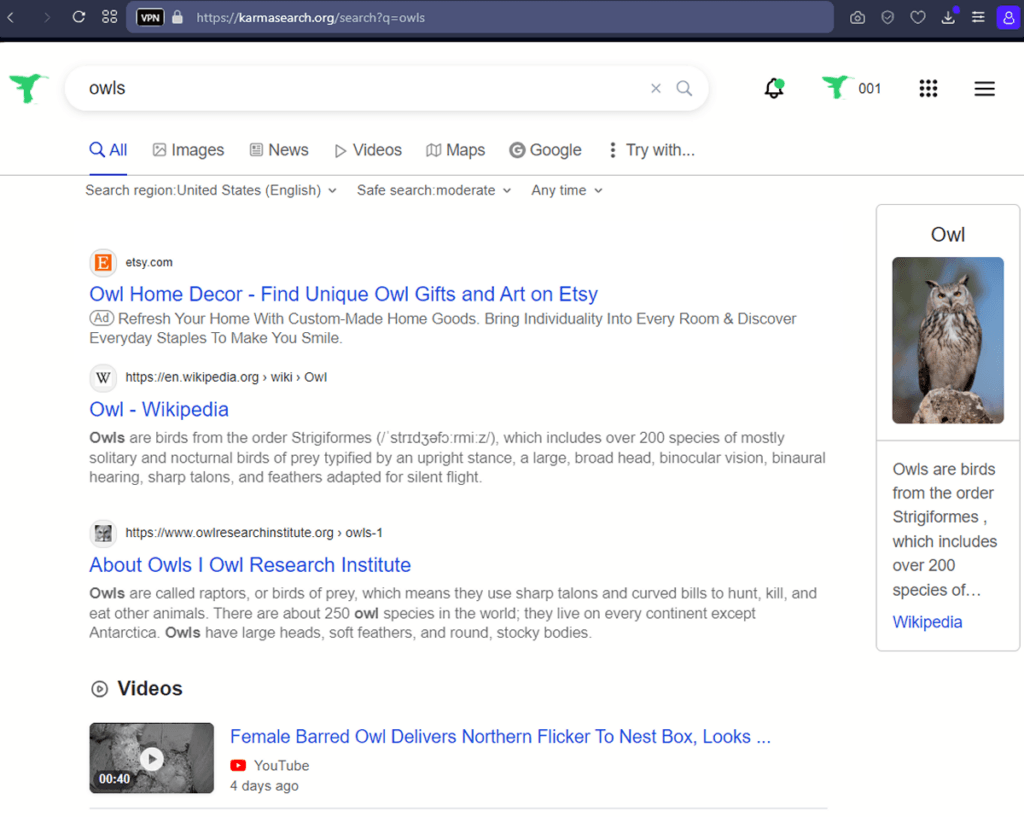
4. KARMA Search
The idea behind KARMA Search is to protect endangered wildlife.
It’s a privacy-focused search engine that turns every-day web searches into funding for conservation and animal welfare projects. Rather than keeping advertising profits for shareholders, KARMA directs revenue from sponsored search results to nonprofit organizations such as Re and Humane Society International.
Founded in France and launched in the United States in 2024, the platform supports biodiversity initiatives, wildlife protection programs, habitat restoration projects, and other environmental causes around the world.
From a search perspective, KARMA is powered by Brave Search, one of the few major search engines with an independent web index. This means users aren’t relying on Google’s search infrastructure, while also benefiting from Brave’s privacy-focused approach that avoids tracking and user profiling.
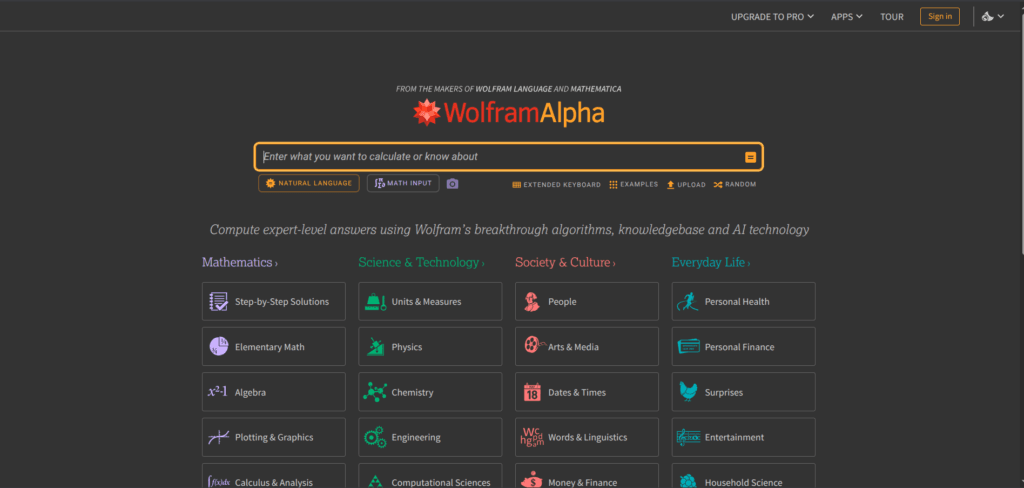
One feature that sets KARMA apart from many alternative search engines is its collection of specialized search shortcuts. Users can quickly switch to tools such as Wolfram Alpha for calculations and data analysis or the Internet Archive for historical versions of web pages, making it particularly useful for research-heavy searches.
The platform also includes a “Learn & Act” section that highlights conservation news, petitions, and environmental initiatives, giving users opportunities to support causes beyond simply searching the web.
One big disadvantage of KARMA search is that it’s still not available in many countries around the world.
5. DuckDuckGo
When people talk about alternatives to Google, DuckDuckGo is usually the first name that comes up, and for good reason.
Founded in 2008, DuckDuckGo built its reputation on a simple promise: your searches should remain private. While Google uses search history, browsing activity, location data, and other signals to personalize results and advertisements, DuckDuckGo takes the opposite approach. The company states that it doesn’t track users, store personal search histories or build profiles based on online behavior.
That means every user sees largely the same search results for the same query. There are no personalized search bubbles, no long-term search profiles, and no targeted advertising based on your search history. For many users, that’s exactly the appeal. If you’ve ever searched for a product once and then been followed around the internet by ads for weeks, DuckDuckGo offers a refreshing alternative.
Privacy is also becoming a major selling point in the AI era. As search engines collect more user data to power personalized AI experiences, DuckDuckGo continues to position itself as a privacy-first option. The company has expanded beyond search into privacy-focused browsers, tracker blocking, email protection, and even AI-powered search features that don’t require users to create accounts.
DuckDuckGo has grown steadily over the past decade and held approximately 2.2% of the U.S. search market by the end of 2025, making it one of the largest independent search engines outside of Google and Bing. While that may sound small, it represents millions of users who prioritize privacy over personalization.
Another useful feature is DuckDuckGo Lite, a lightweight version of the search engine designed for slower connections, older devices, and users who prefer a minimalist, no-JavaScript experience. The platform also offers extensive search shortcuts, known as “Bangs,” which allow users to search directly on thousands of websites with simple commands.
6. Startpage
What if you could get Google’s search results without Google tracking you?
That’s essentially what Startpage offers. Founded in the Netherlands, Startpage is a privacy-focused search engine that delivers Google-quality search results while removing the tracking, profiling, and data collection typically associated with Google Search. Rather than crawling the web independently, Startpage acts as a privacy layer between you and major search providers. Your search query is submitted anonymously, allowing you to benefit from Google’s search index without sharing your personal information directly with Google.
Privacy is the platform’s biggest selling point. Startpage states that it does not store search histories, record IP addresses, create user profiles, or sell user data. Because there is no profiling, every user receives the same search results for a given query, free from personalization based on browsing history or location.
Another major advantage is its European foundation. Startpage operates under Dutch and European privacy regulations, including GDPR protections, which appeal to users concerned about how technology companies handle personal data. The platform also allows users to choose European servers, adding another layer of privacy control.
One feature that stands out is Anonymous View, a built-in proxy service that lets users visit websites without revealing their identity to the destination site. Think of it as a lightweight privacy shield that helps prevent websites from tracking your IP address or browser information. Startpage also includes HTTPS support and a URL generator that saves preferences without relying heavily on cookies.
The trade-off is that Startpage isn’t fully independent. Because it relies on Google and other search partners for its results, it inherits many of the strengths and limitations of those search indexes. If your goal is maximum privacy while keeping Google’s search quality, that’s a benefit. If you’re looking for a completely independent alternative to Google, Brave Search or Mojeek may be more appealing.
7. Brave Search
If your goal is to escape both Google’s ecosystem and Microsoft’s, Brave Search is one of the few genuine alternatives available.
Launched in 2021, Brave Search has grown into one of the world’s largest independent search engines (and web browsers). Unlike DuckDuckGo, Yahoo, or Ecosia, which rely heavily on other companies’ search indexes, Brave Search now operates entirely on its own index. This makes it one of only a handful of global-scale search engines capable of crawling and ranking the internet independently. For those concerned about the concentration of power among a handful of tech giants, that’s a significant advantage.
Brave Search has also experienced huge growth. By August 2025, the platform was processing more than 1.5 billion searches per month.
Privacy is at the heart of the Brave ecosystem. The search engine doesn’t create detailed user profiles, track search histories, or personalize results based on extensive behavioral data. Users receive search results without the level of surveillance that has become common across much of the modern web.
Beyond search, Brave offers an entire suite of privacy-focused tools. Its browser includes built-in ad and tracker blocking, a customizable news feed, free video calling functionality, offline playlists, a cryptocurrency wallet, IPFS integration for decentralized web content, and support for Tor browsing to enhance anonymity online.
One particularly unique feature is Brave Rewards. Users can choose to view privacy-preserving advertisements and receive rewards in return. Unlike traditional online advertising models that rely on extensive user tracking, Brave’s approach aims to deliver ads while keeping personal data private.
The trade-off is that Brave Search’s index is still a lot smaller than Google’s. For highly niche searches, local queries, or extremely fresh content, users may occasionally find Google’s results more useful still. However, the gap has narrowed as Brave’s index continues to expand.
8. Kagi
Founded in 2022, Kagi is a subscription-based search engine that charges users directly instead of relying on advertising revenue. If you’re the customer, the search engine doesn’t need to optimize for clicks, engagement, or ad impressions. It can focus entirely on delivering the best possible search results.
This approach has made Kagi especially popular among researchers, journalists, developers, academics, and generally useres who spend large portions of their day searching for raw information. While paying for a search engine sounds unusual at first (mental even), many users view it as a worthwhile investment for their productivity.
One of Kagi’s standout features is Lenses, which lets users to customize how search results are displayed.
For example, you can create a search experience that prioritizes academic papers, discussion forums, blogs, technical documentation, or independent websites while reducing the visibility of content farms and SEO-heavy pages. We’re in a time where many search results feel quite commercialized, so this level of control is a major selling point.
Kagi also gives users the ability to block websites they don’t trust, boost sources they value and personalize rankings without relying on invasive tracking.
The biggest hurdle, of course, is the price. Unlike Google, Brave Search, or DuckDuckGo, Kagi isn’t free. Plans start at around $5 per month for a limited number of searches and scale up to premium tiers with unlimited searches and advanced AI features. That said, many subscribers would argue that the lack of ads, cleaner search results and productivity gains easily justify the cost.
Pros
Completely ad-free search experience
No user tracking or profiling
Powerful Lenses feature for customizing search results
Ability to prioritize or block specific websites
Excellent for research, academic work, and professional use
AI-assisted research tools available on higher plans
Less SEO spam and content farm clutter than many mainstream search engines
Cons
Requires a paid subscription
Smaller user base than Google or Bing
Some features have a learning curve
Occasional bugs and missing functionality reported by users
May be excessive for casual searchers who only perform a few searches per day
Knowledge-based search engines
9. SlideShare
Sometimes you’re looking for a presentation, a market report, a lecture, or a ready-made slide deck. For such specific things SlideShare is one of the best options.
Originally launched in 2006 and now owned by Scribd, SlideShare functions as a searchable library of presentations, PDFs, infographics, documents, and ebooks uploaded by professionals, educators, businesses, and researchers. Rather than searching the broader web, users can search directly through millions of presentation-based resources.
For business professionals, SlideShare can be particularly valuable when preparing presentations, researching industry trends, or gathering statistics and visual examples. Marketing agencies, consultants, universities, and large corporations frequently publish presentations that would otherwise be difficult to discover through traditional search engines.
One of SlideShare’s biggest advantages is its ability to surface information in a highly digestible format. Instead of reading a 3,000-word article, users can often find a concise presentation summarizing key findings, industry reports, case studies, or best practices.
The platform also hosts a wide range of educational content, from university lectures and conference presentations to professional training materials and white papers. For students and researchers, this can provide an alternative perspective beyond traditional websites and academic journals.
Another useful feature is document access. In addition to slide decks, SlideShare allows users to discover PDFs, ebooks, reports, and other downloadable resources. Many presentations can be saved for later viewing, and some creators allow their content to be downloaded for offline use.
That said, users should approach SlideShare content with the same critical thinking they’d apply to any online source. Since presentations are uploaded by individual users and organizations, content quality can vary significantly, and information may not always be updated regularly.
10. Wayback machine
Everyone has at some point in their life stumbled across a dead link and wondered what used to be there? The Wayback Machine was built to answer exactly that question.
Operated by the Internet Archive, it continuously captures snapshots of websites and stores them in a huge digital archive. At the time of writing, the archive contains hundreds of billions of saved web pages dating back to the 1990s.
Most people discover the Wayback Machine when trying to recover a deleted page, view an old version of a website or investigate how a company, politician, or publication has changed its messaging over time. Journalists use it to verify claims and researchers use it to preserve disappearing information.
Yet websites are only one aspect of it.
The Internet Archive has gradually grown into one of the largest free digital libraries. Beyond archived websites, users can explore millions of books, movies, TV recordings, music tracks, software programs, photographs and historical documents. You can find all of that on a single platform.
For marketers and SEO professionals, the Wayback Machine is especially useful for competitive research. You can analyze how a competitor’s website evolved over time, uncover deleted content, identify old backlink opportunities, or review previous branding and messaging strategies.
Of course, the platform isn’t designed to replace Google. You won’t use it to find the nearest coffee shop or compare laptop prices. Instead, it serves a different purpose: helping users explore information that has disappeared, changed, or been forgotten.
It’s one of the best choices for researchers, journalists, historians, SEO professionals and anyone curious about what the internet looked like before social media took over.
Specialized search engines
11. WolframAlpha
Launched in 2009 by mathematician and computer scientist Stephen Wolfram, WolframAlpha is what’s known as a computational knowledge engine. Rather than returning a list of websites, it will attempt to generate direct answers by processing structured data and performing calculations in real time.
Ask Google “What is the population of France?” and you’ll get links. Ask WolframAlpha the same question and you’ll get population figures, demographic breakdowns, historical trends, maps, and related statistics. The difference becomes even more obvious with technical queries. WolframAlpha can solve equations, perform statistical analysis, convert units, generate graphs, analyze datasets, and answer complex scientific questions that would normally require specialized software.
This makes it particularly popular among students, educators, engineers, researchers, economists, and data analysts. Whether you’re solving a calculus problem, comparing economic indicators between countries, analyzing chemical compounds, or studying linguistic patterns, WolframAlpha is built to provide answers rather than point you elsewhere.
One of its lesser-known strengths is language analysis. The platform can break down word frequencies, etymologies, letter distributions, and other linguistic data, making it useful for writers, language students, and researchers in addition to STEM professionals.
For users who need more advanced functionality, WolframAlpha Pro expands the platform significantly. Paid plans allow users to upload spreadsheets, images, documents, and datasets for analysis. Pro users can also access step-by-step solutions, downloadable results, and more advanced computational tools. Pricing starts at approximately $9.99 per month, with plans tailored for individuals, students, and educators.
The biggest limitation is that WolframAlpha isn’t designed to replace a traditional search engine. You won’t use it to find restaurant reviews, compare smartphones, or search news. Instead, it excels when the goal is computation, analysis and fact-based knowledge retrieval.
Whether someone is looking for a company, employee, recruiter, service provider, or industry expert, LinkedIn’s search function is often where they start.
For businesses, visibility in LinkedIn search depends on several factors. Companies with distinctive names generally have an advantage over those with generic or highly competitive names. A business called “Innovative Tech Solutions” is easier for LinkedIn to identify and surface than one using a broad name that’s similar to dozens of others.
While keywords still matter, cramming them into your company page or profile isn’t a shortcut to better rankings. In some cases, it can actually hurt visibility and make a profile look spammy.
LinkedIn also considers signals such as follower count, connections between users and the page, posting activity, and how closely a company’s name and profile information match the search query.
In other words, the businesses that show up most often in LinkedIn search tend to be the ones with active profiles, engaged audiences, and clear positioning.
Copyright-free search engine
13. Openverse
Finding the right image for a blog post can be surprisingly stressful.
You find the perfect photo, download it, and then spend the next ten minutes wondering whether you’re about to receive an angry email from a photographer or a copyright claim from a stock image company. Openverse exists to solve that problem.
Created as an open-source project under WordPress.org, Openverse is a search engine dedicated entirely to openly licensed and public domain content. Instead of searching the entire web, it searches hundreds of millions of images and audio files from museums, government archives, educational institutions, and creative platforms around the world.
For content creators, that’s incredibly useful. Need a featured image for a blog post? Background music for a YouTube video? Historical photographs for a presentation? Openverse can help you find media that is legally available for reuse, often with attribution requirements clearly explained.
One of the platform’s strengths is transparency. Every result includes licensing information, helping users understand whether they can modify, share, or use the content commercially. That removes much of the guesswork that comes with sourcing media through traditional search engines.
While Google Images can also filter by usage rights, copyright-free content isn’t its primary focus. Openverse was built specifically for that purpose, which makes it much easier to discover reusable media without digging through pages of unrelated results.
Key takeaway
Google remains the dominant search engine, and will probably remain so for at least another decade. But that doesn’t automatically make it the right choice for everyone.
As we’ve seen, the search market is far more diverse than it was a decade ago. Whether you value privacy, ad-free browsing, academic research, historical archives; there’s likely a search engine built with those priorities in mind.
The best alternative to Google Search really depends on what you’re trying to accomplish. Some tools are great at finding information, others at analyzing it. Some protect your privacy, while others help you discover content that traditional search engines often overlook.
Switching search engines has never been easier. Most of the options on this list are free to try and many can be set as your default search engine in a matter of seconds (especially on mobile).
So before automatically typing your next query into Google, consider exploring some of these alternatives. You could discover a search experience that’s far better suited your needs.
FAQ
1. What is the best alternative to Google Search?
The best alternative depends on your needs. DuckDuckGo and Startpage are popular for privacy, Brave Search offers an independent search index, Kagi provides an ad-free premium experience, and Perplexity excels at AI-powered research.
2. Are there search engines that don’t track users?
Yes. DuckDuckGo, Startpage, Brave Search, and Kagi all prioritize user privacy and collect far less personal data than Google.
3. Which search engine is best for privacy?
DuckDuckGo, Startpage, and Brave Search are among the most privacy-focused options. They don’t build extensive user profiles or track your searches the way Google does.
4. Is Google still the best search engine?
For many users, Google still offers the most comprehensive search results. However, other search engines may be a better fit if privacy, ad-free browsing, environmental impact, or specialized research tools are important to you.
5. What is the best search engine for academic research?
Kagi, WolframAlpha, and Google Scholar are excellent choices for research. Kagi’s customizable search filters and WolframAlpha’s computational capabilities make them particularly useful for students and professionals.
6. Are paid search engines worth it?
For heavy researchers, journalists, developers, and professionals, a paid search engine like Kagi can be worthwhile. Its ad-free experience, advanced filters, and customization tools can save significant time when searching for information.
7. How do I change my default search engine?
Most browsers allow you to change your default search engine in the settings menu. Popular alternatives such as DuckDuckGo, Brave Search, Ecosia, and Startpage can usually be set as the default in just a few clicks.
Google is about to launch its biggest search update in 25 years. The classic 10 blue links per page is being heavily demoted and in its place is a new fully conversational search. It features dynamic and AI-powered responses that support follow-up questions, media inputs (text, images and files) that can monitor the web and even call businesses for you.
Google will also offer digital assistants, known as agents, to automate searches so that someone who may be apartment hunting can be notified of a new listing without opening a real estate site like Zillow.
These new features will be powered by their new Gemini 3.5 Flash model. The company executives claim that the model has improved on creating software code and performing autonomous tasks. Sundar Pichai, Google’s chief executive, said Gemini’s efficiency and lower cost made it easier to roll out on a wider scale, which he believes will ultimately work in Google’s favor.
Here are the new features and functionalities in detail:
Search agents
Google is introducing “Search agents” – AI assistants built directly into Search that can monitor the web for you in the background. Instead of checking for updates yourself, you’ll be able to set up an agent with a specific task or interest, and it’ll continuously scan sources like news sites, blogs, social media, finance data, shopping updates, and sports info.
The idea is to make Search more proactive. For example, you could tell it exactly what kind of apartment you’re looking for, and it would alert you when a matching listing appears. Or if you’re waiting for a sneaker drop from your favorite athlete, the agent can notify you the moment it’s announced.
Google says these AI agents will first roll out this summer for Google AI Pro and Ultra subscribers.
Google is also expanding Search’s AI-powered booking features, making it easier to find and reserve local experiences and services. You’ll be able to describe exactly what you want in plain language, like a private karaoke room for six people on a Friday night with late-night food service, and Search will pull together current pricing, availability, and booking links from different providers.
For some services, including home repair, beauty appointments, and pet care, Google can even contact businesses for you.
On top of that, Google is adding more AI shopping tools to Search, with new agent-style features designed to help users browse and buy products more efficiently. These updates are expected to roll out across the U.S. this summer.
Agentic coding in Search
They’re also turning Search into something closer to an AI-powered workspace. Using its new Antigravity system and Gemini 3.5 Flash, Search will be able to generate custom interfaces in real time instead of only showing standard search results.
That means if you ask a complex question, Search can build interactive visuals, simulations, graphs, tables, or other tools specifically designed around your query. For example, it could create a visual breakdown of an astrophysics concept or an interactive model showing how a mechanical watch works.
Google also wants Search to handle longer-term tasks, not only one-time questions. Users will be able to create personalized dashboards or mini apps for ongoing projects like wedding planning, moving homes, or tracking fitness goals. In one example, Google says Search could generate a custom fitness tracker that pulls in live weather, maps, reviews, and other real-time data to help you stay consistent.
The basic generative UI features are expected to launch for all users this summer, while more advanced “mini app” experiences will first roll out to Google AI Pro and Ultra subscribers in the U.S.
Expanded personal intelligence in Search
They’re also expanding its “Personal Intelligence” features in AI Mode, giving Search more awareness of a user’s personal context. Users in nearly 200 countries and territories will be able to connect apps like Gmail and Google Photos, with Google Calendar support coming later. This will allow Search to provide more personalized and relevant answers.
For example, Search could use information from your emails, photos, or schedule to help with planning, recommendations, reminders, or everyday tasks. Google says these integrations are optional and built around user control, meaning people can decide if and when they want to connect their apps.
The feature is rolling out in 98 languages and won’t require a paid subscription, as Google pushes toward a version of Search that acts more like a personalized AI assistant than a traditional search engine.
Why is Google doubling down on AI?
In short, because investors and Google’s higher ups still believe in the enormous potential of AI (whether that belief is warranted is a topic for another time). Naturally integrating a conversational AI chatbot within their most used and famous product is the logical next step if AI market domination is the end goal.
Ever since OpenAI’s release of ChatGPT in late 2022, Google’s executives and shareholders were wary of the development of AI and how Google could keep up and not be left behind. As it so happens, their biggest fear was that their dominant position in search was going to be in danger. They got to work, and released Gemini on December 6, 2023.
And the fear that Google would be lagging behind a lot in the AI race wasn’t without merit. One of its earliest AI models actually recommended people to use glue to make pizza.
Ever since then, Google has slowly but surely gained on their AI competition. As of 2026, in conversational AI/chatbots, Google Gemini holds roughly 18% to 25% of web traffic share. It’s grown rapidly and cemented itself as the primary competitor to OpenAI’s ChatGPT.
Google AI Overviews were just the first step
Of course, to anyone familiar with how Google has been moving in the past couple of years, this push for a 100% AI search experience will come as no surprise. The writing was on the wall ever since the arrival of AI overviews, which were launched for general users in the US on May 14, 2024 and sporadically in the rest of the world after that.
AI overviews are an aggregator of a user’s search and it gives a quick and easy to digest answer at the top of the page. They were the natural heir to “featured snippets” – quick answers at the top of search results that made it unnecessary to click any link to get the information you wanted. Overviews just took that idea, and instead of one lucky website being quoted, it generates a longer answer based on multiple sources across the web.
Is Google Search just becoming ChatGPT in a different package?
It is going in that direction, however it’s a little more complicated than that. While the classic UI of 10 blue links per page is here to stay, there’s a strong sense of inevitability that one day they might be completely replaced by an AI chatbot interface, that just aggregates website content.
Google can’t just outright abandon that model, since generations of people are so used to it. And while the executives are bragging about Google’s AI numbers and statistics, such as Google AI overviews reaching over 2.5 billion users – the numbers are a bit misleading as a metric to whether people actually want AI in Google Search. The elephant in the room being that you can’t actually turn off AI overviews as a setting. It’s not really 2.5 billion users actively choosing AI overviews, it’s just an integral part of the experience.
Same thing applies to “AI mode”. It’s positioned very strategically to the left of all the other tabs on Google Search (subconsciously asserting to the average user that it’s the default). Throughout the next year,my prediction is that for many users the AI mode will become the default, and it will take a lot of conscious effort to use the traditional tab with 10 blue links (an effort which the average user, a lot of the time, won’t have the will to execute).
What does Google’s new AI Search mean for SEO?
The biggest change is that ranking alone is no longer the end goal.
In AI Mode and AI Overviews, as previously mentioned, Google synthesizes information from multiple sources into a single response. Your content now has to first be selected, then cited, and finally trusted by Google’s AI systems, not only ranked on page one.
What changes is the format and intent behind optimization. AI Search favors content that is easy to interpret, summarize and cite. So that includes pages that directly answer questions, explain concepts clearly and provide unique insights are more likely to appear inside AI-generated responses. One good rule of thumb is “answer first, explain later”. Don’t bury the answer, just have it at the forefront, and give the explanation below.
This also increases the importance of “semantic relevance” over pure keyword targeting. Don’t optimize one page for one exact keyword, you also need to cover broader topic clusters and answer multiple related user intents within the same content ecosystem. AI systems retrieve contextual information, not only exact keyword matches.
Another major concern is traffic. Several early studies suggest that AI-generated summaries can reduce clicks to websites because users often get answers directly on the search page. One recent study found AI Overview exposure reduced traffic to certain informational pages by around 15%, while other reports saw lower click-through rates (CTRs) when AI summaries appeared above organic listings.
Google will never disband the traditional search. It’s simply too ingrained, and a complete removal would invite backlash the likes of which we’ve never seen before. However, I believe that every subsequent update from now on will be pushing the boundary between traditional search and AI mode. More AI features will be integrated to a point where the average user doesn’t even know that there’s a difference between the two.
To AI enthusiasts this is great news. For AI skeptics, it’s another sucker-punch. For SEO professionals it’s more of the same, with some redefinition of KPIs (not panicking at a drop in clicks and and visits is a great start).
FAQ
1. What is Google’s AI Search?
Google’s AI Search is a new search experience powered by generative AI. Instead of only showing a list of links, it can summarize information, answer complex questions, generate visual interfaces, and help users complete tasks directly inside Search.
2. Will AI Search replace traditional Google Search?
Not completely. Traditional search results still exist, but Google is gradually combining them with AI-generated answers and interactive experiences. Search is becoming more conversational and task-oriented.
3. Is SEO still important in the AI Search era?
Yes. Google has repeatedly stated that the same core SEO principles still matter, including high-quality content, expertise, site performance, and relevance. The difference is that content now also needs to be understandable and trustworthy enough for AI systems to reference.
4. Will websites lose traffic because of AI Search?
Potentially, especially for simple informational queries. Users may get answers directly inside Google without clicking a website. However, strong brands and authoritative sites can still gain visibility through citations and mentions in AI-generated responses.
5. What type of content performs best in AI Search?
Content that is clear, well-structured, original, and genuinely useful tends to perform best. AI systems prefer pages that directly answer questions, explain topics thoroughly, and demonstrate expertise.
A backlink is a hyperlink from one website to another website. In SEO, backlinks are also called inbound links or incoming links. When Website A links to Website B, Website B receives a backlink. This is what people usually mean when they want SEO backlinks explained.
Search engines use backlinks to discover pages and judge the authority, relevance and credibility of a website. A backlink functions as a signal that another website considers the linked content valuable enough to reference.
For example, if a digital marketing blog links to an article about technical SEO on your website, that link is considered a backlink. The linking website is called the referring domain.
Backlinks are a core component of off-page SEO because they influence how search engines rank webpages in organic search results. However, not all backlinks carry equal value. Search engines judge factors like the authority of the linking website, topical relevance, anchor text and link placement.
Search engines discover new pages by following links between websites. When a search engine crawler finds a backlink pointing to a page, it can use that link to crawl and index the destination page.
Backlinks also help search engines evaluate the importance of webpages. Google’s ranking systems analyze how pages link to each other to understand which pages may be more useful or authoritative for a search query.
This process is historically associated with PageRank, an old algorithm developed by Google that treats links as signals of importance. Pages that receive backlinks from authoritative and relevant websites generally pass stronger ranking signals than pages with few or low-quality links.
Search engines also take into consideration the context of a backlink. They analyze factors like the topic of the linking page, the anchor text used in the link, and the relationship between the two websites. This helps determine whether the backlink is relevant and trustworthy.
A good backlink typically comes from a relevant website, appears within editorial content, and provides value to readers. These links are usually earned because the content is useful, original, or authoritative.
Examples of good backlinks:
A cybersecurity blog linking to a research study on your website
A news publication citing your original statistics
A university website referencing your educational resource
A niche industry website linking to your guide or case study
Bad backlinks are links created primarily to manipulate search rankings. These often come from spam networks, irrelevant websites, automated systems, or paid link schemes that violate Google’s spam policies.
Examples of bad backlinks:
Links from private blog networks (PBNs)
Spam comments containing keyword-rich links
Links from unrelated gambling, casino, or adult websites
Sitewide footer links repeated across hundreds of pages
Paid backlinks without proper disclosure attributes
Search engines have become better at ignoring low-quality backlinks automatically. However, large-scale manipulative link building can still lead to ranking losses or manual penalties.
Backlinks are commonly divided into 4 main categories based on how search engines interpret them. These categories are defined through HTML link attributes.
Dofollow backlinks
A dofollow backlink is a standard link with no special attribute attached to it. These links can pass ranking signals and authority from one page to another.
Example:
A news website linking to your article as a source
A blog recommending your guide or tool
Nofollow backlinks
Nofollow backlinks contain the rel="nofollow" attribute. They tell search engines that the linking website does not want to pass endorsement signals through the link. Google now treats these as hints rather than strict directives.
Example:
Blog comment links
Social media profile links
Forum discussion links
Sponsored backlinks
Sponsored backlinks use the rel="sponsored" attribute. They identify links created through advertising, sponsorships, affiliate partnerships, or other paid agreements.
Example:
Paid guest posts
Affiliate product links
Sponsored brand collaborations
UGC backlinks
UGC stands for user-generated content. These backlinks use the rel="ugc" attribute and are commonly found in areas where users can publish content themselves.
Example:
Forum posts
Reddit comments
User profile pages
Website comment sections
A natural backlink profile usually contains a mix of these link types rather than only dofollow backlinks.
Yes. Backlinks sre still one of the strongest ranking signals in SEO, although their role has changed slightly. Search engines now place more emphasis on link quality, topical relevance, and trust than raw link quantity. Kind of like how Google and other search engines don’t just look at the sheer number of keywords within a text, because that metric can easily be manipulated (keyword stuffing).
Multiple industry studies continue to show a strong correlation between backlinks and higher rankings:
Many websites fail to benefit from backlinks because they focus on quantity instead of quality. Search engines are designed to detect manipulative link-building patterns, especially those created to artificially influence rankings.
Some of the most common backlink mistakes include:
Buying bulk backlinks from cheap SEO services
Getting links from irrelevant websites outside your niche
Overusing exact-match anchor text like “best SEO agency”
Using private blog networks (PBNs)
Spamming blog comments and forums with links
Building hundreds of links in a short period unnaturally
Paying for backlinks without using proper sponsored attributes
Focusing only on domain authority while ignoring relevance
One of the most common mistakes is using the exact same keyword in every backlink. For example, if dozens of websites all link to your page using the phrase “best SEO agency,” it can look artificial to Google (and to a regular person, if they cared enough to look). Natural backlinks usually use a mix of brand names, page titles, website URLs, and general phrases like “learn more” or “this article.”
Another common issue is prioritizing “high-authority” websites that have no topical connection to your industry. A relevant backlink from a smaller niche website is often more valuable than an unrelated backlink from a large website. For example, a backlink to a dental clinic from a gaming blog is far less useful than a backlink from a smaller healthcare or local business website. Search engines look at relevance, not only website size or authority.
Google has also become more effective at ignoring low-quality spam links automatically. Since the Penguin update, the algorithm often devalues manipulative links instead of penalizing websites directly. However, aggressive link schemes can still trigger manual actions and ranking losses.
How to get high-quality backlinks?
High-quality backlinks are usually earned. Search engines are designed to identify links that exist because someone genuinely found the content useful, relevant or worth referencing. So in short, get better at writing content.
Jokes aside, the most effective way to earn backlinks is to publish content that other websites naturally want to cite. This includes:
Original research and statistics
In-depth guides and tutorials
Case studies
Industry reports
Useful tools or calculators
Expert opinions and interviews
For example, if a cybersecurity company publishes a report on data breaches in 2026, news websites and blogs may reference that data and link back to the original source.
Other common backlink strategies include:
Guest posting on relevant industry websites
Digital PR campaigns
Reaching out to websites that mention your brand without linking
Getting listed in reputable directories
Building relationships with journalists and publishers
Relevance matters more than volume here. A few backlinks from trusted websites in your industry is a much better metric of your quality than hundreds of unrelated links. Google’s spam policies specifically target manipulative practices such as buying links, excessive link exchanges and automated link building.
Such dishonest strategies might work for a little while, but just be aware that your impressions and clicks will probably get smashed into pieces during the next Google update. So beware!
Good backlinks usually grow naturally over time as more people discover and share your content. A useful guide may slowly earn links from blogs, forums and news websites over several months. If a website suddenly gets hundreds of backlinks overnight from random websites, search engines may and will see that as suspicious and manipulated.
A backlink profile is a list of all websites linking to your domain. Checking it helps you understand where your traffic signals come from and whether those links are helping or potentially harming your SEO performance.
You can review your backlink profile using tools such as:
When reviewing backlinks, focus on a few core signals:
Which websites are linking to you (referring domains)
The pages they are linking to
The anchor text used in the links
Whether links are follow or nofollow
Unusual spikes or suspicious domains
A healthy backlink profile shows gradual growth, relevant referring domains, and natural variation in anchor text.
How long does it take backlinks to impact SEO?
Backlinks don’t affect rankings immediately. Search engines first need to discover the link, crawl the page it is on, and then reassess how your page should rank based on the new signal.
In most cases, early movement appears within 2 to 4 weeks, especially for websites that are already indexed and active. More stable and measurable changes usually take6 to 12 weeks, while full impact often builds over 3 to 6 months, depending on competition and site authority.
The timeline varies based on a few practical factors:
How often the linking site is crawled
The authority and relevance of the linking page
The competitiveness of the keyword you are targeting
The existing strength of your website
A single backlink will rarely cause a sudden jump in rankings. Instead, backlinks contribute to gradual improvement as search engines accumulate more signals over time.
Can you rank without backlinks?
Yes, but only in limited situations.
Search engines can rank a page without backlinks if they can clearly understand its relevance and there is little competition for the query. This typically happens with low-competition, very specific searches, or when a website already has some level of trust built from other pages.
In most competitive niches, however, backlinks still matter. When multiple pages have similar content quality, backlinks often act as the deciding factor. Pages with stronger and more relevant link profiles are more likely to rank higher.
In practice:
Possible without backlinks: low-competition keywords, niche topics and highly specific questions
Difficult without backlinks: commercial keywords, competitive industries and high-traffic search terms
Rare but possible: strong content combined with established domain authority or internal site strength
Backlinks are not the only ranking factor, but for most websites trying to grow traffic, they’re a must.
Key takeaways
Think of backlinks less as “individual links” and more like trust building over time. One link won’t change much on its own, but several relevant links pointing to the same topic start to signal that your content is worth paying attention to.
The way links are written also matters. If every link uses the same keyword, it looks unnatural. In real life, people link in different ways, sometimes they use your brand name, sometimes the page title, sometimes just a simple “click here.”
What happens on your own website also plays a role. If people link to a page but your site doesn’t connect that page well to the rest of your content, you’re not getting the full benefit of those links.
Timing matters too. A slow, steady flow of backlinks looks normal. A sudden burst of hundreds of links can look suspicious and may not help as much as you’d expect.
And lastly, backlinks don’t hold permanent value. If the page linking to you gets deleted or loses relevance over time, that link can lose its impact too.
FAQ
1. What is a backlink?
A backlink is when another website links to your website. It works like a reference or recommendation from one page to another.
2. Do I need backlinks to rank on Google?
Not always. Very specific or low-competition topics can rank without them, but for competitive keywords, backlinks are usually needed to reach higher positions.
3. How many backlinks do I need to rank?
There is no fixed number. A few strong, relevant backlinks can outperform hundreds of weak or unrelated ones.
4. Can bad backlinks hurt my website?
Yes, if they are part of spammy or manipulative patterns. However, Google often ignores many low-quality links automatically unless there is clear abuse.
5. How do I get backlinks naturally?
By publishing useful content that others want to reference, such as guides, data, case studies, or tools. Over time, people link to it without needing to be asked.
Originally known as Google Webmaster Tools, Google Search Console (GSC) is a free service from Google that allows site owners to monitor their overall site health and performance using data directly from Google.
Google Search Console shows you how Google sees and uses your site, what queries trigger your pages, how often they show up (impressions), how many clicks you get, indexing issues, and lets you request re-indexing when you update pages.
You don’t need it for your site to work, but without it you’re blind to what’s happening in Google search.
Why does this matter for SEO specifically? Because you can’t improve what you can’t measure. Search Console helps you monitor your website traffic, optimize your rankings, and make informed decisions about how your site appears in search results.
The data can also influence technical decisions for the website and support more sophisticated marketing analysis when used alongside tools like Google Analytics, Google Trends, and Google Ads. No other SEO tool in the industry can compete with the features and information GSC provides for improving SEO performance, both technical and content-wise; and it costs nothing.
Setting it up is the first step toward understanding what Google actually thinks of your site. This guide will walk you through the entire process.
How to set up Google Search Console
Despite its powerful feature set, setting up Google Search Console is surprisingly straightforward. You do not need to be a developer or have any technical background to get it done. The whole process takes about 10 to 15 minutes, and Google walks you through each step. By the end of it, your website will be connected and Google will start collecting data you can actually use.
2. Log in with your preferred gmail account (make sure it’s an account that you want associated with your website)
3. Click “Start now“
Step 2: Add property
Add your website property to start monitoring and improving your site’s performance
1. Choose “URL Prefix” (recommended for beginners)
2. Enter your website’s URL
3. Click “continue“
Step 3: Verify website ownership
1. Copy the HTML tag from GSC
2. Install RankMath SEO plugin in WordPress (or any other SEO plugin will also do)
3. Go to RankMath general settings > Webmaster tools
4. Paste the HTML tag into the “Google Search Console” box and click “save changes“
5. Go back to GSC and click “verify“
Step 4: Submit sitemap
1. Go to RankMath Sitemap settings > copy your sitemap index
2. On the left of your GSC dashboard click on the menu item titled “Sitemaps“
3. Paste your sitemap index and click “Submit“
A few things to keep in mind when setting up Google Search Console
Now that your site is connected, there are a few things worth knowing before you start digging into the data.
Data doesn’t appear instantly. For a new site, it can take days or even weeks before any meaningful data starts showing up, because Google needs time to crawl your pages and collect enough information to report back. Don’t panic if your dashboard looks empty at first, that is completely normal.
You don’t need to check it every day. There is no need to sign in to the tool every day. If Google finds new issues on your site, you will receive an email alert from Search Console. That said, checking your account roughly once a month, or whenever you make significant changes to your site, is a good habit to build.
Submit your sitemap. Pages from your site can be discovered by Google without this step, but submitting a sitemap will speed up discovery and let you monitor related information directly in GSC. It’s like giving Google a map of your site rather than making it figure things out on its own.
Use the Domain property if you can. Adding a domain property gives you the most complete view of your website in GSC because it includes all protocols, subdomains, and paths under the domain. The URL prefix option is simpler and still useful, but the domain property paints a fuller picture.
GSC works best alongside other tools. On its own, Search Console is already great. But pairing it with Google Analytics gives you a much more complete view of how users find and interact with your site. The two tools complement each other well and are both free.
FAQ
1. What is Google Search Console?
Google Search Console is a free tool provided by Google that lets website owners monitor how their site performs in Google Search. It shows you which keywords bring people to your site, whether your pages are properly indexed, and if there are any technical issues that could be affecting your visibility.
2. Do I need Google Search Console if I already have Google Analytics?
es, and the two work well together. Google Analytics tells you what visitors do once they land on your site. Google Search Console tells you how they found it in the first place. They answer different questions, so using both gives you a much more complete picture.
3. How long does it take for data to show up in Google Search Console?
It can take anywhere from a few days to a few weeks for data to start appearing, especially for newer websites. Once GSC starts collecting data, it builds up quickly and you will be able to spot trends within the first month or two.
4. Is Google Search Console free?
Yes, completely. There are no paid tiers or premium features. Every tool and report inside GSC is available to any website owner with a Google account, at no cost.
5. How often should I check Google Search Console?
Once a month is enough for most website owners, unless Google sends you an alert about a specific issue. It is also worth logging in any time you make major changes to your site, such as publishing a lot of new content, redesigning pages, or migrating to a new domain.